Anadolu Ajansı © 2026



ANKARA
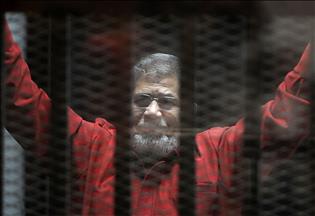
Morsi was born in a village near the Nil Delta and studied engineering at the Cairo University and earned his Ph.D. in materials science from the University of Southern California in the U.S., his government stayed in power 1 year and 4 days, this is the chronology of the incidents in Egypt:
2012
June 30: Morsi elected as the 5th President of Egypt. It was to first free elections in the history of modern Egypt.
The first action of Morsi was a calling back into session the dissolved parliament, also called for new parliamentary elections to be held within 60 days of the adoption of a new constitution for the country.
Against all the parliament convened on July 10 and elected the members of parliament who would prepare the new constitution.
Morsi gave the order to release 572 people who were arrested after protests in 2011 by the and reduced the sentence of 16 people from life sentence to seven years in jail.
August 2: The Cabinet by Prime Minister Hesham Kandil was sworn in.
August 5: After the attack at the Egyptian-Israeli border Morsi fired his intelligence chief, the head of the military police, several Interior Ministry officials, the head of the presidential guard and the governor of North Sinai,
August 12: Morsi demanded of the Egyptian Defence Minister Mohamad Hussein Tantawi and Army chief of staff Sami Anan. Both remained to be advisers to the president.
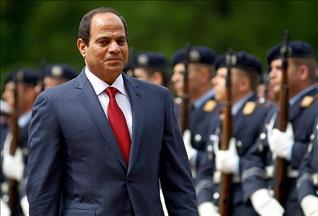
The of military intelligence Abdul Fatah Khalil Al-Sisi was named to be the new defense minister of Egypt and replaced Chief of Staff Lieutenant General Anan with General Sedki Sobhi.
Morsi also named new chiefs of the navy, the air force and the air defense branches of .
August 14: The lawyer Mohamed Salem started a legal process over Morsi's removal of Tantawi and Anan, arguing that Morsi planned to bring back a totalitarian regime.
August 23: Morsi got the full legislative powers, which he will command until the election of a new parliament and delayed the laws detaining journalists for of "offending the president of the republic."
September 20: Morsi attended the Justice and Development (AK) Party's congress meeting in Ankara and came together with Turkish President Abdullah Gul and Prime Minister Recep Tayyip Erdogan, also Turkish and Egyptian businessmen at the Turkey-Egypt Business Forum.
September 23: Morsi attended the General Assembly of United Nations and met with US President Barack Obama and other world leaders.
October 8: Morsi ordered pardon for all persons who were arrested during the uprising of January 25. decree "included felonies, misdemeanors committed to the uprising to achieve its goals from January 25, until June 30, except crimes of murder and obliges the prosecutor general and the military attorney general, to publish a list for in the official newspaper."
October 11: A new crisis started after Morsi ordered Egypt’s prosecutor general Abdel-Maguid Mahmoud to leave his position as prosecutor and be Egypt’s ambassador to the Vatican. Mahmoud became the central figure of public anger over acquittals in the Battle of the 'Camels case' where men riding horses and camels charged into crowds Cairo’s Tahrir Square. Mahmoud was replaced with Talat Ibrahim Abdullah.
November 22: The Presidential office announced that to break down the structure of the ousted regime, to end the corruption, the charge those who had links with corruption, to clean up the governmental institutions, to implement social justice, to protect the Egyptian people of the symbols of the old regime, to create a constitution based on freedom, justice and democracy and to satisfy the needs of the people were the goals of Morsi. Morsi's decree stripped off powers of judicial they could not block the adoption of the new constitution.
November 23: erupted in city of Alexandria and in other cities in Egyp, as opponents of President Mohamed Morsi clashed with his supporters over his November 22 declaration. They torched the offices of the Muslim Brotherhood's Freedom and Justice Party.
The highest body, the Supreme Judicial Council supported the protesters and said that the new step by Morsi was an "unprecedented attack on the independence of the judicial branch". The stock market dropped by 10 percent.
November 26: Morsi met the members of the Supreme Judicial Council and said that he will limit the power of in constitution.
November 27: Ten thousand of people held protests at the Tahrir Square and called Morsi to roll back his November 22 constitutional declaration or resign. One person killed during the protests and many people were injured.
November 29: President of the Constituent Assembly of Egypt Hossam Al announced that the draft was adopted. Morsi sets December 15 as a date for a referendum.
December 5: Tens of thousands of protesters march on the presidential palace, demanding the cancellation of the referendum and writing of a new constitution. The security forces used tear gas against the protesters and in the battles 11 people were killed and about 1.000 people were injured. Masked people set the Muslim Brotherhood offices in Suez, and Zagazig on fire.
December 6: Morsi met with of the Egyptian Fattah al-Sisi and with his cabinet ministers to discuss the situation. After the meeting Morsi said, addressing the nation, that the opposition to incite violence. The military sent tanks and armored vehicles into Cairo and implemented a curfew. Morsi's family was forced to evacuate their home in Zagazig.
December 8: The Egyptian Army said in first statement since the protests erupted it would protect public institutions and innocent people and not allow the events to become more serious. The cabinet gave authorization to the army to maintain security.
December 15/22: In the two-round referendum, Egyptians approve the constitution, with 63.8 percent voting in favor.
2013
January 25: On the second anniversary of the beginning of the 2011 revolution, protests again erupted in cities across the country, following occasional skirmishes between protesters and police in Cairo the day before. 280 protesters and 55 security forces were wounded during the clashes at Tahrir Square and 4 protesters and 1 security guard lost their lives.
January 26: The sentencing to death of 21 people for their roles in the Port Said Stadium disaster sparked further unrest in Port Said that resulted in 16 fatalities. 33 people were killed during the protests.
January 30: Morsi visited Germany and met with Chancellor Angela Merkel.
February 11: On the second anniversary of the fall of president , people gathered outside the presidential palace and protested.
March 19: Morsi's three-day-long official visit in India begins, he met Prime Minister Singh.
March 30: The comedian Bassem Youssef was alleged to insult Islam and Morsi. The opposition said that this was a tactic of the government to silence dissent against Morsi. Youssef was released on bail after questioned by the authorities.
April 28: Morsi met Iranian officials in Teheran in the framework of his "Quartet Initiative" for the Syrian issue.
May 8: Morsi signed an agreement with Brazilian President Dilma Rousseff on the issues of health, agriculture, social development, and technical support.
May 16: Seven Egyptian soldiers were kidnapped by unknown militants demanding the release of members of an Islamist group detained for almost two years. They were released after one week and Morsi for its way of dealing with the crisis.
June 26: Morsi's 2 hours and long speech to the nation was evaluated as provocative and full of threats and accusations targeted against his opponents. The opposition and Morsi supporters started protests.
June 28: The people on the Tahrir Square called for the resignation of Morsi.
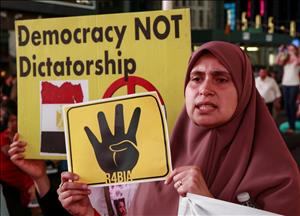
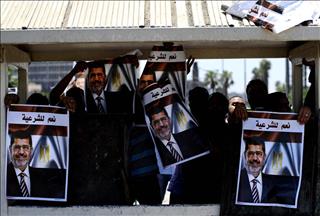
June 30: Millions of Egyptians demonstrate, calling for Morsi to step down. Members of the Egyptian Movement for Change claimed to have collected 22 million signatures calling for President Morsi's resignation.
July 1: Egypt's military gives the president and the opposition 48 hours to resolve their disputes, or it will impose its own solution. Anti-government protesters in Egypt were reported to enter the Muslim Brotherhood headquarters office in Cairo's Mokattam region. Four Ministers of Environmental Affairs, Communications, Tourism and Legal and Parliamentary Affairs had tendered their resignations to Prime Minister Hisham Qandil.
Morsi told the English Newspaper The Guardian that a second revolution did not take place and rejected the calls for early elections.
July 2: Foreign Minister Mohamed Kamil Amr also resigned. Morsi had asked the army to withdraw the 48-hour ultimatum it had issued for solving the political crisis in the country. Pope Tawadros II 118th Pope of Alexandria and Patriarch of the See of Saint Mark noted on his Twitter account: "I admire the people of Egypt. The thoughts of the stolen revolution 'rebellion' and devoted young people with the idea of taking back the high civilized manner. My prayers for all the people of Egypt."
July 3: 16 people died and 200 others were wounded when gunmen fired at a Cairo rally supporting Egypt's President Mohamed Morsi. The same attacks took place in several areas in Egypt.
Morsi reiterated unwavering commitment to his constitutional legitimacy, insisting he would never accept any decision or move by any authority, group or individual to undermine his legitimacy. "I am ready to defend my constitutional legitimacy to the death," he said. Morsi has not accepted the said military coup and has called onEgyptians to stand against the coup, said Presidency of Egypt. It was stated that Morsi "I am still the president and army commander as well."
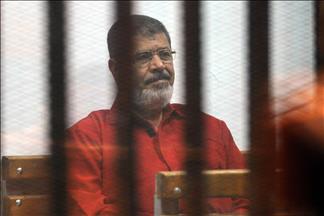
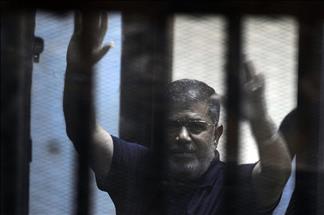
July 4: Defense Minister Abdel Fatah El Sisi has won the support of Al-Azhar, the Orthodox Church and the Salafist Nour party whose representatives attended the announcement of the "roadmap" which will pave the way for elections. Morsi has been detained.
Chair of Constitutional Court Adly Mansour sworn in as interim president.
news_share_descriptionsubscription_contact