JERUSLAEM
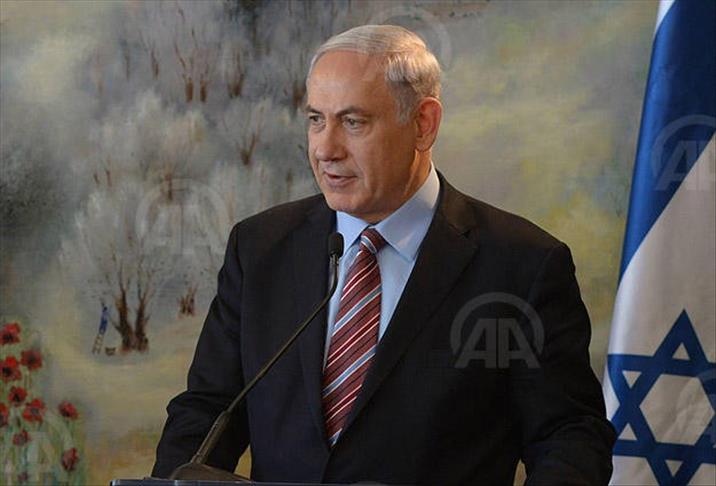
Israeli Prime Minister Benjamin Netanyahu and Economy Minister Naftali Bennett have agreed to expand settlement construction in the West Bank and East Jerusalem, according to a report by Israel's Channel 2.
According to the broadcaster, Netanyahu, the leader of Israel's Likud Party, is nearing agreement with the Habayit Hayehudi ("Jewish Home") party, which has promised to remain in the ruling coalition government in return for stepped-up settlement expansion on Palestinian land in the West Bank.
No comment on the reported agreement was issued by the offices of either official.
According to Israeli media reports, Habayit Hayehudi had threatened to leave the government unless Netanyahu unfroze West Bank settlement activity.
Israeli Justice Minister Tzipi Livni criticized the reported agreement, calling it an irresponsible move both diplomatically and in terms of security.
"New construction in the settlements will lead to damage to these settlements," she said.
Israeli Finance Minister Yair Lapid, meanwhile, said that new settlement construction would cause serious harm to the state of Israel.
"New settlement constructions will harm Israel at the international level and will lead to a real crisis with the United States," the minister, who leads the Yesh Atid party, warned.
The left-wing Labor opposition party also strongly criticized the reported agreement, saying that Netanyahu's policies threatened to damage Israeli interests in order to secure a few more months in the premiership.
Palestinian official slams fresh Israeli settlement drive
A Palestinian official on Monday described a recently-unveiled plan by Israeli Prime Minister Benjamin Netanyahu to build 1,060 new Jewish-only settlements in East Jerusalem as a "crime" against international and human law.
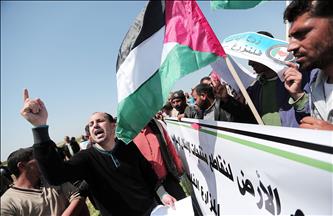
"The plan reveals the intention of the Israeli government to impose new realities on the ground and derail the Palestinians' dream of establishing a state," Ziad Abu Ein, head of the barrier and settlement resistance authority, an affiliate of the Palestinian Authority (PA), told Anadolu Agency.
He said the Palestinian leadership would maintain its efforts at international institutions to resist Israel's settlement policies and its ongoing confiscation of Palestinian land. Abu Ein added that the PA leadership would continue to resist any settlement projects on the ground as well.
"We are responsible for drawing the borders of our state," Abu Ein said.
"We will not be silent while these crimes are being committed," he added, noting that settlement construction and peace were mutually exclusive.
Netanyahu was reported earlier Monday to have approved a plan to build 1,060 new Jewish-only settlements in East Jerusalem.
Israeli daily Haaretz quoted unnamed officials in Netanyahu's office as saying that 660 of these units would be built in the northern neighborhood of Ramot Shlomo, and another 400 in Har Homa in the south.
The Ramot Shlomo settlement was built on the Palestinian neighborhood of Shuafat, while Har Homa was built on the neighborhood of Jabal Abu Ghneim.
Israel occupied East Jerusalem during the 1967 Middle East War. It unilaterally annexed the holy city in 1980, claiming it as the capital of the self-proclaimed Jewish state – a move never recognized by the international community.
Sacred to both Muslims and Jews, Jerusalem is home to the Al-Aqsa Mosque, which for Muslims represents the world's third holiest site. Jews refer to the area as the "Temple Mount," claiming it was the site of two prominent Jewish temples in ancient times.
Palestinians accuse Israel of waging an aggressive campaign to "Judaize" the city with the aim of effacing its Arab and Islamic identity and ultimately driving out its Palestinian inhabitants.
International law considers the West Bank and East Jerusalem occupied territories taken by Israel in 1967, viewing all Jewish settlement building as illegitimate.
Palestinian negotiators insist that Israeli settlement building must stop before stalled peace talks with Israel can resume.
www.aa.com.tr/en