13 April 2016•Update: 20 April 2016
By Alex Jensen
SEOUL
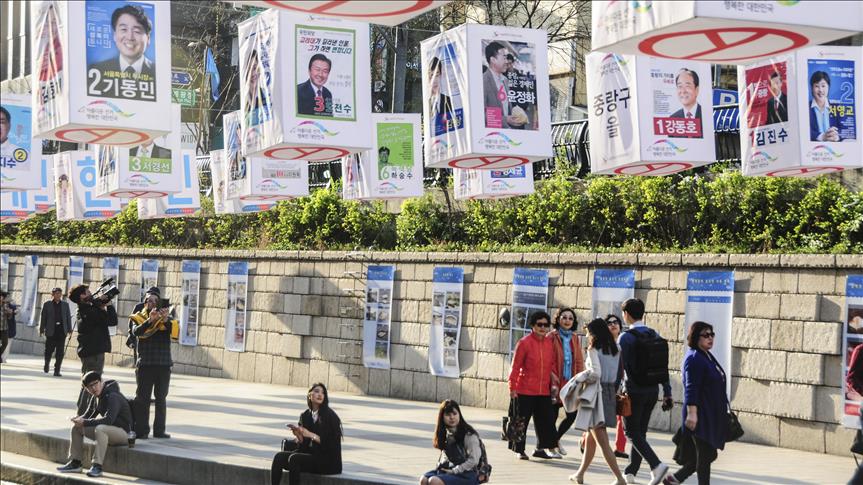
South Korea’s ruling Saenuri Party looked set to restore its majority parliamentary status as voters made their picks at nearly 14,000 polling stations across the country Wednesday.
The conservative Saenuri camp has apparently been boosted by weeks of uncertainty on the peninsula, fueled by Seoul-Pyongyang tensions following North Korea’s fourth ever nuclear test and subsequent rocket and missile launches.
Multiple local opinion polls suggest that the ruling party could win as many as 170 of 300 National Assembly seats, up from 146 going into this general election -- having lost its narrow majority since the last nationwide vote in 2012.
If the Saenuri Party does score a big overall victory, it will have several factors to be thankful for.
North Korea’s repeated threats have provided conservatives with an opportunity to demonstrate a tough stance on the authoritarian state -- a position not associated with the main opposition Minjoo Party of Korea (MPK), which only recently agreed to apply parliamentary pressure on Pyongyang over its human rights record via legislation that had been years in the waiting.
With the North’s provocative rhetoric hastening the decline in the memory of last year’s mass anti-government street protests in Seoul, the MPK also suffered a significant split this year when several prominent lawmakers left to form a third way in Korean politics -- the People’s Party.
The MPK could now struggle to even reach 100 Assembly seats, as more than 20 People’s Party lawmakers are expected to be confirmed by Thursday morning.
Parts of Korea started the day under rain clouds, which left voter turnout at just about 16 percent with seven hours to go before polling stations shut, according to the National Election Commission.
Again, a low turnout would likely offer an advantage to the establishment and its older, more committed voters – but the electoral branch's forecast of a near 60 percent participation rate looked more optimistic as the portion of eligible voters casting their ballots rose above 50 percent with two hours to go.
A strong Saenuri showing should be good news for the party’s former leader, President Park Geun-hye, whose supporters would be expected to back her remaining agenda in the Assembly -- although the ruling camp has been almost as divided as the opposition in recent months.
On the other hand, a heavy defeat for the MPK would leave the party with much to do if it is to supply South Korea with its first liberal leader since 2008 when the presidential election comes around next year.