by Magda Panoutsopoulou
ATHENS
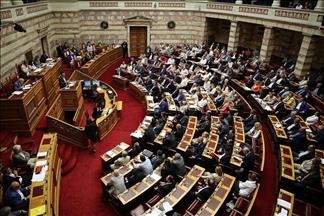
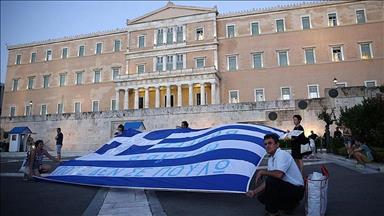
No clear winner emerged from a televised debate among the leaders of Greek political parties late on Wednesday.
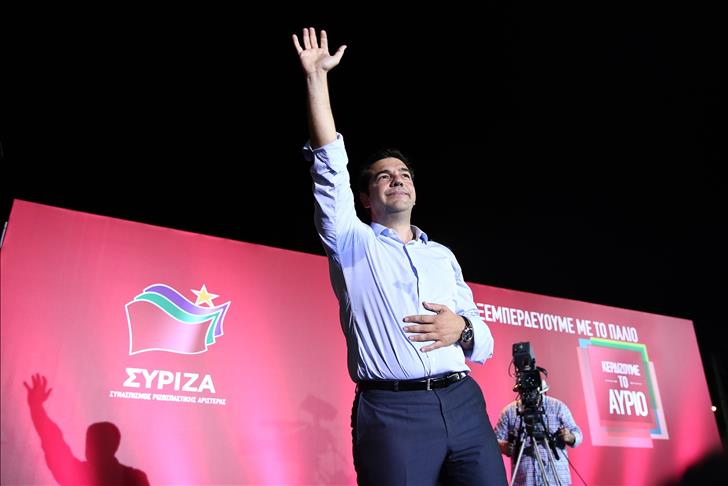
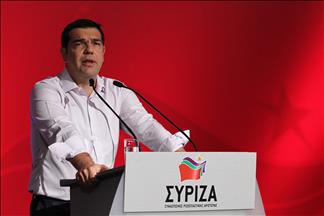
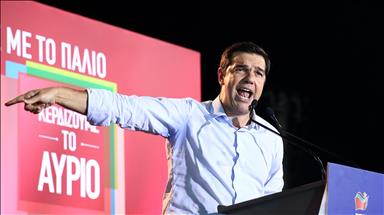
Ahead of the election on Sept. 20, leaders exchanged barbs, and made policy statements, but not even outgoing Prime Minister Alexis Tsipras dominated the exchanges in the four-hour debate on public broadcaster ERT.
With Tsipras’ left wing SYRIZA party tied in the polls with conservative opposition party New Democracy, tension at the debate was high.
The seven leaders included Tsipras, New Democracy leader Evangelis Meimarakis, Socialist PASOK leader Fofi Gennimata, Centrist Potami (River) party leader Stavros Theodorakis, Communist Party (KKE) leader Dimitris Koutsoumbas, Right-wing Independent Greeks (ANEL) leader Panos Kammenos and far-left Popular Unity party leader Panagiotis Lafazanis.
The debated took off with a tough question addressed to Tsipras: The previously ruling SYRIZA party had promised to abolish an unpopular property tax called ENFIA, so why didn’t it follow through while it was in the government?
Tsipras admitted that his coalition government wasn’t able to implement part of the pledges he had made before the last elections, but insisted that “the battle to change things will continue.” He pledged at the debate that the property tax would be abolished if his party were to form a government, but would not say when.
Tsipras maintained, as he has throughout his campaign, that people know how hard his government fought these past six months to defend the country’s rights in his negotiations with Greece’s bailout lenders. “We were obliged to achieve primary surpluses, but with the negotiations we saved €20 billion ($22.4 billion), we managed to stabilize the economy and at the same time we secured €35 billion ($39.2 billion) from the Juncker package,” he said.
But Pasok leader Gennimata came back with an insult: "If there was a Golden Raspberry award for the economy, Mr. Tsipras would definitely be the winner. He turned surpluses into deficits, emptied out welfare funds, and took us to the brink of euro exit and catastrophe."
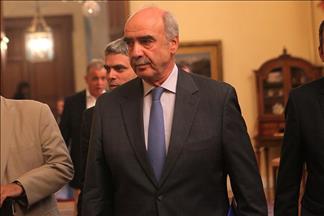
Meimarakis followed up with another barb: “When we were in government [in 2012] we attracted investment to Greece, while Tsipras has chased it all away.”
Meimarakis said at the end of the day, the people will judge how the country did. “In January 2014, the country was doing much better; the special levy was reduced, the tax on oil was reduced, and social security contributions decreased … If we had had the full four-year term our work wouldn’t have been abruptly interrupted and we would have implemented the things we promised.”
Asked about the possibility of forming a coalition government with other parties after the elections, Meimarakis said New Democracy is seeking a government that would have a four-year term to complete its work and invited Tsipras to talks. Tsipras has, thus far, made no commitment to any opposition party.
SYRIZA reversed its position while in government on the bailout, and signed on to an €86 billion, ($99.5 billion), three-year bailout which imposed far-reaching economic reforms.
Popular Unity leader Pangiotis Lafazanis resigned from SYRIZA and took 25 MPs with him. He formed his party based on a Greek exit from the euro, a move that a majority of Greeks oppose. At the debate, he introduced his manifesto in favor of the drachma and said that “The national currency is not a catastrophe. It will boost exports and employment.’’
But his party trails in the polls with only about 5 percent of the vote.
A second debate between just Tsipras and main opposition conservative New Democracy leader Vangelis Meimarakis is scheduled to take place early next week.