By Mustafa Caglayan
NEW YORK
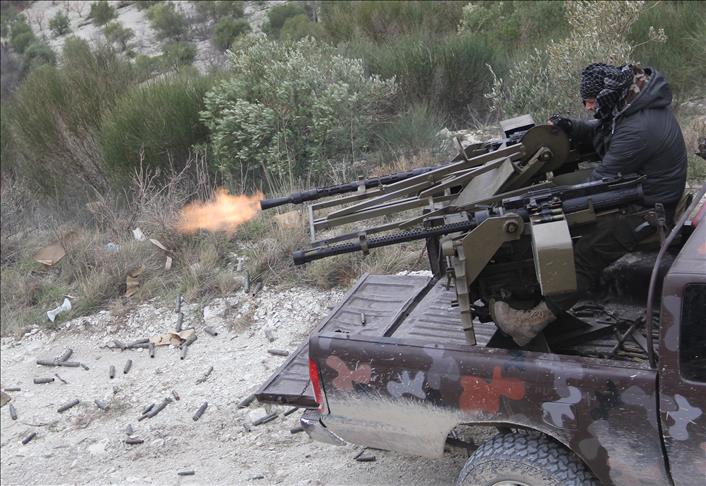
In Syria, a past built on impunity and absence of a unified global stance to hold those who committed war crimes accountable provided a "license to kill" for both the Assad regime and terrorist groups, a Syrian opposition figure said.
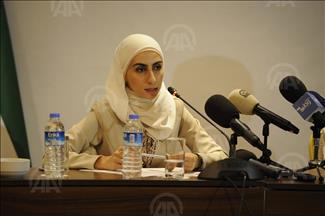
Najib Ghadbian, the special representative to the U.S. for the National Coalition of Syrian Revolution and Opposition Forces, told The Anadolu Agency that extremist groups such as Daesh could not have gained a foothold in Syria if there had been accountability for the regime's atrocities.
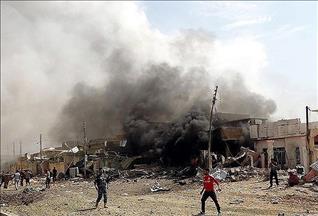
The Syrian civil war enters its fifth year this month, having left as many as 210,000 people dead, according to the UN.
Although the international community long ago concluded that crimes against humanity had been widely committed across the country, the UN Security Council has failed to act and the suffering of the Syrian people has gone unheeded.
"It’s very simple. When you have impunity, it’s a license to kill," Ghadbian said, adding that groups like Daesh might use this lack of accountability as an argument to gain more supporters.
"The Security Council has failed to address the Syrian conflict and we need to keep reminding them," he added.
For this, he said, the coalition would work with "the countries that care about international humanitarian law and about crimes against humanity" to explore alternative ways, such as forming independent commissions or filing lawsuits in European courts to pursue accountability.
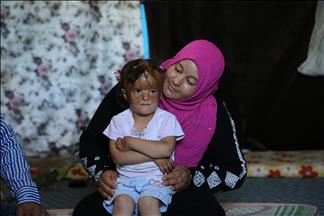
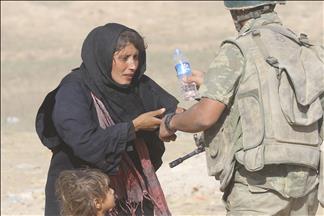
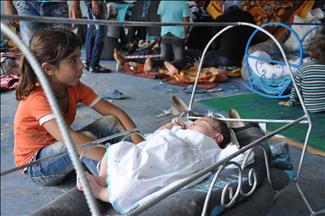
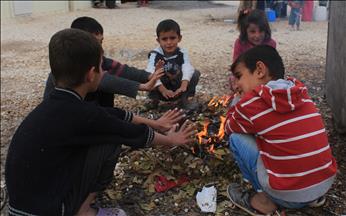
As many as 3.8 million Syrian refugees are registered in neighboring Turkey, Jordan, Lebanon and Iraq as a result of the conflict which started in March 2011 when the regime responded to anti-government protests with a violent crackdown.
With regards to a plan set out by the UN envoy to Syria, Staffan de Mistura, for a freeze in fighting in Aleppo, Ghadbian said the envoy's efforts were yet to offer a "tangible" situation.
De Mistura has been working on a plan he announced last October which envisaged establishing a special "freeze" zone in Aleppo in which fighting would stop, leading to the delivery of humanitarian aid and the build-up of the political process at a local level.
In late February, the envoy said the government accepted the freeze, but only in a small area of Aleppo.
However, some countries, including France, expressed skepticism regarding the initiative, citing the Assad government's unwillingness to agree to conditions that would avoid a regime takeover of opposition-held regions.
Ghadbian said the coalition did not oppose de Mistura's efforts, but the plan did not get much support and its implementation took a long time.
"If you want to introduce any political initiative, you have to bring with you the support of the Security Council," he said. "The point is, show us how you are going to convince this criminal regime to stop the barrel bombings. Show us. This is what we need."