LONDON
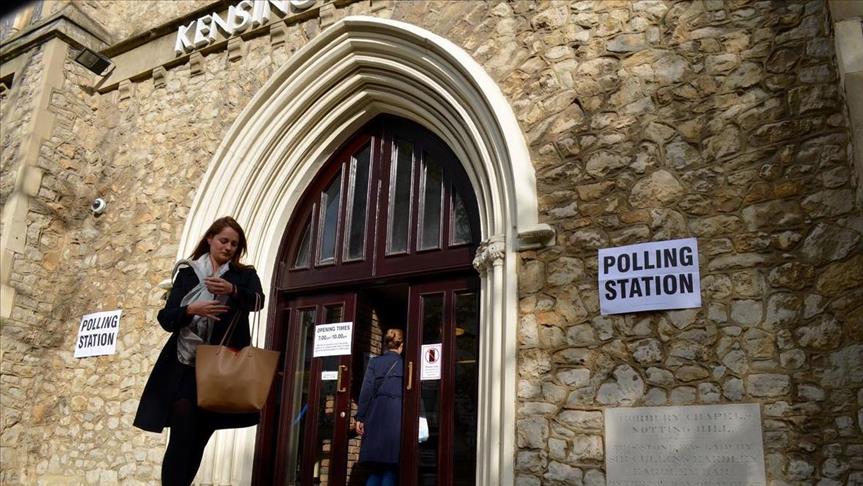
Nearly nine months have passed but Britain’s political classes are still talking about last year’s general election result.
It had been billed the most unpredictable election in a generation because no polling company could say who would win it.
Every pollster, bar none, was adamant the election would be a dead heat between David Cameron’s Conservatives and the center-left Labour Party.
But the result was a clear win for the Conservatives, enough to deliver the party its first parliamentary majority in 18 years.
For the pollsters it was a moment of infamy – and this week, they revealed how they thought they went wrong: they underestimated Conservative backing and overestimated Labour's support.
David Cameron had spent the previous five years in a coalition that dramatically reformed Britain’s welfare state, and many predicted voters would punish him for that.
But voters had not forgotten it was Labour that had been in power when the country’s banking sector was particularly hard hit by the 2007-08 subprime mortgage crisis.
Few believed that voters looking for an alternative to Cameron had found their man in Labour’s leader, Ed Miliband.
As the old parliament was dissolved on March 30, 2015, one polling company – YouGov – put the two parties at a dead heat, giving the Conservatives and Labour 35% each. It set a trend throughout the campaign.
According to the UK Polling Report website, there were 92 polls conducted in the following six weeks up to election day. Three of them separated the parties by more than six percentage points.
After the final votes were counted on May 8, it became clear those three polls were the most accurate. The Conservatives had confounded the pollsters’ expectations for a coalition by resoundingly winning enough seats to form a parliamentary majority.
Cameron himself admitted he was surprised by the outcome. For the polling companies, the response was one of shock: not a single one had been remotely close in calling the final result.
For Paddy Ashdown, a former leader of the smaller Liberal Democrat party, the pollsters had “materially” altered the election’s outcome.
“The effect of the poll was to hugely increase the power of the Conservative message and hugely decrease the power of the Liberal Democrat message, which was ‘you need us to make sure they don't do bad things’,” he said in an interview with BBC radio on Tuesday.
“My view is that the mood of the nation was for a coalition. It wanted the coalition, it quite liked the coalition. And I think it was surprised by the outcome that what they got was a Tory [Conservative] Party with a majority, albeit a small one, and I think therefore there is an argument to be made that it actually materially altered the outcome of the election.”
The British Polling Council (BPC), which represents pollsters around the country, admitted very quickly that something had gone very wrong. It said in a statement the day after the election: “The final opinion polls before the election were clearly not as accurate as we would like, and the fact that all the pollsters underestimated the Conservative lead over Labour suggests that the methods that were used should be subject to careful, independent investigation.”
A few weeks later, BPC chairman John Curtice went even further: “The polls clearly gave the public a misleading impression of the likely outcome of the 2015 election and this shaped the reporting of the campaign.”
Media coverage of the election was visibly affected by the polls: Britain’s press had decided a coalition government was inevitable and spent the campaign trying to persuade readers to vote in a way that would influence its composition.
Conservative-supporting newspapers, for example, said a government led by Ed Miliband would have to rely on parliamentary support from the separatist Scottish National Party. The pro-Labour press warned voters thinking of smaller parties like the Greens or Liberal Democrats that Miliband was the only party leader who could unseat Cameron.
In the months since the election, commentators speculated widely on why the polls were so wrong.
Some said pollsters had not asked their questions in the correct order, causing their respondents to offer inaccurate answers. Others said there had been a ‘late swing’, meaning voters had changed their mind on who to vote for in the last few hours of the campaign.
But on Tuesday, the pollsters’ investigation revealed a different reason for the error: their samples were not representative enough. This meant that the companies had statistically spoken to too many Labour voters in their surveys and not enough Conservative ones.
The panel said in a statement: “The Inquiry panel has concluded that the primary cause of the failure of the 2015 pre-election opinion polls was unrepresentativeness in the composition of the poll samples.
“The methods of sample recruitment used by the polling organizations resulted in systematic over-representation of Labour voters and under-representation of Conservative voters.
“Statistical adjustment procedures applied by polling organizations were not effective in mitigating these errors.”
The full inquiry report, to be published in March, is expected to recommend that British polling companies make changes to the way they collect their survey samples.
That may help the companies deliver more accurate polls ahead of the next parliamentary election, due for 2020.
But it could also mean the British public pay less attention to opinion polls before deciding who to vote for.