Hatice Kesgin
18 December 2015•Update: 18 December 2015
KIGALI, Rwanda
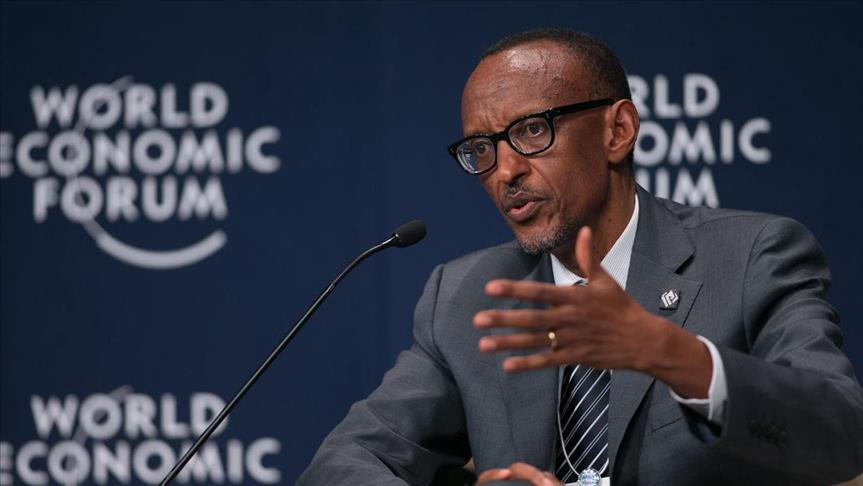
Rwandans have begun voting in a constitutional referendum which could allow incumbent president, Paul Kagame, to extend his rule until 2034.
Polling stations on Friday were filled with voters when they opened at 7 a.m. local time (0500 GMT), and are set to close at 5 p.m.
Long lines of voters lined up outside polling stations across the country, even before opening, reported local media.
Nearly 6.5 million Rwandans will decide if Kagame, who has been in power for 15 years, will be allowed run for another seven-year term in 2017.
The new constitution says that the presidential mandate will be reduced from seven to five years and would be renewable only once.
However, controversy surrounds the start date of a presidential term.
Kagame has been in power since 2000 and is expected to serve his current term of seven years.
However, if the new constitution is approved Kagame will be entitled to a “transitional term” of another seven years, putting him at the helm until 2024.
After 2024, if he wishes, Kagame could again seek another term, but this time not for seven, but for only five years, putting him hypothetically in power until 2029.
If he desires to stay in power beyond 2029, then according to the new constitution, Kagame would have such an option only once, and then -- theoretically -- his term would finally come to an end in 2034.
Kagame, 58, is a former rebel leader, who served as vice president and defense minister between 1994 and 2000. He became president in 2000 after President Pasteur Bizimungu resigned.
The proposed change has been supported by the majority of the country’s political parties plus the ruling Rwandan Patriotic Front.
However, only the Green Democratic Party -- a small opposition group -- has called for a 'no' vote.
The Rwandan parliament claims it has received over four million petitions between June and August requesting Kagame stay in power.
Some of Rwanda’s allies, including the European Union and the United States, have criticized the proposed reform.
The European Union earlier said that "this is a reform that serves the interests of one person".