By Jad Yatim and Enes Kanli
BEIRUT, Lebanon
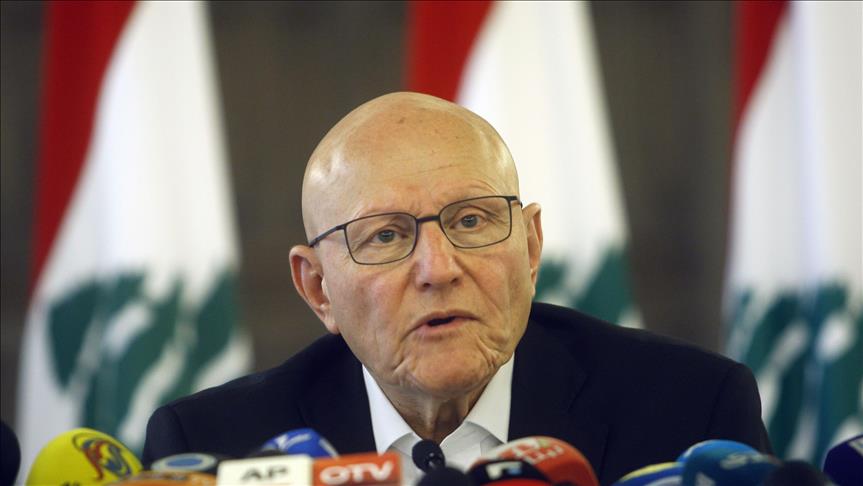
Political experts rule out the possibility that a scheduled visit by Lebanese Prime Minister Tammam Salam to Saudi Arabia will resolve the ongoing political crisis between Riyadh and Beirut.
Last week, Riyadh announced a decision to cancel a promised $3-billion grant to the Lebanese army for the purchase of French arms and a $1-billion grant to the country’s internal security forces.
The move came shortly after Riyadh had carried out a "comprehensive revision" of its relations with Beirut.
One day later, the six-member Gulf Cooperation Council (GCC) declared its "full support" for the Saudi move, while urging Beirut to "reconsider its positions and policies".
In a veiled reference to Shia Iran, the GCC -- comprised of Saudi Arabia, Kuwait, the United Arab Emirates, Qatar, Bahrain and Oman -- voiced its "deep regret" that Lebanese policy had become "hostage to the interests of external regional powers".
Saudi Arabia and some other Gulf States went so far as to warn its citizens against traveling to Lebanon and called on their nationals living in the country to leave.
Saudi Arabia accuses Shia Hezbollah -- Lebanon’s most powerful military force -- of serving as a proxy for Iran and of hijacking Lebanese policy-making.
Since 2012, Hezbollah has sent fighters to Syria to support the Bashar al-Assad regime, a close ally of Tehran. Riyadh, meanwhile, remains one of Assad’s staunchest foes.
Lebanon’s Hezbollah, for its part, has denounced Saudi military intervention in Yemen, where Riyadh is leading a fierce campaign against the Shia Houthi militant group, which in 2014 overran much of the country and which Saudi Arabia accuses of serving Iranian interests.
On Monday, the Lebanese government held an emergency meeting to discuss means of de-escalating the row with Saudi Arabia.
Lebanese Foreign Minister Gebran Bassil, however, said that there would "be a problem" with the Arab Gulf States "if they don’t want to understand the Lebanese position".
He went on to say that, if forced to choose between the "Arab consensus" and Lebanese national unity, "of course we will choose national unity".
Ahmed Ayyash, a political expert and journalist for Lebanon’s An-Nahar newspaper, told Anadolu Agency that a scheduled visit to Riyadh by PM Salam -- if it happens -- "will not include Bassil, who is now persona non grata in Saudi Arabia and the Gulf".
He added, however, that Saudi Arabia’s recent decision to cut military aid would not affect Lebanon’s security or economy.
"American weapons are still flowing into the warehouses of the Lebanese army," said Ayyash.
"And, economically, the situation remains under control," he added, "as Lebanon now hosts huge numbers of Syrian refugees and the international community won’t let it collapse."
Lebanese political writer Qassim Qaseer, for his part, said he did not expect Salam’s visit to Riyadh to materialize -- despite the PM’s meeting last week with Saudi Ambassador Ali Awad Asiri.
He went on to assert that a resolution of the crisis "is not in Salam’s hands but in those of Hezbollah".
Qaseer also agreed with Ayyash that the current political rift would not affect other areas.
"Until now, the dispute is merely political and limited to the media," he said.
Saudi journalist Jamal Khashoggi, meanwhile, said that, while Riyad was trying to avoid a crisis with Lebanon, Beirut had "taken a position against Saudi Arabia and has become a supporter of Iran’s regional project".
Hezbollah "should keep its hands off Lebanese policy", he said, going on to assert that the Shia group was "actively working against Lebanon’s sovereignty".
He added: "It’s time for the Lebanese people to stand up to Hezbollah."
Joseph Kechichian, an analyst at Riyadh’s King Faisal Center for Research and Islamic Studies, said the Saudis "don’t want to topple the government in Lebanon".
"They just want Lebanon to choose between the Arab world and Iran," he said.
"Do they [Lebanon] want to remain part of the Arab world, or do they want Iran’s Welayet al-Faqih system [of Shia religious governance]?" he asked.
"The Saudis are just offering a choice."