ANTALYA
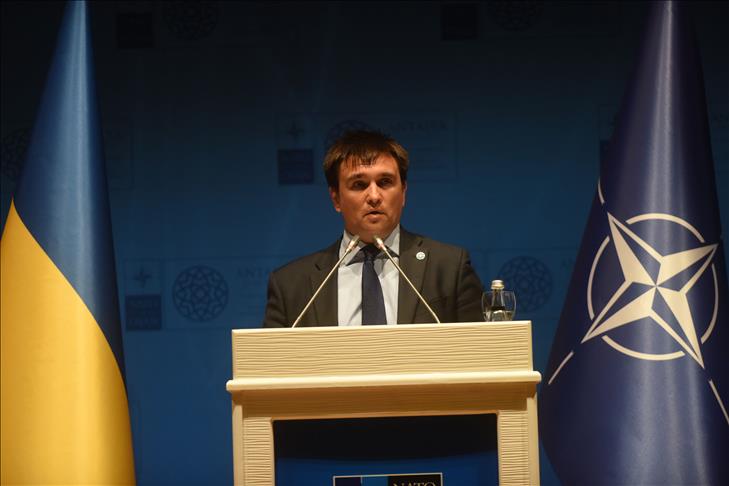
Ukraine was pleased to receive the support of all NATO allies with regards to its territorial integrity, Ukraine’s Foreign Affairs Minister Pavlo Klimkin said Wednesday.
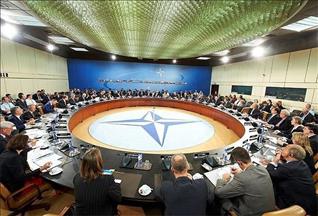
The first day of the NATO foreign ministers meeting in Turkey’s southern province of Antalya ended with Klimkin’s remarks.
“Everyone was talking at the meeting about support for the sovereignty and territorial integrity of Ukraine,” said Klimkin.
Saying it was “extremely important” to hear the messages of support and to hear messages of commitment to reforms in Ukraine, Klimkin said: “I especially express my gratefulness for all allies who have provided for Ukrainian military forces and national guards.”
Speaking at a press conference after the NATO-Ukraine Commission meeting, NATO Secretary-General Jens Stoltenberg reiterated: “We strongly condemn Russia’s aggressive actions and continued violation of international law and its international obligations. We call on Russia to fully abide by international law.”
Stoltenberg also said: “We stand firm in our support for Ukraine’s sovereignty and territorial integrity within its internationally recognized borders and Ukraine’s right to decide its own future and foreign policy course free from outside interference, as set out in the Helsinki Final Act.”
Expressing his “deep” concern about the worsening human rights situation on the peninsula, Stoltenberg said: “We urge Russia to respect the rights and freedoms of the entire local population, including the native Crimean Tatars and other members of the local community and to allow for international monitoring of the human rights situation in Crimea.”
Fighting in eastern Ukraine has left more than 6,000 people dead since April 2014, according to the UN.
“We condemn Russia’s ongoing and wide-ranging military build-up in Crimea, and are concerned by Russia’s efforts and stated plans for further military build-up in the Black Sea region, which will potentially have further implications for the stability of the region,” said Stoltenberg.
Moscow has notably focused its weight in the military field in the Crimea region and deployed an estimated 40,000 troops with tanks, ships and warplanes in the port city of Sevastapol, one year after its annexation.