Michael Hernandez
19 April 2016•Update: 26 April 2016
By Michael Hernandez
WASHINGTON
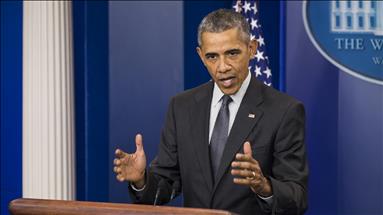
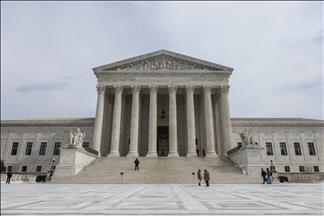
The Supreme Court appeared deadlocked Monday over U.S. President Barack Obama's plan to shield millions of undocumented immigrants from deportation, potentially jeopardizing the policy.
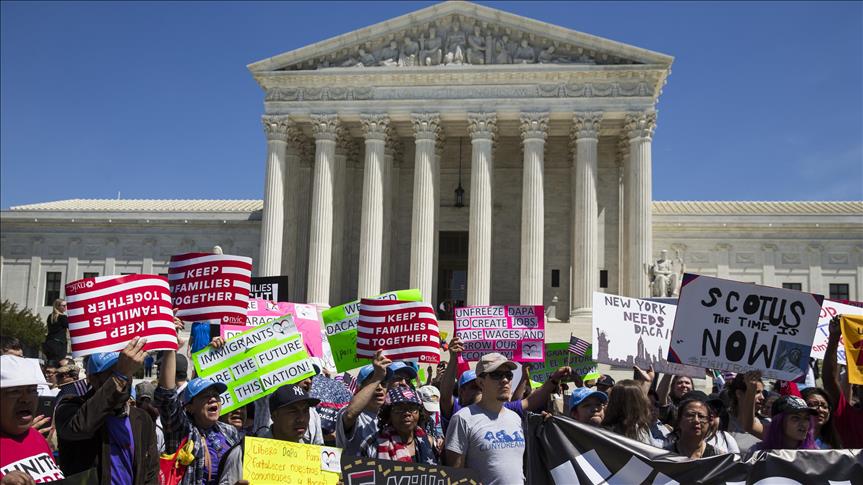
The top court is likely to be split 4-4 along ideological lines as hundreds of immigration advocates protested outside.
Conservative justices appear to side with Texas and 25 other states that say the plan usurps powers that belong to Congress and forces undue financial burdens on them.
Liberal judges, meanwhile, maintain that Obama was acting within his powers when he allowed millions of immigrants living in the country illegally to work under a quasi-legal status using executive action in 2014.
The plan appeared to lack support from two key justices who are widely seen as pivotal to the proposal’s success: Chief Justice John G. Roberts Jr. and Justice Anthony M. Kennedy.
“What we’re doing is defining the limits of discretion. And it seems to me that is a legislative, not an executive act,” Kennedy, who is widely seen as a swing vote, said according to Politico. “That’s just upside down.”
Roberts also appeared to support a Texas court’s earlier ruling that the plan pushes costs on to states, asking, ““Isn’t losing money the classic case for standing?”
Roberts quoted Obama who earlier in his administration said he did not have the powers he exercised in 2014.
"What was he talking about?” he asked.
Justice Antonio Scalia’s death in February has increased the likelihood of a stalemated court as senate Republicans resist efforts to hear any Obama nominee to fill the vacancy.
Obama nominated Merrick Garland to fill the post in March but he has yet to receive a confirmation hearing in the Senate.
If the justices remain split the lower court's ruling would be upheld but would not be applied nationwide.
The oral arguments might not be indicative of where the judges ultimately stand and they may work to broker some sort of compromise behind closed doors.