Anadolu Ajansı © 2026


As private companies launch more satellites, cargo and even tourists into orbit, a decades-old legal question has returned to the forefront: who is ultimately responsible for what happens in space?
The answer, for now, still lies in a framework built during the Cold War – long before billionaires, startups and commercial space stations entered the picture.
Now, experts say the rapid expansion of private space activity is testing a legal system designed for a very different era, when only governments had the technology to reach orbit.
“The main gap is that, because of their age, these treaties do not at all deal with the private sector,” said Frans G. von der Dunk, professor of space law at the University of Nebraska-Lincoln.
“All the obligations, rights, duties and clauses address states,” he told Anadolu.
But because international law places liability on states rather than corporations, private actors are largely shielded from direct responsibility for damage. Experts also warn that uneven national rules could allow companies to exploit regulatory differences to minimize oversight.
The cornerstone of space law is the 1967 Outer Space Treaty, negotiated at the height of the US-Soviet rivalry.
At the time, space was the domain of superpowers. The treaty set out broad principles that still govern activities beyond Earth today, including that countries cannot claim sovereignty over outer space or celestial bodies and must use space for peaceful purposes.
“Initially, the treaties were formulated around nation-states because the only two entities that had the ability to go into space were the former Soviet Union and the US,” Joanne Gabrynowicz, professor emerita of space law at the University of Mississippi School of Law, told Anadolu.
The treaties were intentionally written in general terms, allowing them to remain relevant as technology evolved. But that flexibility also means they offer limited guidance for today’s commercial space environment.
Despite the rise of private actors, international space law places responsibility squarely on states.
Under Article 6 of the Outer Space Treaty, countries must authorize and supervise all space activities carried out by entities under their jurisdiction, including private companies.
“Space law exists at the international level, and those are the treaties and agreements, and those govern international space. Then, at the national level, nations govern and regulate their space,” Gabrynowicz explained. “As far as companies are concerned, they will be governed by their nation of origin.”
That structure means governments are legally accountable for what their companies do in space.
“If Elon Musk at SpaceX does something in outer space which is against international law, the US as a country is responsible to every other country for these violations,” von der Dunk said.
He added that the same applies to liability for damage.
“If a SpaceX rocket were to crash into Mexico and cause a billion dollars of damage under the international treaty, it is not Elon Musk – it is the US government which has to pay for the damage.”
As a result, most countries regulate private space companies through licensing systems that require approval before launches or operations.
As commercial activity accelerates, experts warn that the state-based system is beginning to show strain.
The global space economy has expanded rapidly in recent decades and is increasingly driven by private launch providers and satellite networks.
But because international law focuses on states rather than companies, regulation varies widely between countries.
Some governments impose strict safety and environmental standards, while others may adopt lighter rules to attract investment.
“There is a risk that states engage in what I might call a race to the bottom,” von der Dunk said, warning that competition could weaken safeguards on issues such as space debris.
Without effective oversight, he said, space could become increasingly unstable.
“Without that imposition of responsibility and liability … space might be a Wild West where you have people who have the money who think: ‘I can do something fantastic, and nobody will stop me,’” he said.
The debate is also gaining urgency as competition intensifies around the moon, with the US and China racing to return astronauts and establish a sustained presence on its surface.
NASA plans to land astronauts on the moon in 2028, while Beijing has set a target of 2030, though timelines on both sides remain subject to delays and technological advances.
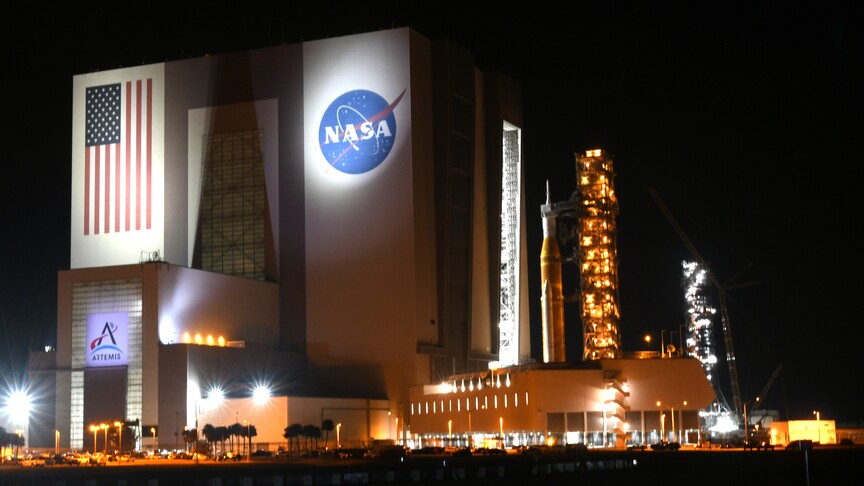
One emerging framework for cooperation is the Artemis Accords, developed alongside NASA’s Artemis program, which recently sent astronauts around the far side of the moon.
The accords reaffirm core principles of the 1967 Outer Space Treaty but also introduce new concepts such as “safety zones” to prevent interference between missions – a provision some legal experts say could edge toward de facto territorial control.
Around 60 countries have signed the accords, but China and Russia have not. Moscow has criticized the initiative as an attempt to shape international rules in Washington’s favor.
Instead, China and Russia are advancing an alternative through the International Lunar Research Station (ILRS), a planned scientific base on or around the Moon. Around a dozen countries have expressed support for the project.
Despite these challenges, space law remains fundamentally international.
“Space is, as you can imagine, an international arena,” von der Dunk said. “It doesn't belong to any particular nation.”
Countries negotiate rules collectively, primarily through the UN Committee on the Peaceful Uses of Outer Space, where governments discuss guidelines and potential agreements.
But that cooperative structure also means reaching consensus can be slow.
“If there is to be a new rule that everyone agrees to, you need everyone to agree, or at least the major spacefaring countries,” von der Dunk added.
At the same time, reaching new global agreements has become increasingly difficult amid geopolitical tensions.
“The obstacle is not the law,” Gabrynowicz said. “The obstacle is the political will.”
Officials involved in global space governance argue that existing treaties provide a strong foundation.
“The foundation of space regulation and law will always be, I hope, but for sure today … the five UN space treaties that were drafted and adopted between the 1960s and the 80s,” Rosanna Hoffmann, lead for space law and policy at the UN Office for Outer Space Affairs, told Anadolu.
She said the treaties were deliberately designed to set broad principles rather than detailed regulations.
“The treaties have very high-level principles, such as that states need to authorize and supervise activities by non-governmental entities. But the treaties don't say how this should be done,” she added.
That flexibility allows national governments to develop their own regulatory systems while incorporating input from industry.
Rather than rewriting the core treaties, experts say new agreements and technical guidelines are gradually filling governance gaps.
One example is the Artemis Accords, a US-led multilateral framework tied to lunar exploration.
Gabrynowicz said the initiative reinforces existing space law principles while building cooperation around new missions.
“It started out by repeating the most important principles in the Outer Space Treaty and other space treaties,” she said.
Experts stress that cooperation remains essential because orbital hazards affect every country.
International bodies are working on practical issues such as space traffic management and debris mitigation as satellite numbers surge.
“If you have a cloud of debris, everybody will get hurt,” von der Dunk noted. “Space debris does not discriminate.”
news_share_descriptionsubscription_contact