Hajer M'tırı,Bilal Müftüoğlu
17 March 2016•Update: 19 March 2016
By Hajer M’tiri and Bilal Muftuoglu
PARIS
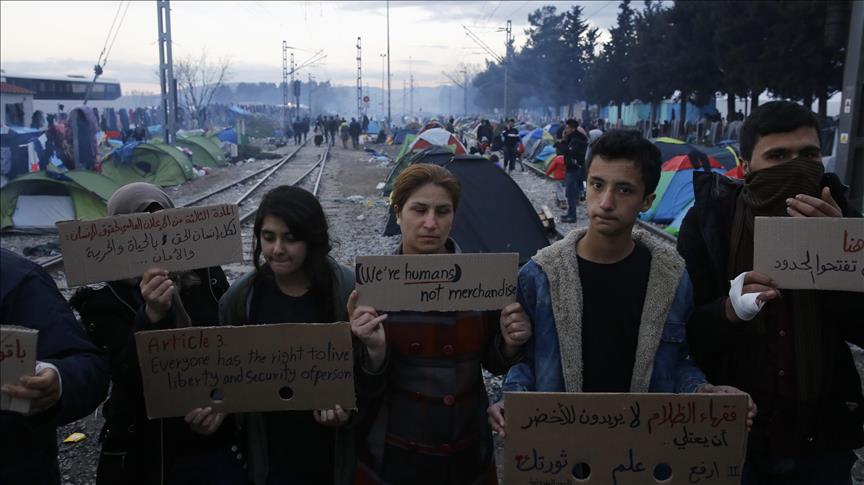
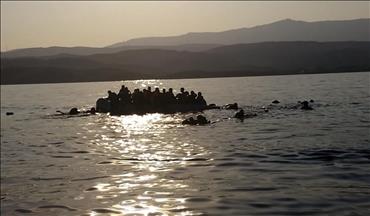
As the European Union and Turkey negotiate the fate of millions of refugees, the crisis reflects the limited capabilities of Europe and its “unprepared” political class, Pascal Lamy, former director-general of the World trade Organization has told Anadolu Agency.
The former senior French official, who currently holds the honorary presidency of the Jacques Delors Institute, said the crisis has been a source of tension not only between Turkey and the EU, but also between EU member states over the distribution of refugees.
When asked if it is normal that the refugee crisis has singularly dominated the European agenda, especially at the economic level, for months? The answer for Lamy is "yes".
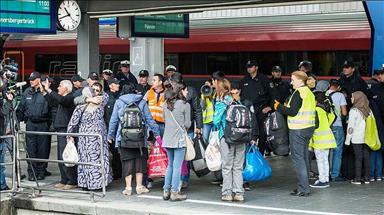
"First of all it [the influx] was unexpected; it was a big shock," Lamy says, recalling that receiving over a million refugees requires a prior increase in capacity.
"We can’t make a school overnight. We can put up tents for a while but if you are going to put on social housing, we must speak of a period of three-to-four years [of pre-preparation]," he continues.
Besides the logistical and economic demands, it was mainly the "traditional" political class which was unprepared for a stream of this size, says the former WTO head.
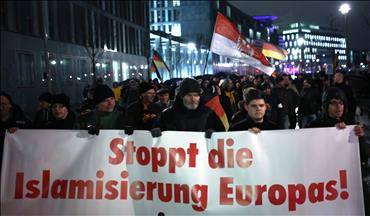
"Traditional politicians have lost this battle; we have not worked well enough," Lamy said, adding that political leaders were "caught" by public opinion, which in these turbulent times, has turned towards populist movements.
According to Lamy, several surveys revealed that in each European state, the local population overestimates the number of refugees living in their country, sometime by as much as three times the actual number.
For him "it shows that populist movements have gained [ground in] a mental and ideological battle".
"It's a real deep political problem because people vote based on their perceptions," he added.
-Raising questions on EU structures
For Lamy, the refugee crisis does not only reveal a lack of preparation at the European level but it also “calls into question the very foundations of the European Union”.
"This is a key issue for the European project because it is a matter of solidarity," Lamy said.
"The discussions around the table of the European Council are tough debates because they lay bare a cornerstone of the European structure, which is solidarity," he explained.
During these debates, which remain unfinished in terms of an ongoing Turkey-EU summit, the countries of Western Europe require new members of the EU to accommodate migrants, in the name of "solidarity", Lamy continued.
He said the same solidarity problem also exists inside the Schengen area: "The external borders of Schengen are not made because we had not integrated into the institutions of solidarity represented by these boundaries. In matter of facts, it was Europe's borders but they were not institutionalized nor symbolized as borders.”
- ‘Reason and passion’
Walking away from the refugee crisis would affect the future of Europe, says Lamy. However, this trend [withdrawal] is more and more marked with the gain of popularity by extremist parties:
“We are in a time when the passion coefficient is higher than normal… the articulation between reason and passion is a bit difficult."
Leaving the Schengen area, for example, as has been proposed by some political forces in Europe to deal with the refugee crisis, can only generate costs and bring in return "zero-percent profit," said the former European Commissioner.
The disappearance of Schengen involves a waiver of free movement for 99 percent of people, yet "it will not prevent the one percent of ‘potential terrorists’,” Lamy said.
Lamy said that the flow of refugees could actually be beneficial to the European economy with the integration of long-term refugees. “The figures, studies, history show that the integration of people from outside is always more economical.”
"The political horizon is not necessarily the horizon of economists,” he added ruefully.
“Economic forces and phenomena obey reason; … political phenomena obey passions,” he concluded.