Aide to German chancellor rejects criticism of Turkey
Says opposition criticism of Turkey 'counterproductive' for alleged inaction in ISIL-besieged border town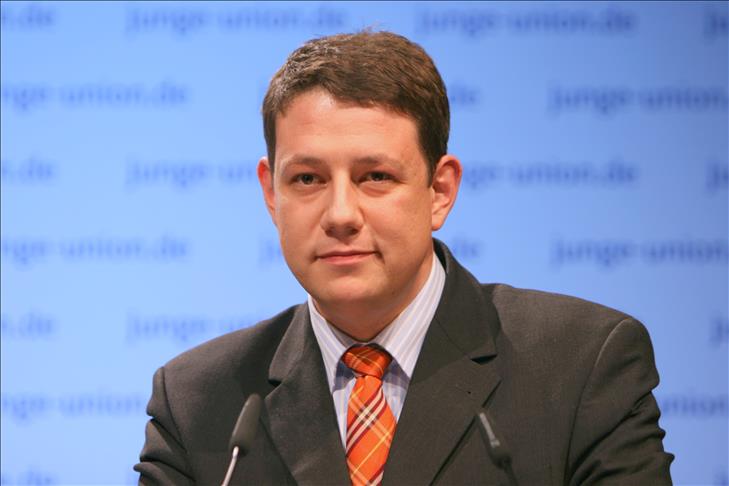
BERLIN
A top aide to the German chancellor has rejected opposition parties' criticism of Turkey for its alleged inaction in an ISIL-besieged border town, calling any attack on its NATO ally "counterproductive."
Philipp Missfelder, a top German lawmaker and foreign-policy spokesman in Chancellor Angela Merkel's Christian Democratic alliance, told daily Neue Osnabrucker Zeitung on Thursday that such "Accusations and suspicions... make no sense and they are counterproductive for foreign policy.”
“Turkey continues to be a significant and strategic partner for us,” he underlined.
German parties The Left and The Greens have increased criticism of Ankara this week, claiming it is doing nothing to support the Syrian Kurdish population who are under siege from the Islamic State of Iraq and the Levant (ISIL) in the town of Kobani, which lies a few kilometers from Turkey's border.
Britain's foreign secretary said Wednesday that Turkey was aware of the situation in Kobani.
"Clearly, on their border, this is of enormous concern... and they recognize that," Philip Hammond added.
He explained that there were different duties inside an international coalition set up to tackle ISIL, which has been flying bombing raids against its positions, but did not elaborate as to exactly what they were.
He said that the retired U.S. general leading the coalition is due in Turkey on Thursday and Friday to discuss what role it can play to stop the advance of ISIL.
"We wait to see exactly how Turkey will make its contribution," he said.
ISIL launched an offensive in mid-September on Kobani, also known as Ayn al-Arab, and recently captured some surrounding villages. Since then, more than 180,000 Kurdish refugees have fled across the border.
German opposition parties have called on Merkel to provide support for the Syrian Kurds and increase pressure on Turkey. Germany is home to around 700 thousand Kurdish immigrants and they traditionally vote for The Left and The Greens.
Missfelder, however, ruled out military support Thursday.
“Any arms supply to Syrian Kurds would in the short or long term fall into the hands of PKK [the outlawed Kurdistan Workers Party]," he said. "It [the PKK] is forbidden as a terrorist organization in Germany and should continue to be so.”
He underlined that a major problem with supplying Syrian Kurds is that in Syria - "unlike Iraq"- there is no proper state structure through which military aid can be transferred to fighters battling ISIL.
The German government decided in August to supply military goods - arms and ammunition - to Iraqi Kurdish Peshmerga, with the goal of stopping ISIL’s advances in northern Iraq.
ISIL, which already controls parts of Syria, has extended its reach into Iraq since June 10, when it seized Iraq's second-largest city Mosul. Violence conducted by ISIL has claimed more than 1,400 lives in Iraq, and caused 1.2 million Iraqis - including Turkmen, Arabs, Christians and Ezidis - to flee their homes.
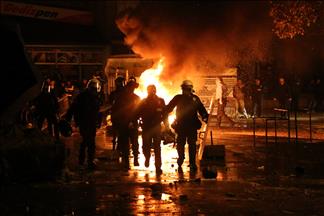
The Turkish government has come under growing pressure to halt the relentless advance of the group with thousands of protestors taking to the streets of the country Tuesday to protest what they see as the Turkish government’s inaction.