ANKARA
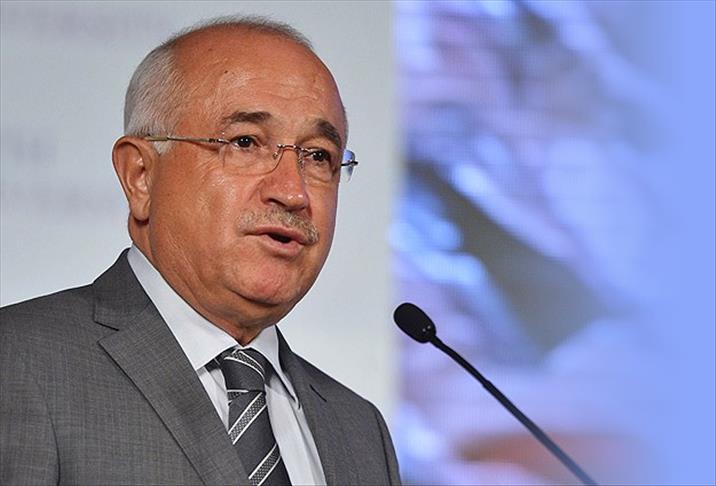
Speaker of the Turkish Parliament Cemil Cicek said on Thursday Turkey could champion a culture of reconciliation if it managed to finalize ongoing multi-party efforts to successfully draft the country's new constitution to replace one that still bears traces of military tutelage even after numerous amendments.
Cicek spoke at a research center in the capital Ankara on the now 20-month-old process of building Turkey's new constitution.
"We emphasize quite frequently that there is no culture of reconciliation in Turkey," Cicek said. "Maybe for the first time, by being able to agree on the most fundamental piece of legislation through reconciling our differences, we'll have the opportunity to leave a good legacy in our democratic history, and a prime example of culture of reconciliation for future generations to emulate."
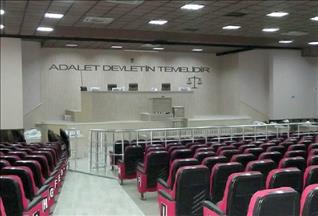
The current constitution is a result of the 1982 military coup, whose perpetrators are currently being tried by the Turkish judiciary. The constitution was amended 17 times over the last 31 years it has been in force.
"We're faced with a constitutional challenge every thirteen to fourteen months, sometimes new problems arise in as short as two months," Cicek said. "I don't know if there's any other constitution in the world that's constantly debated every single day."
Repeated amendments have also damaged judicial stability, and are in many ways against legal philosophy, he said.
Gezi protests as a result of poor constitutional rights
Turkish Parliament Speaker said reasons abound as towhy Turkey needs a new constitution: The current one is ineffective in governance, not conducive to political stability, and incompatible with the European Union acquis. In addition, he said, it functions poorly in checks and balances, and fails to meet the societal demands for rights and freedoms.
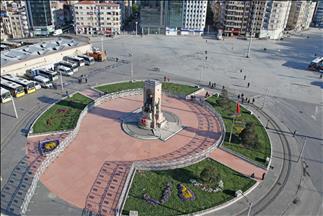
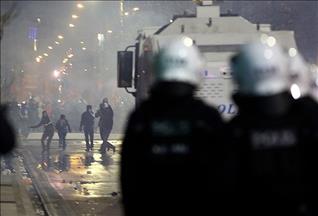
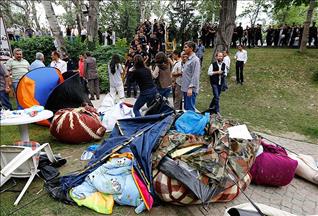
Cicek believes the latter is one reason that factored in when a small environmental demonstration turned into widespread anti-government protests that have lasted for over two weeks.
"If we take an optimistic perspective and consider the [Gezi Park] protests to be solely the expression of legitimate demands for rights and freedoms, then all this is in part related to limitations of the current constitution."
A new president & a new constitution
Cicek said Turkey's constitutional woes would be aggravated if the current constitution cannot be replaced before the country holds a presidential election next year, when the president, with far-reaching representative powers, will be elected by the public rather than by the parliament.
"We'll then be discussing whether the president or the government is right in their policies, and the opposition will be totally ignored," he said.
This would also result in the executive branch housing two foci of power, which would inevitably come into conflict, he said.
"As the president will be elected by the public in the next two successive elections, the new president will strive to do not only what's right, but also what's politically profitable," Cicek said.
"If we consider this possibility to be fine, then I'll leave my arguments aside," he said. "But if we believe such a circumstance would engender serious problems, then it means that in addition to all that has been said so far in favor of a new constitution, we have just found yet another rationale."
Cicek had said that it was not possible to understand EU countries' provocative and unfair approach to the Gezi Park incidents when they ignore similar interventions in their member states.
Cicek's comments had come in Ankara in response to a non-binding resolution adopted by the European Parliament (EP) in regard to Turkey.
"The EP's approach to Gezi Park incidents hurt their credibility," Cicek underlined and said that today's resolution at the EP on the Gezi Park incidents was not objective and did not comply with international laws.
englishnews@aa.com.tr