Bahattin Gönültaş,Fatih Erkan Doğan
04 March 2016•Update: 05 March 2016
ANKARA
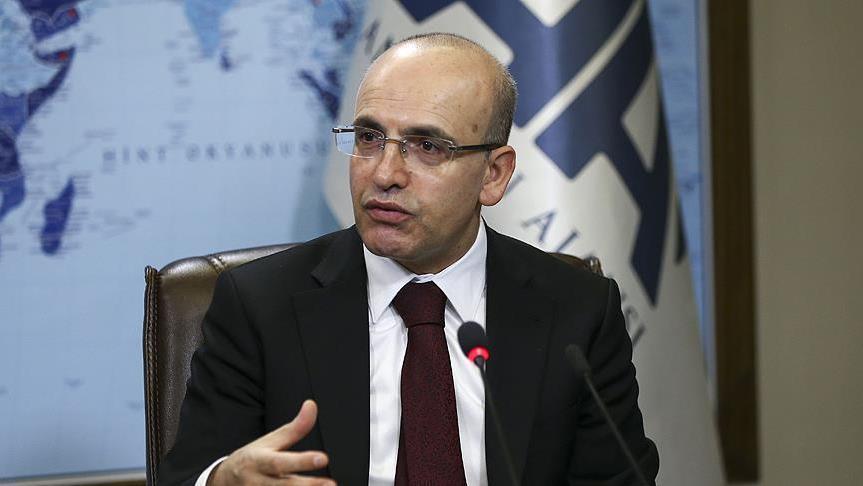
Implementing a presidential system would help Turkey keep up with the world’s rapid pace of development, said Deputy Prime Minister for the Economy Mehmet Simsek on Friday.
Speaking at AA Editors’ Desk, Simsek said: "Let’s talk about a presidential model, which would suit the country’s needs in order to not to create an authoritarian system.”
Simsek said the country’s opposition parties are deliberately using the issue as political fodder rather than seriously sharing ideas with the public about a possible presidential model that would fit Turkey’s needs. If there is stability and the ability to enact predictable reforms, then the country will develop rapidly, he said.
There is a debate over changing Turkey’s existing parliamentarian system into a presidential one.
Simsek also said that in the wake of the 2008 global financial crisis, expectations of central banks have risen unrealistically.
"It was expected that central banks could be like a ‘superman’. There is no such thing,” he said. “There is no possibility that banks’ monetary policy could single-handedly lift up the global economy. These expectations are mistaken.
“Central banks can’t solve problems alone. They can (only) temporarily provide some relief and ease”.
Simsek also praised the reforms enacted under AKP rule.
"Thanks to AK Party governments, many reforms were enacted in Turkey and the country has developed rapidly in this period. Turkey is developing rapidly only if reforms can be implemented and there is predictability and stability in governance," he said.
He said Turkey has developed rapidly during periods of political stability when the county was governed by parties who could form a government alone rather than coalitions.
"A permanent solution to avoid the path of coalition governments is the presidential system," he said.
Both globally and at the national level, monetary policies have failed to revive waning economies, he said.
"The world economy is currently consumed with its [battle against economic slowdown] in many areas and has failed to get the results it hoped for. There is a need for structural reforms to put the world economy on a permanent path to recovery," he said.
Simsek said if there were a coalition government in power, Turkey’s economy would face much more difficult challenges amid global economic problems.
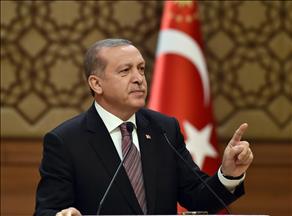
On President Erdogan's calls for low interest rates, Simsek said, "Our president is right on high interest rates, as with good reason he wants more investment, since investment is vital for a country’s development”.
But he stressed that steps must be taken in order to permanently reduce interest rates to the desired levels.
"With increased domestic savings, the deepening of capital markets, lowering inflation to single digits, and minimizing the country’s risk premiums, interest rates will come down," he predicted.
According to the World Bank, Turkey’s savings rate is 14 percent of its gross domestic products (GDP).