Toll proposal to limit traffic in Istanbul spurs debate
A report proposing the establishment of a fee to enter Istanbul's central areas by car has sparked controversy across the city, but it has also stirred up new ideas on how to limit congestion in the city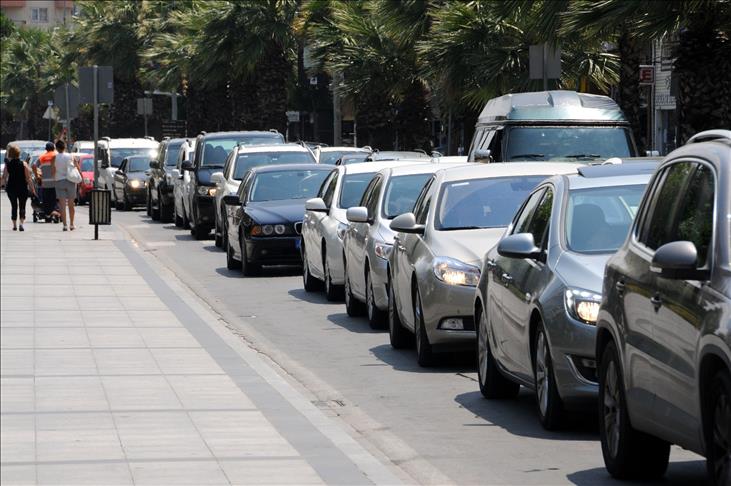
By Esra Kaymak Avci
ISTANBUL
If an Istanbulite tells you he loves soaring through the city in his car during the day, he is lying.
As congested roads daily fill with honking sounds in Istanbul, a recent official report on possible transportation policies, made public last August, suggested the implementation of an entrance fee to enter central areas of the city in order to reduce traffic.
The measure has sparked debate among city residents and in the media, as evidenced by numerous articles in such dailies as Vatan or Hurriyet. The prospect of paying an entrance fee has been disquieting to car owners who consider sufficient, their additional expenditures.
Count 4.25 Turkish liras ($1.9) each time you cross from the European to the Asian side over one of two bridges (according to data form the Turkish General Directorate for Highways). Add 10 to 15 Turkish liras ($4.5 to $6.7) if you want to park your car in one of the central districts of Istanbul, for more than four hours in a day (according to Istanbul Municipality’s parking department ISPARK). Take into account an average of 375 Turkish liras ($167) to be paid annually to the directorate of tax administration for motor vehicles, and almost 370 Turkish liras ($165) for automobile insurance on a brand new car, it indeed becomes quite expensive to be a driver in Istanbul: around 4,730 Turkish Liras ($2,112) each year.
According to 2012 data from Europe's biggest navigation systems company TomTom, Istanbul is the second worst city after Moscow in terms of traffic congestion in Europe.
The debated report on transportation policies by Faruk Cirit of the Turkish Development Ministry proposes to add a toll in order to be able to enter the city center, a measure that has proved effective in certain European capitals.
The reports gives the example of Oslo, in Norway, which imposes a toll of $4.8 to “250,000 vehicles each day,” easing traffic to a great extent, Cirit writes.
In London, a similar measure, implemented in 2003, brought a 21 percent decrease in car traffic by 2009, according to a report by Urbanet Analyse, Norwegian company specialized in market analysis on transportation issues.
Still, some believe there are other ways of limiting traffic in Istanbul, without burdening drivers financially.
Mustafa Ilicali, who is a transportation consultant for the Istanbul Metropolitan Municipality, says that the main reason for Istanbul's traffic jams today are the almost 85 percent of cars that don't have an additional passenger.
Ilicali, also a professor at Bahcesehir University's Transportation Engineering department, proposes separating one of the lanes during peak hours and reserving it only for public transportation vehicles and cars with more than two passengers in order to decrease the number of cars by 30 to 35 percent.
"The speed on that lane would be about 30 to 35 kph while the others would stay at 10 kph -- as it is now during peak times. People will notice this difference between the lanes and will be attracted by it. They will share it on social networks and with their friends and the number of cars with less than three passengers will decrease," Ilicali stresses.
He also suggests increasing service by sea in, which represents only 3 percent of the city’s transportation in Istanbul.
However, City-line Ferries’ general director, Suleyman Genc, has previously told the AA that the sea bordering Istanbul and the Bosporus were already used at full capacity.
In recent years though, the city has tried to tackle the city’s traffic problems head-on.
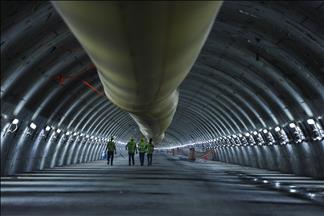
The Marmaray -- the railway tunnel underneath the Bosporus Strait -- has already transported around 21 million passengers in the first six months following its inauguration, last year in October, according to data from the Turkish Statistical Institute.
The Metrobus system, which was implemented in 2007, now spans 52 kilometers, linking more than 40 stations. It has become one of the most popular public transportation services of Istanbul. Ilicali estimates that around 80.000 vehicles have disappeared from daily traffic since its inauguration.
While a noticeable improvement, these measures have proven insufficient to diminish traffic flow in such a way that drivers’ frustration diminishes.
The city does plan to add more than 600 km of metro railway to the current 150 km by 2019.
Moreover, a third bridge over the Bosporus, is currently in construction and is expected to be ready by the end of 2015. IC ICTAS Construction Company, which is building it, claims it will be the widest (59 meters), longest (1048) and highest (320) bridge in the world.
But, in the meantime, residents of Istanbul continue to honk their horns.