WASHINGTON
The U.S. would like to see Turkey play a bigger role in the ongoing campaign against ISIL, as the U.S.’ special envoy for the anti-ISIL coalition prepares to visit Turkey later this week.
State Department spokeswoman Jen Psaki said the U.S. would “certainly” like to see Turkey do more in the anti-ISIL effort.
“Turkey is determining what larger role they’ll play broadly as a part of the coalition moving forward, and that conversation is ongoing,” she told reporters Tuesday.
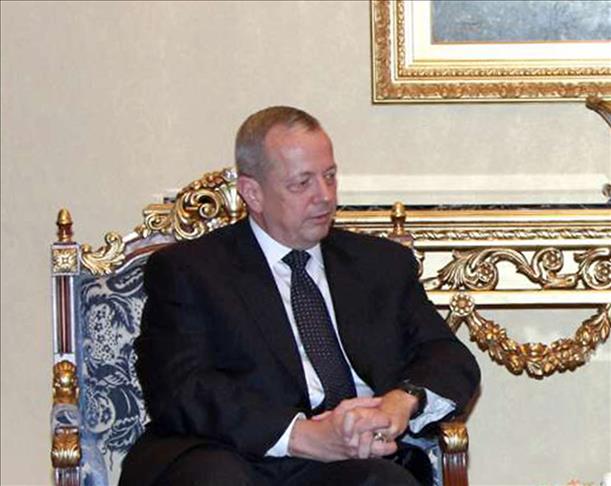
Gen. John Allen, the U.S. special envoy for the anti-ISIL U.S.-led coalition, and his deputy, Ambassador Brett McGurk, will be in Ankara Oct. 9-10 to meet with Turkish officials, Psaki said.
The meetings will address “basic logistical questions” regarding Turkey’s role in the coalition, White House press secretary Josh Earnest told reporters aboard Air Force One.
“There will also be a discussion about what Turkey’s political leadership perceives to be their interest in this region,” he added. “It is our view that there is a clear interest that Turkey has in working with the international coalition -- or international community to deal with the threat that's posed by ISIL, notwithstanding whatever other political interests they may have there.”
Secretary of State John Kerry spoke twice in the last two days with Turkish Premier Ahmet Davutoglu about the ISIL challenge and the group’s attempts to seize control of the Syrian border town of Kobani from Kurdish forces known as the People’s Protection Units, or YPG.
The YPG is the armed faction of the Kurdish Democratic Party, or PYD, which Turkey considers to be an offshoot of the Kurdistan Worker's Party, or PKK, militant group that has for decades waged a bloody insurgency in Turkey. The U.S. and EU have listed the PKK as a terrorist organization. Turkey also accuses the PYD of supporting Syrian President Bashar al-Assad.
Psaki confirmed the U.S. has contact with the PYD, through intermediaries, but did not elaborate further.
On Tuesday, Turkish President Recep Tayyip Erdogan warned that Kobani was about to fall to ISIL.
“Certainly, no one wants to see Kobani fall, but our primary objective here is preventing ISIL from gaining a safe haven,” Psaki said.
The U.S. and partner nations carried out six airstrikes against ISIL near Kobani since Sunday.
Turkey has been pushing for the establishment of a no-fly zone and safe haven in Syria near the Turkish border as a priority it views as necessary if the U.S.-led coalition wants to join forces with Ankara against ISIL.
Davutoglu told CNN on Monday that Turkey is prepared to send ground forces to help eradicate ISIL in Syria if it gets international assurances for its borders and the removal of the Syrian regime.
www.aa.com.tr/en