Mücahithan Avcıoğlu
27 July 2026•Update: 27 July 2026
- Mehmet Demiroglu says alliance’s deterrence increasingly depends on joint capability development, technology integration, and defense industry cooperation
- Hurjet’s planned export to Spain strengthens Türkiye’s position in European and NATO defense ecosystem, Demiroglu says
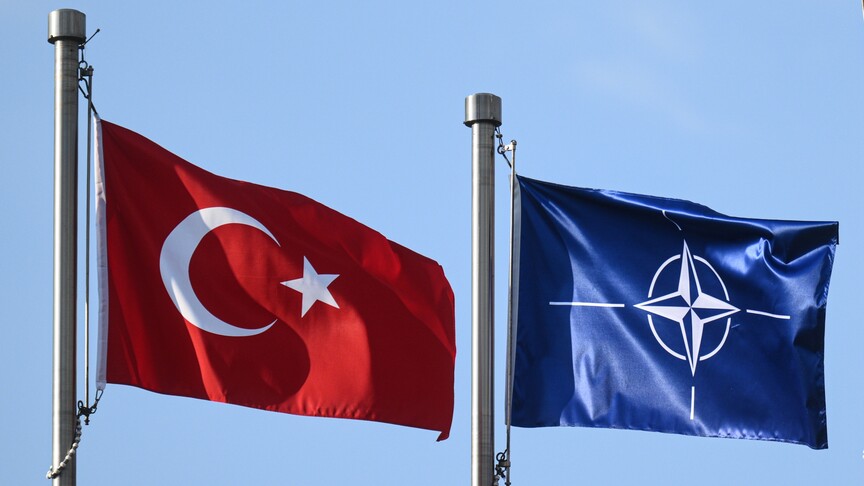
Türkiye is making a strategic contribution to NATO’s future security architecture through its technology development capacity, engineering expertise and defense industry cooperation, the CEO of Turkish Aerospace Industries (TUSAS) said Monday.
Mehmet Demiroglu participated in an event, titled Perspectives from Ankara: The security and defense implications of the NATO Summit, hosted by the UK-based think tank Chatham House in London.
Demiroglu said on the Turkish social media platform NSosyal that the panel addressed trends shaping the defense industry, evolving security requirements, and the transformative impact of technology.
Discussions also focused on joint capability development, technology integration, and cooperation among NATO defense industries, as well as Türkiye’s strategic role in this transformation.
He said the Turkish defense industry had moved beyond merely developing military platforms and become a strategic stakeholder in the emerging security architecture shaped by the “NATO 3.0” vision.
Demiroglu said Türkiye will continue contributing to NATO’s future security architecture through its ability to develop technology, its engineering strength, and its approach to cooperation.
Production capacity central to collective deterrence
Demiroglu said production capacity, technological development, and joint industrial projects were becoming key elements of NATO’s collective deterrence.
Under the new security paradigm, security depends not only on military strength but also on a robust defense industry, sustainable manufacturing capacity, resilient supply chains, technological superiority and cooperation among allies, he said.
Türkiye’s defense industry ecosystem is well positioned to support this approach, while TUSAS contributes through its indigenous platforms, engineering infrastructure and production capabilities, he added.
Demiroglu said Türkiye had become a major producer contributing not only to its own defense needs but also to the security of friendly and allied countries.
He also stressed the importance of stronger transatlantic cooperation for European security.
“We want to see a stronger NATO with contributions from both sides of the Atlantic,” he said.
Defense spending should be assessed not only by budget size but also by the capabilities developed to address specific threats, he added.
Hurjet strengthens Türkiye’s role in NATO ecosystem
Demiroglu said the planned export of the Hurjet advanced jet trainer to Spain represented more than a commercial achievement.
The project is a strategic step strengthening the position of Türkiye’s aviation technologies within the European and NATO defense ecosystem, he said.
Hurjet can be adapted to different user requirements and conduct missions in line with NATO standards, helping deepen cooperation with allied countries, he added.
Demiroglu said cost-effective systems that can be produced rapidly and adapted to operational needs were gaining importance alongside advanced platforms.
TUSAS will continue strengthening Türkiye’s global position in the defense industry while contributing to NATO’s and Europe’s future security architecture, he added.
The panel was moderated by Chatham House associate fellow Galip Dalay and also included NATO Parliamentary Assembly Secretary General Benedetta Berti, Chatham House International Security Program Director Marion Messmer, and former UK Parliament Defense Committee Chair Tobias Ellwood.