Saadet Gokce
12 November 2026•Update: 12 November 2026
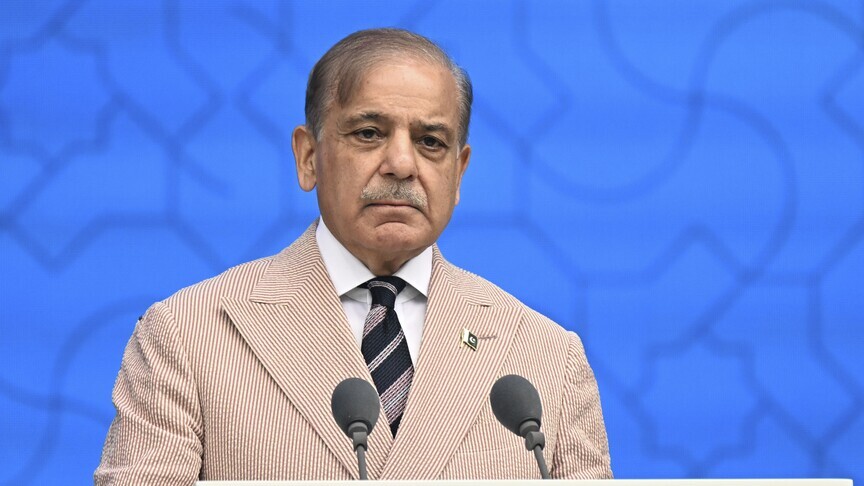
Pakistani Prime Minister Shehbaz Sharif on Thursday urged grant-based financing for countries affected by climate change, while also warning against "weaponizing water," during his address to the COP31 summit.
"National effort cannot replace a fair and just global response when climate disaster strikes. Vulnerable countries need timely help and finance that does not deepen their debt. We call for grant-based finance, including public-private partnership, alongside significant enhancement of resilience and adaptation funds, which amount to survival funds, especially for struggling economies," he told the COP31 summit in the Turkish city of Antalya.
He said that water "must never be weaponized" and that no nation should be allowed to put the lives and livelihoods of people downstream at risk.
"Water sharing agreements must be honored," he said.
His remarks came after India suspended the Indus Waters Treaty and stopped sharing water data with Pakistan last year following an attack in Indian-administered Kashmir that killed 26 people.
The South Asian nation has suffered several severe floods in recent years, resulting in loss of life and damage worth billions of dollars.
Sharif said that devastating flash floods in 2022 submerged one-third of Pakistan and affected 33 million people.
He recalled warning at the United Nations four years ago that "what happens in Pakistan will not stay in Pakistan," saying the warning had since become a stark reality.
"The future we feared has become the present we are living. Climate change knows no borders. No nation can face it alone. Solidarity must mean real action," he stressed.
He expressed "deep gratitude" for Türkiye's support to Pakistan during the devastating floods, saying that solidarity and friendship shown then would remain forever in Pakistan's hearts and memories.
The Pakistani prime minister also highlighted his country's clean energy efforts, including investments in nuclear power and solar capacity.
Green energy sources now account for nearly 55% of Pakistan's energy mix, he said, adding that the country is advancing electric mobility and aims to cut projected emissions by about 50% by 2035.