Şükrü Gündüz
13 July 2026•Update: 13 July 2026
Two survivors of Türkiye's defeated July 15, 2016 coup attempt say they have lived for the past decade with bullets still lodged in their bodies because doctors determined surgery would pose life-threatening risks.
On July 15, 2016, members of the Fetullah Terrorist Organization (FETO) attempted to overthrow Türkiye's government through a military coup centered in Ankara and Istanbul.
The coup plotters opened fire on civilians, turned against their commanders, and bombed the Turkish Grand National Assembly and the Presidential Complex, killing 253 people and wounding thousands.
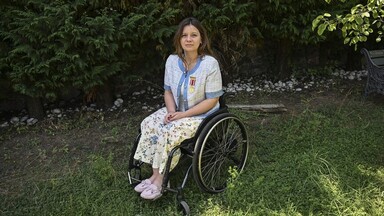
Ismail Acur, who lost his right eye after being shot in Istanbul's Sarachane district, still has a bullet lodged between his carotid artery and spinal cord.
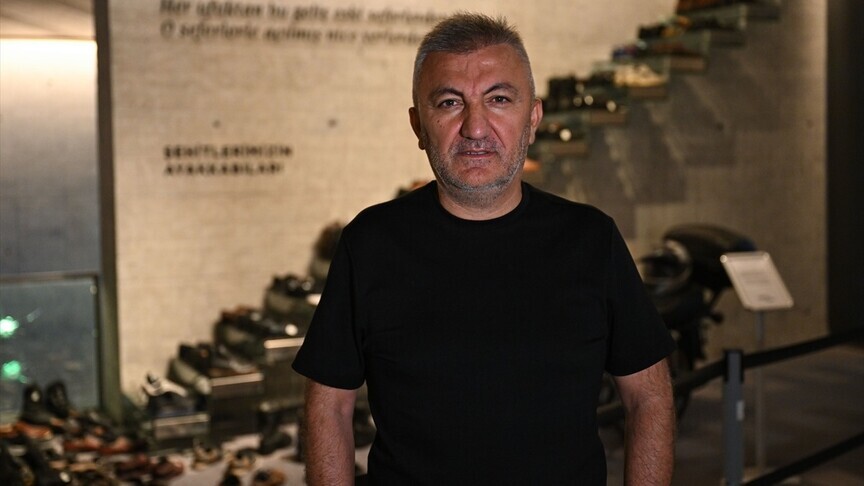
Musa Ilhan was shot outside the Istanbul Metropolitan Municipality's Disaster Coordination Center (AKOM) and continues to carry a bullet about 2 centimeters (around 0.8 inches) below his heart.
The two men told Anadolu that their injuries continue to cause physical pain while keeping the memories of the coup attempt alive in their daily lives.
Acur, a father of three, said he had returned to Istanbul from the eastern province of Malatya on July 15 and went into the streets after hearing President Recep Tayyip Erdogan's call on the public to resist the coup attempt.
After helping carry wounded civilians to safety in Sarachane, he returned to the front line, where coup soldiers opened fire.
"I thought the bullet had only grazed me. I took my hand toward my eye, and my eye fell into my hand," Acur said.
After collapsing from heavy blood loss, he was presumed dead and covered with a Turkish flag before paramedics detected a pulse and rushed him to hospital.
"I lost my eye, and the bullet remained in my neck. My eye is now a prosthetic and I cannot see with it," he said.
Acur said the bullet cannot be removed because it is lodged close to his spinal cord and a major artery.
"The bullet is still in my body. I sometimes experience dizziness, pain and numbness," he said. "Because it is very close to my spinal cord, there are times when I cannot feel my hand."
He said metal detectors at public buildings occasionally sound because of the bullet in his neck.
During one such incident, Acur said he explained to a police officer that he was carrying a bullet in his body rather than a weapon.
"The officer came over, hugged me, and said, 'It is thanks to you that we are here today'," he said.
Ilhan, 49, said he headed to AKOM after hearing about the coup attempt.
He said coup soldiers opened fire as civilians entered the compound. "They were firing toward our feet. At first, we were afraid," Ilhan said.
He said he continued walking toward a soldier despite a warning to stop.
"I said, 'I am coming. Shoot if you are going to shoot.' Then I was hit," he said.
Another civilian pressed against his chest to slow the bleeding before he lost consciousness, Ilhan said.
He spent four days in hospital and underwent treatment for three months. "The bullet stopped 2 centimeters below my heart. I have lived with it for 10 years," Ilhan said.