Emre Aytekin
20 June 2026•Update: 20 June 2026
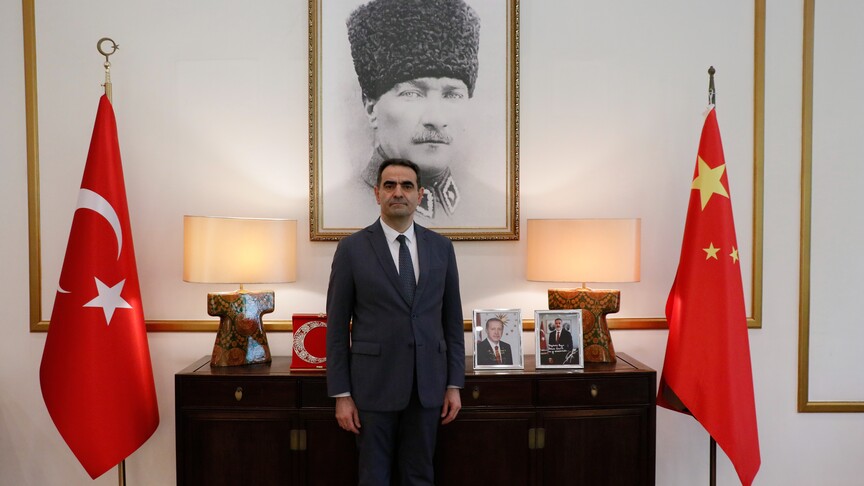
Türkiye's ambassador to Beijing said relations between Türkiye and China continue to deepen, driven by expanding economic ties and a shared outlook on global, international, and regional issues centered on peace, stability, and development.
Speaking to Anadolu on the 55th anniversary of diplomatic relations between the two countries, Selcuk Unal said ties between the two ancient civilizations extend far beyond the formal establishment of diplomatic relations in 1971.
He noted that the historic Silk Road served as a bridge connecting the eastern and western ends of Asia, facilitating trade, cultural exchange, technological transfers, and diplomatic contacts between Turks and Chinese for centuries.
"The Silk Road connected two civilizations and two nations. Today, that connection continues under different names," Unal said.
The ambassador emphasized that although geographical distance and limited transportation options constrained diplomatic contacts in earlier periods, cultural interaction between the two peoples remained constant through the Silk Road network.
Unal recalled that official Turkish representation in China began during the early Republican era, with diplomatic contacts continuing despite difficult wartime conditions.
He noted that Türkiye maintained its diplomatic presence in China during World War II even as many countries closed their missions.
Regarding the establishment of diplomatic ties, Unal said Türkiye officially recognized the People's Republic of China in 1971, amid major shifts in the international system.
He noted that negotiations were conducted through the two countries' embassies in Paris and diplomatic relations were formally established through an exchange of notes on Aug. 4, 1971.
Highlighting the transformation in bilateral relations over the past quarter-century, Unal said China has become Türkiye's largest trading partner not only in Asia but also globally.
"In this year, when we mark the 55th anniversary of diplomatic relations, China has become our largest trading partner in the world," he said, adding: "Our trade volume exceeds $50 billion."
Unal pointed to growing connectivity between the two countries, noting that Turkish Airlines operates two daily flights to four Chinese cities, while most major Chinese airlines fly to Istanbul.
More than 50 passenger flights operate weekly between the countries, alongside increasing cargo traffic.
He added that Türkiye's diplomatic presence in China has expanded beyond its embassy in Beijing to include consulates general in Shanghai, Hong Kong, Guangzhou, and Chengdu.
"Relations are at a more advanced and positive stage than before, and I believe we will take them even further," he said.
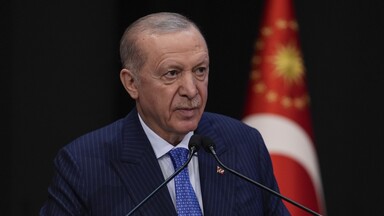
Unal said the two countries are working in line with the vision set out by Turkish President Recep Tayyip Erdogan and Chinese President Xi Jinping to strengthen cooperation in political, economic, and commercial fields, as well as in connectivity, energy, artificial intelligence, and the green economy.
"Fundamentally, both countries view the international system through the lens of peace, stability, preventing wars and, where possible, ending them," he said.
"In that sense, we actually look at many global, international, and regional issues from the same perspective."
* Writing by Merve Berker in Ankara.