Türkiye ranks 2nd globally with 48 contractors among top 250
Türkiye ranks second after China in the number of builders on global list, with $24.9B in projects and a 4.5% revenue share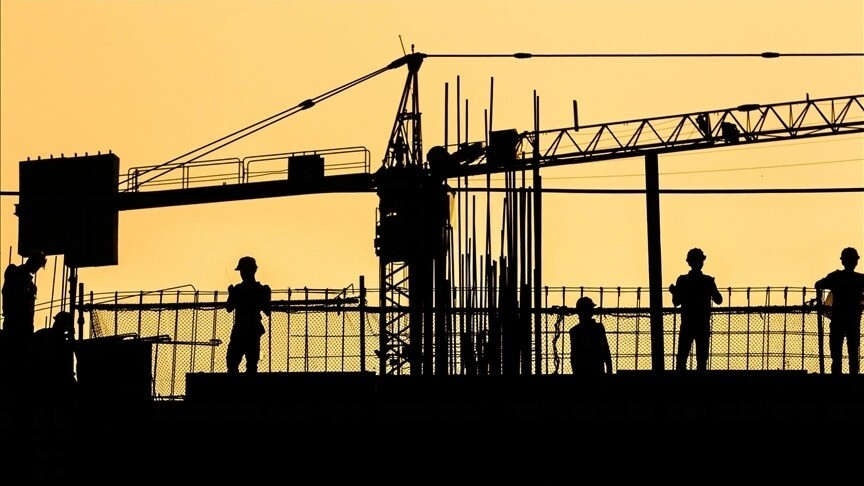
Some 48 Turkish builders made the cut for Engineering News-Record’s (ENR) top 250 largest construction firms this year, securing Türkiye second place worldwide in the number of firms on the list, following China, the Turkish Trade Ministry said.
Turkish contractors undertook $24.9 billion in global projects last year, up from $20.8 billion in 2024, while securing a 4.5% share of the $550.6 billion in total construction revenue generated by the 250 firms on ENR’s list, which also marked 9.7% growth, the ministry’s statement said on Friday.
Türkiye climbed two spots from last year to rank seventh worldwide in global project value, trailing China, France, Spain, the US, South Korea and Italy, while surpassing Japan, the Netherlands and India.
Some seven Turkish construction companies entered the top 100 in this year’s list, with two of those breaking into the top 50.
“The global construction market continued to grow while the sector grappled with key challenges, such as geopolitical uncertainties, supply chain disruptions, rising costs, a shortage of skilled labor, and adverse weather conditions linked to climate change,” the statement read.
“More comprehensive business models like local partnerships, risk management, technical capacity, digitalization, and public-private partnerships (PPPs) enhanced the competitive edge of companies,” it added.
Meanwhile, ENR’s list of the top 225 global engineering consulting firms was also updated, adding nine Turkish firms this year compared with eight last year.
Turkish builders have undertaken 12,952 global construction projects worth over $568 billion across 138 countries to date.
Turkish engineering consultancy firms have completed some 3,177 global technical projects worth around $3.8 billion across 138 countries.
Türkiye plans to continue leveraging trade diplomacy through delegations and third-country partnerships with countries like the UK and Japan to support local firms in traditional hubs like Libya and Iraq, as well as European markets like Portugal and Romania, and future reconstruction plans in Ukraine and Syria, according to the Trade Ministry.