Yasemin Kalyoncuoglu
14 July 2026•Update: 14 July 2026
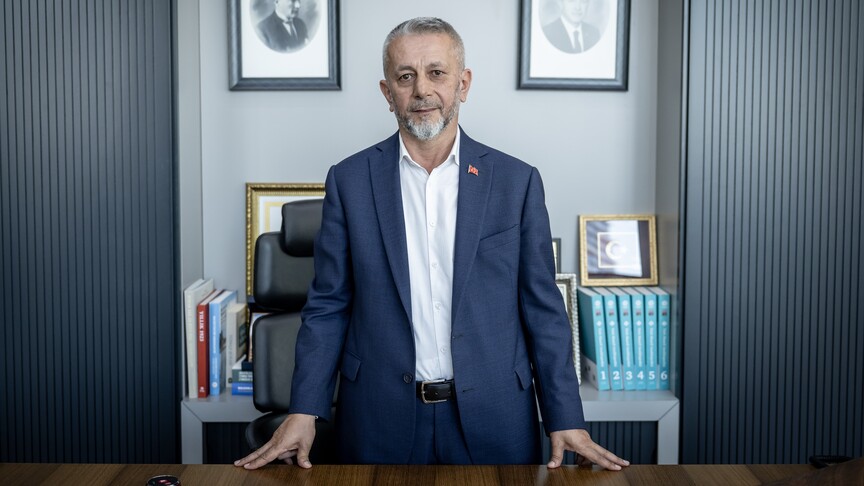
A report prepared over nearly four years by around 600 academics from universities across Türkiye offers policy recommendations to address challenges ranging from education and healthcare to artificial intelligence, agriculture and water management, said Selim Cerrah, chairman of the Cihannuma Association.
The report, titled “Türkiye Report: Forecasts, Proposals and Solutions,” will be launched on July 17 at an event organized by the Cihannuma Association and the Union of Academicians and Writers of Islamic Countries (AYBIR), with Anadolu serving as the event's communications partner.
Speaking to Anadolu, Cerrah said the report was compiled after 28 workshops held across Türkiye.
“Our goal was to identify Türkiye’s challenges across different sectors and develop policy recommendations to address them,” he said.
The first workshop focused on migration after the Syrian civil war, while subsequent meetings examined issues including healthcare, digitalization, youth, higher education, agriculture, and artificial intelligence.
“For the report prepared by 600 academics from different universities, we focused on issues that directly affect people’s daily lives and require solutions,” Cerrah said, adding: “Through this comprehensive report, we aim to provide policymakers and practitioners with a roadmap.”
The report will be presented at a launch event attended by Vice President Cevdet Yılmaz.
Education and healthcare feature prominently in the report. Cerrah said that the recommendations support the Türkiye Century Education Model and include proposals to improve health literacy, prevent violence against healthcare workers and make healthcare services more effective.
He also proposed establishing a Health Industry Presidency to coordinate pharmaceuticals, medical devices and health technologies under a single institution.
“Such a structure would contribute both to reducing Türkiye’s current account deficit and increasing its export capacity,” he said.
Cerrah said artificial intelligence and knowledge production were also key themes, stressing AI should be embraced while maintaining a critical perspective.
“We also included artificial intelligence in the report. We cannot ignore AI, but neither can we regard all the information it generates as absolute truth,” he said. “How we produce knowledge and how we make it serve humanity will be one of the defining issues of the future.”
The report also highlights agriculture, environmental policy and water management, with Cerrah describing the protection of water resources as a strategic priority for the future.
He said the report would be published online and also distributed in print to public institutions, policymakers and other stakeholders.