Türkiye will mark on Wednesday the 10th anniversary of the July 15, 2016 failed coup attempt carried out by members of the Fetullah Terrorist Organization (FETO), which left 253 people dead and sought to overthrow the country's democratic order.
Presenting itself as a religious movement while infiltrating state institutions, including the Turkish Armed Forces, FETO attempted to seize power through a military coup after years of covert organization within the state.
Before the coup attempt, the group carried out several operations against the government, including attempts to summon then-National Intelligence Organization (MIT) Undersecretary Hakan Fidan for questioning, the Dec. 17-25 investigations and the stopping of MIT trucks.
Following the Justice and Development (AK) Party's victory in the Nov. 1, 2015 elections and anticipating the removal of FETO-linked officers through Supreme Military Council decisions, the organization accelerated its plans.
FETO ringleader Fetullah Gulen, appeared on camera on March 19, 2016, wearing a khaki-colored robe and called on members of the group's military network to stage a coup.
After receiving the instruction, members of the terrorist group began preparations for a coup across Türkiye.
As part of the planning, the group's civilian leaders traveled to the US from December 2015 onward to meet Gulen.
As part of its domestic planning, the terrorist group held a series of meetings, culminating in a gathering on July 6-9 at a villa in Ankara's Konutkent neighborhood led by Adil Oksüz, a senior FETO figure widely referred to as the group's "Air Force imam."
Participants included "civilian imams" Hakan Cicek, Nurettin Oruc, Harun Binis and Kemal Batmaz, who were later captured at the Akinci Air Base—the command center of the coup attempt—as well as members of the group's so-called Peace at Home Committee, including former brigadier generals Mehmet Partigoc and Gokhan Sahin Sonmezates, Rear Adm. Omer Faruk Harmancık, Colonels Murat Kocyigit, Bilal Akyuz and Mustafa Barıs Avıalan, Lt. Col. Turgay Sokmen, former Rear Adm. Halil İbrahim Yıldız and former Col. Hakan Bıyık.
Following the coup planning meetings, Adil Oksuz and Kemal Batmaz traveled to the US on July 11 to present the coup plan to the group's ring leader. After receiving his approval, they returned to Türkiye on July 13, and the group began waiting for the planned launch of the coup at 3 am on July 16.
Hours before the planned coup, a major serving at the Army Aviation Command informed MIT that FETO members were planning to detain Fidan. The information was relayed to then-Deputy Chief of the General Staff Gen. Yasar Guler, who informed then-Chief of the General Staff Hulusi Akar.
Akar also instructed then-Lt. Gen. Metin Gürak, commander of the 4th Corps, to prevent armored vehicles from leaving the Etimesgut Armored Units School and Training Division Command, and dispatched then-Land Forces Commander Gen. Salih Zeki Colak to the Army Aviation Command to monitor helicopter movements.
Around the same time, Col. Bunyamin Tuner, Guler's former military aide, informed former Brig. Gen. Mehmet Partigoc, then head of the General Staff's Personnel Planning and Management Department and one of the figures coordinating the coup attempt, that MIT chief Fidan met Akar.
News of the meeting between Akar and Fidan, along with Colak's deployment to the Army Aviation Command, quickly spread among the coup plotters.
After learning their plans had been exposed, the planned coup attempt, which was scheduled to begin at 3 am on July 16, was brought forward to 8.30 pm on July 15.
Shortly after the coup order was issued, 33 specially equipped maroon berets from the Special Forces Command, who had gathered at Akinci Air Base, moved to the General Staff headquarters.
Former Maj. Gen. Mehmet Disli, former Gen. Staff Strategy Department head, Col. Orhan Yikilkan, then chief adviser to the chief of the General Staff, Brig. Gen. Partigoc and Col. Ramazan Gozel, then chief military aide to the chief of the General Staff, convened to coordinate the coup attempt at the headquarters.
At 9 pm, Disli informed Akar of the coup attempt. After realizing he could not persuade Akar to support it, Disli ordered the team waiting outside the general's office to intervene. Gozel, Yikilkan, former aide-de-camp Lt. Col. Levent Turkkan, former assistant aide-de-camp Capt. Serdar Tekin and former Master Sgt. Abdullah Erdoğan then detained Akar.
Acting on instructions from the coup plotters at the General Staff headquarters, former Brig. Gen. Murat Aygun, then commander of the 58th Artillery Brigade stationed in Polatli, ordered military vehicles, including missile launcher systems, to leave the barracks to seize control of key locations in Ankara.
The coup plotters issued their first directive through the General Staff's Message and Document Distribution System (MEDAS), titled "Preparation Alert and Unit Deployment."
They then distributed a purported martial law appointment list bearing the signatures of Partigoc and former Col. Erhan Turhan through the same system. The plotters later issued a second order via MEDAS, titled "Armored Combat Vehicle Deployment," instructing units to occupy key roads, intersections and public institutions across the country.
The coup plotters continued issuing directives through MEDAS and, at 9.53 pm, ordered all soldiers outside their barracks to return to their units. Acting on the order, coup participants seized the Disaster Coordination Center (AKOM) in Istanbul's Kagithane district, known as the city's central emergency coordination hub.
Around the same time, Sgt. Maj. Bulent Aydin, the protection noncommissioned officer assigned to then-Land Forces Commander Gen. Salih Zeki Colak, was killed by coup plotters at the General Staff headquarters, becoming the first martyr of the July 15 coup attempt.
F-16 fighter jets that had taken off from Akinci Air Base began flying at low altitude over Ankara. Reports of unusual military activity first appeared on news channels at 10.28 pm, with broadcasters reporting as breaking news that soldiers had blocked access to Istanbul's Bosphorus and Fatih Sultan Mehmet bridges.
At 11.02 pm, then-Prime Minister Binali Yildirim told NTV by phone that "the government representing the nation remains in office," adding that those responsible for "this uprising, this madness and this unlawful act" would "pay the heaviest price."
Three minutes later, at 11.05 pm, the Ankara Chief Public Prosecutor's Office launched an investigation into the coup attempt.
Coup pilots then struck the Police Aviation Department in Ankara's Golbasi district, followed by the Special Operations Department. Helicopters under the control of the coup plotters also opened fire on the MIT compound in Yenimahalle, a district in the capital. Meanwhile, former Lt. Col. Umit Gencer seized the state broadcaster TRT and forced it to air the coup declaration.
At 12.24 am, President Recep Tayyip Erdogan appeared live on CNN Turk and delivered the historic address that altered the course of the coup attempt, calling on the public to "take to the streets."
Outside the Gendarmerie General Command headquarters, nine civilians were killed and dozens injured when a helicopter operated by the coup plotters opened fire on people protesting the coup attempt.
At 12.56 am, coup pilots Mehmet Yurdakul and İlhami Aygul bombed the Ankara Police Department headquarters with a fighter jet. About 10 minutes later, another coup pilot, Mustafa Ozkan, carried out a second airstrike on the same location.
The aircraft carrying coup plotter, Brig. Gen. Semih Terzi, and a battalion of maroon berets from Diyarbakir landed at Etimesgut Air Base at 1.13 am.
Meanwhile, then-Special Forces Commander Lt. Gen. Zekai Aksakalli contacted his aide, Sgt. Maj. Omer Halisdemir, by phone and ordered him to neutralize Terzi.
After arriving at the Etimesgut Special Air Regiment Command with troops under his command, Terzi boarded a helicopter at 2.14 am for the Special Forces Command headquarters in Golbasi district to take control of the command.
As Terzi reached the entrance to the headquarters, he was shot and killed by Halisdemir. Halisdemir was later martyred after coming under fire from Terzi's accompanying soldiers from Diyarbakır.
Thirty-six civilians protesting the coup attempt outside the General Staff headquarters were martyred.
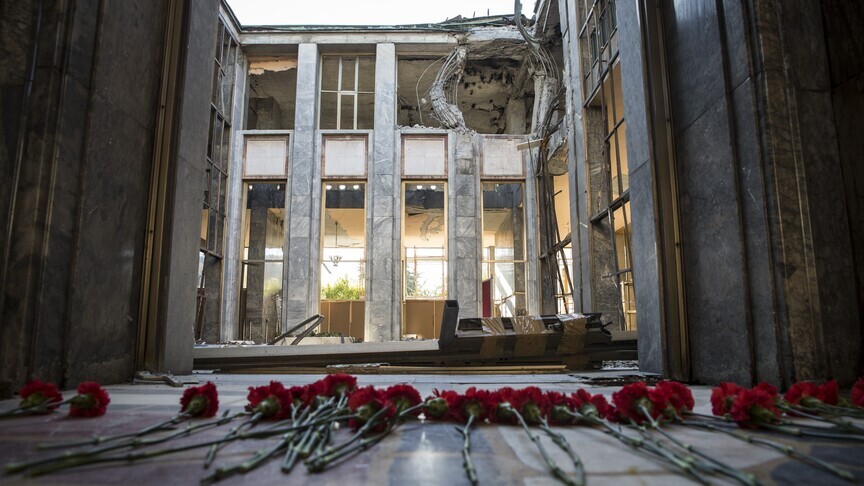
In an attempt to break public resistance, the coup plotters turned their attention to the Turkish Grand National Assembly. An F-16 flown by now former pilots Hasan Husnu Balikci and Ugur Uzunoglu dropped a bomb on parliament, injuring 32 people.
At 3 am, security forces retook the state broadcaster TRT from the coup plotters, allowing normal broadcasts to resume. The coup participants surrendered to police.
Between 3.14 am and 3.19 am, coup pilot Huseyin Turk dropped four bombs on the TURKSAT satellite communications facilities in an attempt to disrupt television broadcasts.
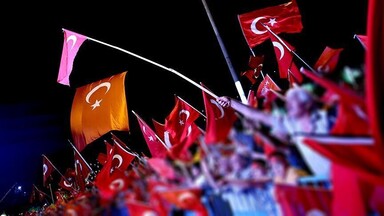
As the hours passed, citizens responded to President Erdogan's call by gathering in city squares and around key public institutions to resist the coup attempt.
At Istanbul Ataturk Airport, police special operations units neutralized the coup plotters who had seized the control tower. Shortly afterward, the presidential aircraft carrying Erdogan landed, where he was welcomed by thousands of supporters.
Following the developments in Istanbul, the parliament came under attack once again. At 3.24 am, former Capt. Huseyin Turk carried out a second bombing of the Turkish Grand National Assembly with an F-16.
As civilians took to the streets and loyalist troops confronted the coup plotters at military bases, the Ankara Chief Public Prosecutor's Office issued detention orders at 4 am for "judicial officials linked to FETO," members of the so-called Peace at Home Council, and others involved in the coup attempt.
At 6.19 am, former First Lt. Muslim Macit dropped two bombs on the Presidential Complex intersection in Ankara. The attack martyred 15 civilians and injured seven others.
Turgut Aslan, then head of the Police Department's Counterterrorism Division, and his bodyguard, Hasan Gulhan, who were being held at the Gendarmerie General Command, were taken outside the building with their hands and eyes bound before coup Col. Erkan Oktem shot them in the head. Aslan was seriously wounded, while Gulhan was martyred.
Yildirim then authorized Lt. Gen. Ziya Kemal Kadioglu to shoot down aircraft under the control of the coup plotters.
Realizing the coup attempt had failed, the coup plotters stationed on Istanbul's Bosphorus Bridge surrendered.
At 8.26 am, Akar, who had been held hostage by the coup plotters, was flown by helicopter from Akinci Air Base to the Cankaya presidential mansion.
On the instructions of President Erdogan and then-National Defense Minister Fikri Isik, the main runway at Akinci Air Base was struck to prevent aircraft from taking off.
At 12.57 pm, then Premier Yildirim announced at a joint news conference alongside Isik and Akar that the coup attempt had been suppressed.
The attempted coup was brought under control across Türkiye after approximately 21 hours.
The bid was ultimately thwarted under the leadership of President Erdogan, through the resistance of the Turkish people and the efforts of loyal security forces.
According to official records, the coup plotters martyred 253 people, both civilians and security personnel. Nearly 9,000 military personnel, 35 aircraft, 37 helicopters, 246 armored vehicles, including 74 tanks, and nearly 4,000 light weapons were used.
Gulen, who laid the foundations of the organization in Turkish city Izmir's Kestanepazari district in the 1960s, directed a series of conspiracies from the Chestnut Retreat Center in the US state of Pennsylvania, where he had lived since fleeing Türkiye in 1999.
Gulen headed the organization, which Turkish authorities say infiltrated state institutions under a "parallel structure" with the aim of overthrowing the constitutional order and secretly embedding its members across key branches of the state, including politics, the civil service, the judiciary, the military and the police.
Living under tight security at a compound of eight villas on a 130-acre property, Gulen continued issuing instructions to members of the organization from the US, according to Turkish authorities.
Despite Türkiye's seven extradition requests covering 27 criminal charges, US authorities did not take concrete steps toward extraditing him.
Gulen died on Oct. 20, 2024, at the Monroe Campus of St. Luke's Hospital in Pennsylvania. His death was officially confirmed through a document conveyed to Turkish authorities by the US State Department.
news_share_descriptionsubscription_contact