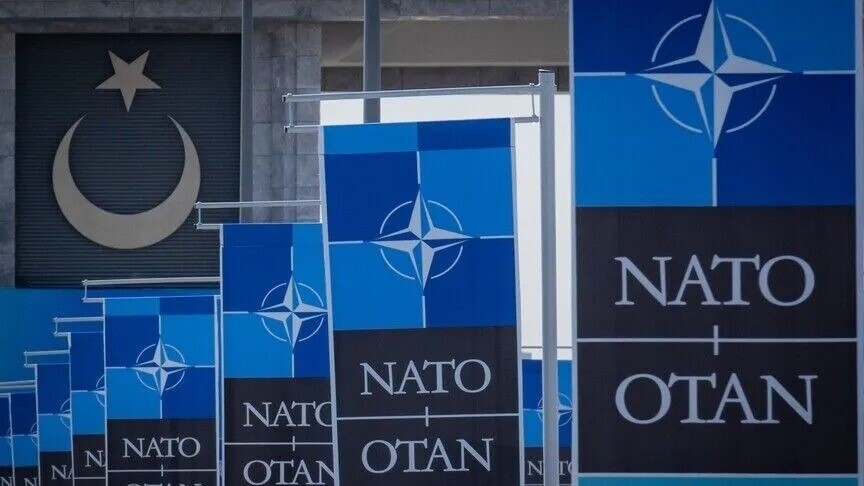
NATO leaders will gather in the Turkish capital Ankara on Tuesday and Wednesday for a summit expected to test the alliance's ability to turn ambitious pledges into concrete action, against the backdrop of Russia's war in Ukraine, tensions in the Middle East and renewed debate over transatlantic burden-sharing.
Defense spending, long-term support for Ukraine and efforts to strengthen defense industrial capacity are expected to dominate the two-day meeting.
Türkiye, hosting its second NATO summit after Istanbul in 2004, is presenting the gathering as a showcase for its growing defense industry.
Defense spending is expected to top the agenda in Ankara as allies face mounting pressure to turn last year's headline commitment into concrete military capabilities.
At the 2025 NATO summit in The Hague, the leaders agreed on a new target of 5% of gross domestic product (GDP) annually by 2035 for defense and security-related spending, replacing the alliance's long-standing benchmark of 2%.
Under the plan, at least 3.5% would go toward core military spending – such as troops, weapons and operations – while up to 1.5% could be invested in broader security priorities including cyber defense, military mobility, critical infrastructure and defense industries.
Allies also pledged to submit annual national implementation plans, with progress to be reviewed in 2029.
The issue remains politically sensitive because many European governments face difficult budget choices, while Washington has long argued that the US shoulders a disproportionate share of NATO's military burden.
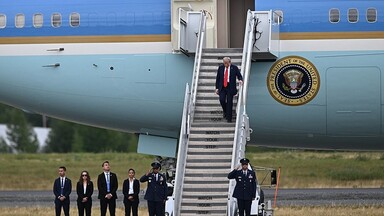
President Donald Trump has repeatedly accused European allies of relying too heavily on US protection and has renewed those criticisms ahead of the Ankara summit, calling the current imbalance "ridiculous" and insisting Europe take greater responsibility for its own defense.
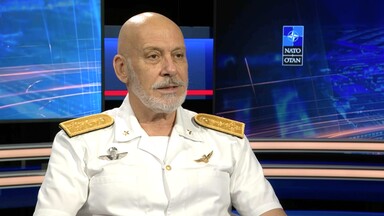
NATO Secretary General Mark Rutte has framed the debate less as a question of accounting than of military readiness, arguing that the alliance now needs to convert higher budgets into deployable forces, ammunition, air defenses and industrial production.
Ahead of the summit, he said NATO would announce tens of billions of dollars in new defense contracts, describing the effort as the beginning of a "defense industrial revolution."
The spending debate is also frequently misunderstood.
The 5% target refers to each country's own national defense and security expenditure as a share of its GDP – not contributions to NATO's common budget.
NATO's shared civilian budget, military budget and Security Investment Program together amount to only a small fraction of what allies spend individually on their armed forces.
All NATO allies now exceed the old 2% benchmark. Progress has accelerated since Russia's war in Ukraine in 2022.
Poland is expected to remain NATO's biggest defense spender relative to the size of its economy, while the Baltic states have sharply increased military budgets in response to security concerns.
Germany has also announced plans to reach NATO's 3.5% core defense spending target by 2029, six years ahead of schedule, with Chancellor Friedrich Merz describing the buildup as an unprecedented investment in European security.
One notable point of friction remains Spain. Madrid secured flexibility at last year's Hague summit, arguing it could meet NATO capability targets while spending significantly less than 5% of GDP, a position that drew public criticism from Trump.
Ukraine is expected to remain one of the summit's defining issues as allies seek to demonstrate that support for Kyiv remains intact more than four years after Russia's war.
Although Ukraine is not a NATO member, the alliance maintains close ties with Kyiv through mechanisms such as the NATO-Ukraine Council and the NATO Security Assistance and Training for Ukraine (NSATU) mission, which coordinates military aid and training.
Since the outbreak of the war in 2022, allies have provided the overwhelming majority of Ukraine's military assistance.
Host country Türkiye has also positioned itself as an active supporter of Kyiv within the alliance, supplying Ukraine with Bayraktar TB2 drones and hosting earlier rounds of Russia-Ukraine peace talks while keeping diplomatic channels open with Moscow.
Last year, NATO and the US launched the Prioritised Ukraine Requirements List (PURL), a mechanism allowing allies to jointly finance US-made military equipment identified by Kyiv as an operational priority, including air defense systems.
In Ankara, leaders are expected to review progress on weapons deliveries, air defense, ammunition supplies and defense-industrial cooperation with Ukraine.
But the issue has also been shaped by shifting signals from Washington.
US President Donald Trump has repeatedly argued that European allies should assume greater responsibility for supporting Ukraine and for Europe's security more broadly, while signaling impatience with open-ended US support.
In April, Trump said he was reconsidering US membership in NATO after accusing European allies of failing to support the US in its war on Iran.
He has since met with NATO Secretary General Mark Rutte, with both sides emphasizing continued cooperation, although the episode renewed European concerns about the durability of US support for Kyiv.
Rutte has argued that helping Ukraine defend itself is inseparable from NATO's own security, stressing that US contributions such as Patriot air defense systems remain indispensable while urging European allies to step up their own support.
Ukrainian President Volodymyr Zelenskyy is expected to take part in summit events, including a joint appearance with Rutte and a meeting of the NATO-Ukraine Council.
Following a phone call with Trump on Saturday, Zelenskyy said they discussed battlefield developments, air defense and diplomatic efforts to end the war, expressing hope they would continue those discussions in Ankara.
Beyond increasing defense budgets, leaders are expected to focus on how to translate new spending commitments into faster weapons production and stronger military capabilities.
The issue has gained urgency as Russia's war in Ukraine exposed shortages of ammunition, air defense systems and other critical equipment, while highlighting the need for allies to replenish their own stockpiles.
NATO officials have repeatedly warned that production capacity has not kept pace with growing demand, despite sharp increases in defense spending across Europe and North America.
Rutte has pointed to fragmented European defense industries, slow procurement bureaucracies and production timelines that lag behind battlefield demand.
A full day on July 7 is set aside for the NATO Summit Defense Industry Forum (NSDIF26), which NATO describes as its premier event on transatlantic defense production, investment and innovation.
The event will bring together senior NATO officials, defense ministers, military commanders and executives from leading defense companies to accelerate cooperation between governments and the industry.
The forum is also expected to feature announcements on new defense contracts and multinational procurement projects.
As host, Türkiye is expected to use the gathering to showcase its expanding defense industry and press for deeper integration into European and NATO defense initiatives.
As part of the forum, the Presidency of Defense Industries will host a high-level reception at Turkish Aerospace Industries facilities in Kahramankazan, where Turkish defense products will be exhibited and indigenous air platforms will perform demonstration flights.
news_share_descriptionsubscription_contact