- Talks mark an unprecedented step in relations between two countries that have no formal diplomatic ties
- Key issues include ceasefire, disarmament of Hezbollah, territorial integrity
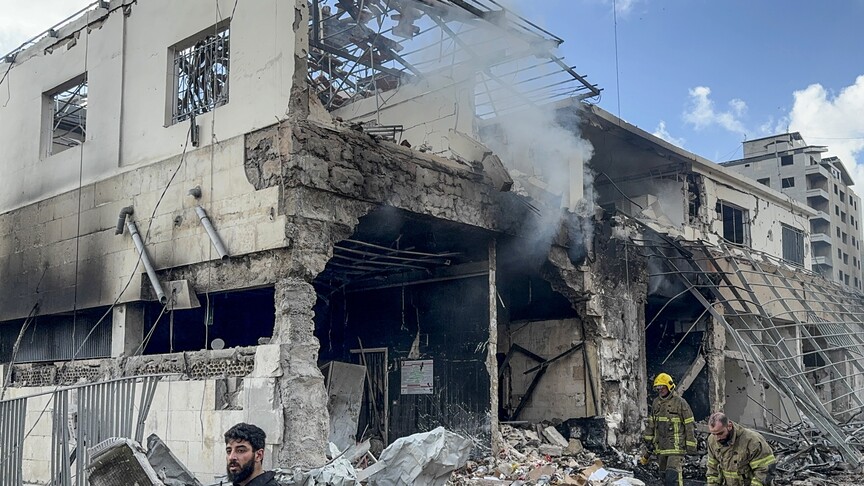
Lebanese and Israeli officials are set to hold rare, direct talks in Washington on Tuesday to discuss a ceasefire and potentially open the door to formal peace negotiations amid ongoing Israeli military operations against Hezbollah.
Experts say the talks mark an unprecedented step in communication between the two countries and will be among the highest-level engagements in years.
"There is no diplomatic relationship between Lebanon and Israel," Dania Arayssi, a senior analyst at the New Lines Institute for Strategy and Policy, told Anadolu.
"There has always been a broker or mediator when negotiating any peace agreements, including the last ceasefire agreement under the Biden administration."
The meeting comes amid a two-week ceasefire in the Israeli-US conflict with Iran, with Tehran saying a ceasefire in Lebanon is a key element of any broader deal. However, Israel intensified attacks on Lebanon shortly after the initial agreement was reached.
US media reported that US President Donald Trump has pressed Israeli Prime Minister Benjamin Netanyahu to scale back strikes against Hezbollah.
Meanwhile, Hezbollah has rejected the planned talks in Washington, calling them “futile” and urging the Lebanese government to focus on confronting Israeli “aggression.”
Arayssi said Lebanon is signaling an effort to reclaim its sovereignty and negotiate independently, rather than relying on Iran or its allies.
According to Lebanon’s Health Ministry, Israeli strikes since the latest escalation have killed at least 2,089 people and wounded 6,762 others.
More than a million Lebanese people – around 20% of the population – have been displaced by the conflict.
Who will attend the talks
The talks are scheduled to take place at the US State Department, with US Secretary of State Marco Rubio expected to join at 11 am local time (1500GMT), according to the official schedule.
Lebanese Ambassador to Washington Nada Hamadeh Moawad will represent Lebanon.
Meanwhile, the Israeli Ambassador to Washington Yechiel Leiter will lead the Israeli delegation.
Ahead of the talks, Moawad held what officials described as the first direct contact with Leiter in a phone call. US Ambassador to Lebanon Michel Issa, currently in Washington, also joined the conversation.
What issues will be discussed
Lebanese President Joseph Aoun said Monday that reaching a ceasefire remains the country’s top priority.
However, Arayssi said a full ceasefire is unlikely at this stage.
"Instead, the Israelis will probably propose a gradual, incremental ceasefire that will likely start with Beirut,” she said.
She added that disarming Hezbollah, particularly in southern Lebanon, will be a central demand for Israel.
"Israel is going to be asking for some details,” she said, pointing to intelligence-sharing on Hezbollah positions, weapons and tunnel networks.
Arayssi said Israel may also push for changes in how Lebanon’s security institutions operate, including the leadership and strategies of the Lebanese Armed Forces.
On March 2, Lebanese Prime Minister Nawaf Salam said the government had banned Hezbollah’s military and security activities and limited the group’s role to political work, ordering the army to enforce state control over weapons north of the Litani River.
Territorial sovereignty is also expected to be a key issue. In late March, Israel announced the creation of what it describes as a security buffer zone inside Lebanese territory.
Lebanon’s Defense Minister Michel Menassa has previously rejected any such move, warning it would displace residents and that the proposal reflects “a clear intention to impose a new occupation of Lebanese territory.”
Arayssi said that while Israel may raise the issue of normalizing diplomatic relations, it is not a priority for Lebanon at this stage.
"I think the priority is stopping the war,” she said. “Another important priority is controlling the borders."
She added that if initial talks progress Tuesday, further rounds could follow quickly given the urgency of the situation.