LONDON
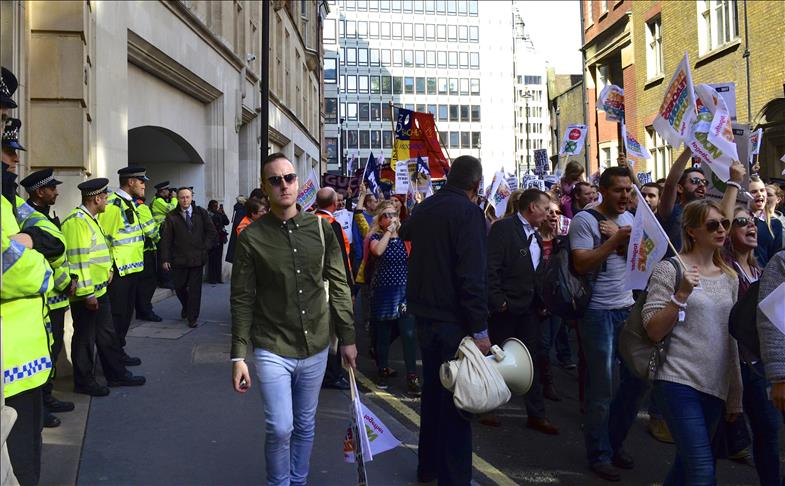
Thousands of state health workers have gone on strike across England and Northern Ireland on Monday, protesting against the government’s refusal to grant them a 1 percent pay rise.
Six trade unions have called the protest for nurses, midwives, and ambulance staff, although emergency care is not affected.
Dave Prentis - the general secretary of health worker union Unison - said in a statement Monday that Safety remained "paramount," and it was the first strike action in the union’s 32 years of existence that illustrated that its members did not take such action lightly.
Unison, along with GMB, Unite, Royal College of Midwives, UCATT, and the British association of occupational therapists - has organized the protest - the first walk out over pay in the National Health Service (NHS) for over 30 years.
“I reiterate my offer to [Health Secretary] Jeremy Hunt to reconsider his pay policy and negotiate with trade unions to avoid more industrial action as we get closer to the Winter pressures,” Prentis added. "We have been working with employers to ensure urgent patient care is not compromised.”
Lawmakers have offered a 1 percent increase to NHS staff in England, but only for those whose wages are not tied to a guaranteed yearly rise.
However, an independent pay review board has said the one percent increase should be across the board - the government replying that if that happened it would have to make job cuts.
Hunt told the BBC Monday that according to analysis "if we did that [gave everyone a 1 percent increase] hospital chief executives would lay off around 4,000 nurses this year and around 10,000 nurses next year.”
He added that 5,000 extra nurses had been recruited in the last year.
“We don't want to turn the clock back on that,” he said.
In a statement Friday ahead of the strike, Cathy Warwick - the Royal College of Midwives Chief Executive - said that "while MPs are set for a 10 percent pay hike, we’re told that midwives don’t deserve even a below-inflation 1 percent rise."
“It feels to a great many people, including midwives, that there is one rule for them and another rule for everybody else.”
The National Health Service was created after the second world war, and is funded through central taxation.
The service is free at the point of use to everyone living in the U.K.
www.aa.com.tr/en