By Ainur Romah
JAKARTA
Indonesian police say they have arrested five Thais and two Indonesians on charges of committing human trafficking and slavery in the remote island of Benjina, Maluku.
The head of the human trafficking unit under the police force’s detective division, Adj. Sr. Comr. Arie Dharmanto, confirmed the arrests to Anadolu Agency on Tuesday.
"We have arrested seven suspects so far," he said, adding that the case will continue and another suspect could be named shortly.
"Our team remains in Benjina to continue investigations."
The Jakarta Post named the men as Hatsaphon Phaet Jakreng, captain of the Antasena 141 vessel, Boonsom Jaika of the Antasena 311, the acting CEO of fishery company PT PBR Hermanwir Martino and Mukhlis Ohoitenan.
Following further investigations, police then arrested three more suspects in the case, reported the Post - Surachai Maneephong, captain of the Antasena 142 vessel, Somchit Korraneesuk of the Antasena 309 and Yongyut N of the Antasena 838.
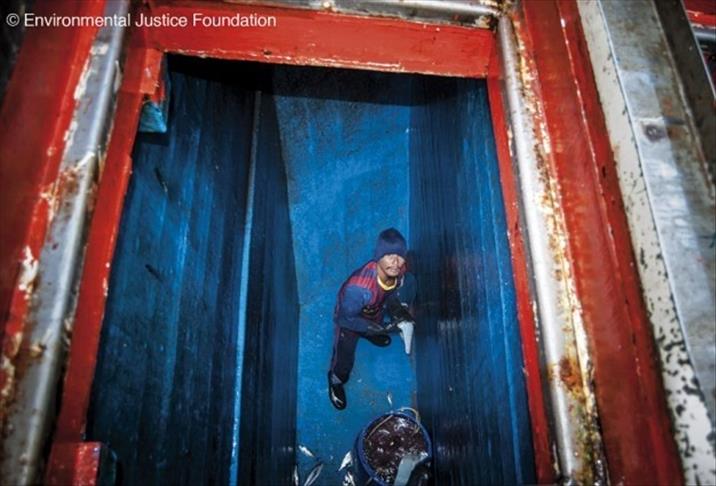
The suspects are accused of trafficking men to work as slaves in the fishing industry.
After recruiting the men in Thailand, they were supplied with falsified seamen's books to enter Indonesia.
They were then employed in fisheries in Benjina without labor contracts stipulating working hours or monthly salaries.
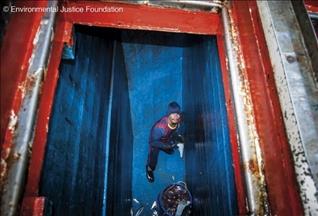
Authorities have since found dozens of graves of those who allegedly refused to work, and some isolation chambers used to lock them up.
A government investigation revealed that at least 1,456 crewmembers, comprising 1,205 Indonesians and 251 foreigners, were forced to work for long hours with no pay on the company's boats.
Data from Maluku police revealed about 20-30 of the fishermen in Benjina died each year.
The Capital Investment Coordination Board has revoked the business license of PT PBR on the recommendation of Minister of Marine and Fisheries Susi Pudjiastuti.
According to Pudjiastuti, PT PBR has conducted illegal fishing, which includes falsifying crew documents, slavery, and the use of trawling equipment to capture fish -- which is prohibited.
In addition, he said the company had used the Indonesian flag to operate in local waters, even though it was owned by a company from Thailand.
Pudjiastuti said many fishing companies choose to operate in the remote area to avoid government monitoring.