Ekip
06 April 2016•Update: 12 April 2016
By Kaamil Ahmed
JERUSALEM
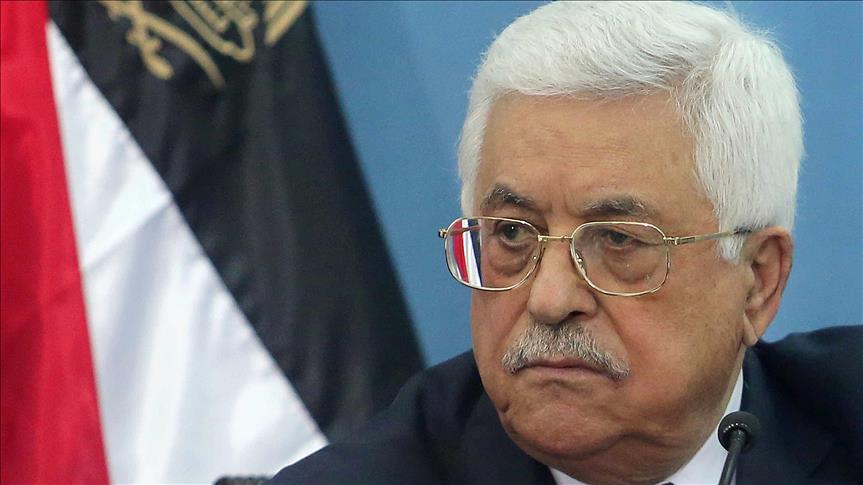
Palestinian President Mahmoud Abbas caused a stir this week with his surprise decision to establish a Palestinian constitutional court.
Abbas followed up his Monday announcement the following day by swearing in a number of judges, including two from the blockaded Gaza Strip.
Nevertheless, the Gaza-based Hamas movement promptly denounced the initiative.
Hamas complained that the court was dominated by members of Abbas' own Fatah movement and criticized the Palestinian president for making a "unilateral" decision without consulting other Palestinian parties.
"The way Abbas set up the court on his own is a deviation from national unity and renders the concept of Palestinian reconciliation meaningless," said Hamas spokesman Sami Abu Zahri.
Abu Zahri went on to assert that Abbas had failed to seek national consensus, pointing out that it was only with the consent of other political parties that Abbas had been allowed to remain in office -- despite the expiry of his term in 2009.
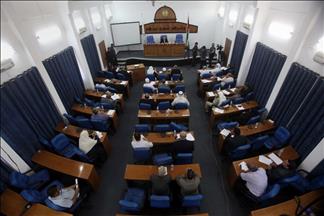
Abbas' legal adviser, Hasan al-Aouri, for his part, said the court would be responsible for reviewing the constitutionality of proposed laws and regulations and interpreting the 2002 "Basic Law", which functions as a temporary Palestinian constitution.
While writing a Palestinian national charter has long been a priority for the Palestine Liberation Organization (PLO) -- and now has added urgency with mounting international recognition of Palestine as a state -- the move’s timing nevertheless came as a surprise, according to political analyst Mahdi Abdul Hadi.
He said many observers saw a contradiction in setting up such a court -- and going so far as to appoint judges -- before expected reconciliation talks between Fatah and Hamas, who have been at odds since Hamas took control of the Gaza Strip in 2007.
"With the impasse [arising] from the continued separation [between] Hamas and Fatah and the West Bank and Gaza, to fill the vacuum it seems Abbas has appointed a constitutional court in the absence of PLC [Palestinian Legislative Council] meetings and in the absence of the unity government," said Abdul Hadi.
"This has created enormous resentment and anger from many, including Fatah people," he added.
Abdul Hadi, head of the Palestinian Academic Society for the Study of International Affairs, said the establishment of the court was probably related to the anticipated power transition after Abbas, 81, leaves the presidency, which he has held since 2005.
"Post-Abbas, where do we go now with no peace process and a divided society?" Abdul Hadi asked.
"[The court decision] did not come from nowhere... it has been discussed and has been planned to fill the vacuum," he said.
He added: "[But] the people are angry and don’t understand where it came from since it was never discussed at the PLO meetings."