By Shadi Khan Saif
KABUL, Afghanistan
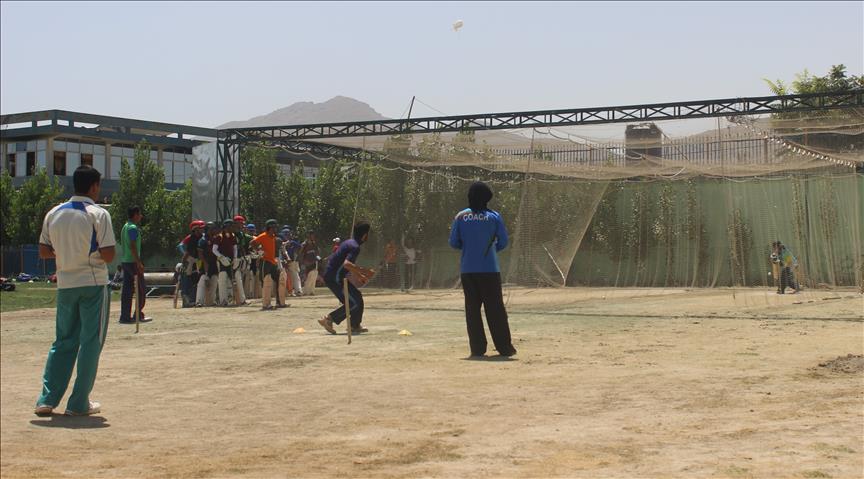
For the second year running, Afghans were able to enjoy their own cricket league. It was only brief but the Super Sixes tournament, which ended Monday, was able to attract thousands of supporters to the country's capital, Kabul, where they watched five teams from across the country compete.
A major reason that the whole tournament is hosted in Kabul is that the capital is home to Afghanistan's only international standard cricket stadium. This solitary home for cricket did not exist until a few years ago, when sport-linked aid began flowing into the country to support the impressive show of talent Afghans had flashed on the international stage.
Cricket is not a traditional Afghan sport. Imported to South Asia by the British in the 20th century, it was picked up by Afghan refugees living in Pakistan in the 1990s and travelled back with them following the end of the Taliban regime. But Afghans have managed to achieve a great amount of success in a very short period of time and now people across the country are beginning to connect to the sport.
India, the home of cricket's biggest and most extravagant cricket league, has decided to capitalize on this by announcing a $1 million grant to build a new cricket stadium in the insurgency-hit southern Kandahar province.
Fearing a hidden cost
India's investment into Afghanistan is not limited to cricket, however, and some analysts fear that this could be another area in which Pakistan and India, rivals in both cricket and politics, will compete for geo-political influence. That speculation has been heightened by a recent deterioration in the relationship between Pakistan and Afghanistan.
"We know from the history, there is a great deal of skepticism on both sides and unfortunately it has grown instead of coming down," says sports pundit Javed Hamim.
"It is absolutely true that Pakistan and India do not go very well in Afghanistan," says Hamim.
India has already invested over $10 billion in Afghanistan for projects including the setting up of iron ore mines, a steel plant, hydroelectric power projects, transmission lines and road networks. That growing influence has been a cause of concern for Pakistan, which is sandwiched between the two countries. While Afghanistan and India have generally cordial relations with each other, both have had bitter disputes with Pakistan in the past.
Strategic affairs expert Ahmad Mehboob believes Pakistan is concerned about the influence its long-term rival India is beginning to wield on its western border.
"India is one of the largest players in the reconstruction efforts in Afghanistan, which means more influence, more contacts with the government and people and that is something that makes Pakistani government, the establishment and the spy agencies all very nervous," Mehboob says.
Officials from the Afghanistan Cricket Board are hoping that such a dispute will not emerge. The board’s representative, Fareed Hotak, says he hopes cricket does not become a victim of regional politics. "We are hopeful that this would not lead into trouble with anyone, sports does not have boundaries and has nothing to do with the politics," he said.
Regardless of souring relations between Afghanistan and Pakistan, the two countries share a historical link within cricket. It was the experience of refugees in Pakistan that made the game popular and, until Tuesday, the Afghan national team's coach was a Pakistani national.
Youth prospect Mohibullah Oryakhail, the latest inductee into the Afghan cricket squad, missed out on winning the tournament with his team, the Band-e-Amir Dragons, but the 19-year old is hopeful. He says that, with the help of its neighbours, Afghanistan can start to use sport to promote peace.
www.aa.com.tr/en