By Turgut Alp Boyraz
JERUSALEM
Israeli Police said on Monday that no criminal factors stood behind the death of a 32-year-old Arab bus driver in West Jerusalem late on Sunday.
Citing the results of an autopsy on Arab driver Hassan al-Ramouni, police spokesman Micky Rosenfeld said the man's death was an "incident", not a criminal act.
"Findings from autopsy on the Arab bus driver showed that his death was not caused by criminal action," Rosenfeld told Anadolu Agency.
He said al-Tamouni's body had already been sent to his family.
Al-Ramouni's body was found hanging inside a vehicle in a bus depot in West Jerusalem late on Sunday.
His family rejected earlier reports that Israeli police had hinted that the man had committed suicide. The family believes that he was killed by some Jewish settlers.
Soon after his death, al-Ramouni's body featured in some Palestinian media photos that showed signs of bruises and cuts in the back, abdomen and face.
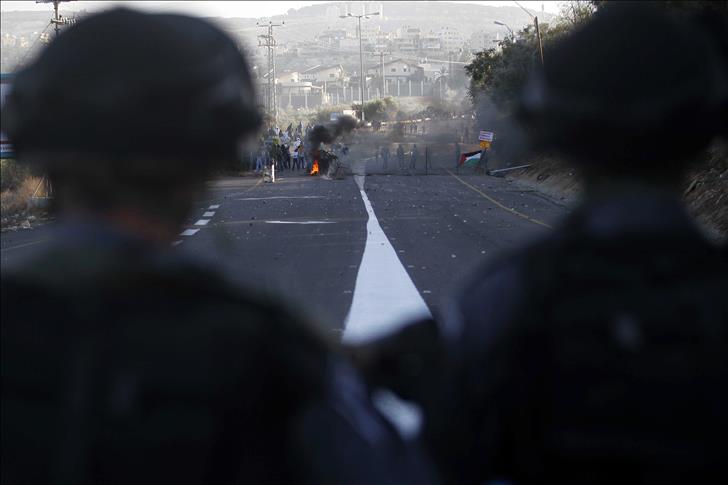
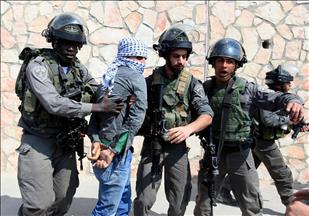
The bus driver's death had sparked violent clashes between Israeli troops and Palestinian youths in north Jerusalem.
The clashes, which started late on Sunday, continued to rage unabated on Monday.
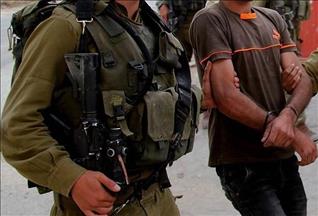
Israeli troops used stun grenades and teargas to disperse the protesters who threw stones and petrol bombs at Israeli troops in Al-Tur, Ras al-Amud and Abu Dis neighborhoods in East Jerusalem.
Police said no arrest had been made during the protests. It reported no casualties either.
Al-Ramouni's body was moved to Hadassah Medical Center for the Israeli authorities to identify the cause of death.
Tension has already been running high since Israeli authorities sealed access to the Al-Aqsa Mosque complex in occupied East Jerusalem after the shooting of an extremist Jewish rabbi in the city before reopening it hours later.
The unrest mounted further after Israeli forces killed a young Palestinian man suspected of shooting the rabbi in a raid on his East Jerusalem home.
Several Israeli parliamentarians have also entered the mosque complex in recent days, drawing the ire of Muslim worshippers and official condemnation from Arab and Muslim countries.
Groups of Jewish settlers, too, have forced their way into the site, prompting clashes between Muslim worshippers and Israeli forces.
For Muslims, Al-Aqsa represents the world's third holiest site. Jews, for their part, refer to the area as the "Temple Mount," claiming it was the site of two Jewish temples in ancient times.
Israel occupied East Jerusalem during the 1967 Middle East War. It later annexed the holy city in 1980, claiming it as the capital of the self-proclaimed Jewish state – a move never recognized by the international community.
In September 2000, a visit to Al-Aqsa by controversial Israeli politician Ariel Sharon triggered what later became known as the "Second Intifada," a popular uprising against Israel's decades-long occupation in which thousands of Palestinians were killed.
www.aa.com.tr/en