ANKARA
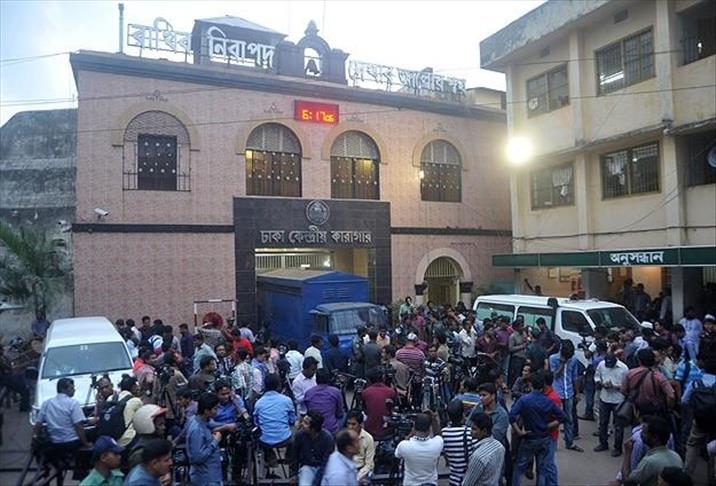
The Turkish Foreign Ministry has expressed sorrow over the execution in Bangladesh of Mohammad Kamaruzzaman, the Assistant General Secretary of Jamaat-e-Islami, on war crimes charges.
The ministry said in a statement released on Sunday that his death was "learnt with sadness" and it hoped a method could be found in the Asian state to reflect social consensus rather than resort to the use of death sentences.
Kamaruzzaman was executed a day earlier for war crimes committed during Bangladesh's 1971 independence war after he chose not to confess to committing war crimes, a condition for being granted mercy, after his petition for a trial review was rejected by the Supreme Court last week.
The statement continued: "Turkey called on Bangladesh not to carry out the execution and also to suspend other similar death penalties in order to support social cohesion and peace in Bangladesh."
"... as a country which has abolished the death penalty, Turkey raised concern over the implementation of this punishment that will lead to new tensions in the society."
Turkey abolished capital punishment in 2004 and replaced it with aggravated life imprisonment.
Kamaruzzaman was sentenced to death in May 2013 by the International Crimes Tribunal, a domestic court formed to investigate 1971 war crimes, and had an appeal rejected by the Supreme Court in November.
He was the second person executed for war crimes after another leading Jamaat-e-Islami figure, Abdul Quader Molla, was hanged in December 2013.