Talha Öztürk
24 March 2016•Update: 24 March 2016
BELGRADE, Serbia
Ahead of Thursday’s expected verdict in The Hague war crimes trial of former Bosnian Serb leader Radovan Karadzic, Serbia’s opposition Radical Party put up full-size billboards in the Bosnia and Herzegovina capital Sarajevo calling Karadzic and current party leader Vojislav Seselj "Serbian heroes".
The International Criminal Tribunal for the former Yugoslavia (ICTY) is expected to deliver a verdict Thursday on Karadzic, the Bosnian Serb wartime leader and first president of the Republic of Serbia.
Ultranationalist Seselj is facing his own war crimes trial. After being given leave to return to Serbia for cancer treatment, he has vowed he will not return to his trial in The Hague.
On Monday, Bosnian Serb officials named a student dormitory for Karadzic. Current Bosnian Serb leader Milorad Dodik unveiled a plaque bearing Karadzic’s name in front of hundreds of cheering residents.
Meanwhile, security was tightened in Bosnia ahead of the Karadzic verdict.
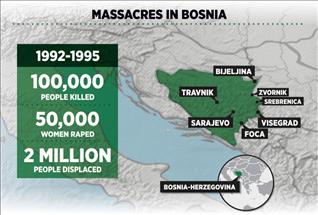
Karadzic was president of the self-styled Bosnian Serb Republic and supreme commander of its armed forces between 1992 and 1995, when around 100,000 Bosnians died as the former Yugoslavia descended into ethnic bloodshed.
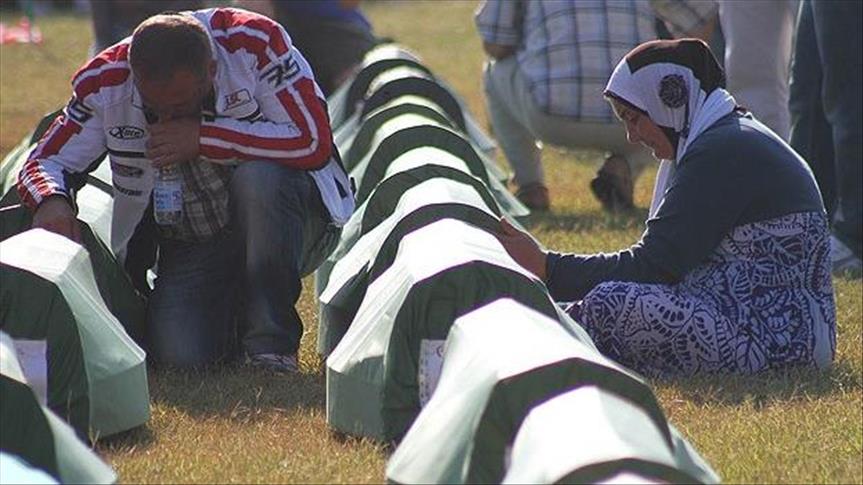
He has been charged with 11 counts of genocide, crimes against humanity and war crimes, including the siege of Sarajevo and the Srebrenica massacre, Europe's worst atrocity since World War II. Karadzic – who has been dubbed Butcher of Bosnia – was first indicted in July 1995 for the shooting of unarmed civilians in Sarajevo and taking UN peacekeepers hostage. Four months later, he was accused of orchestrating the slaughter of 8,000 Muslim men and boys after Serb forces seized the UN’s Srebrenica “safe area” in eastern Bosnia.
He went on the run after the war and was finally arrested in Belgrade in 2008.
When he was brought before the war crimes tribunal in March 2009, he refused to make a statement and declared his innocence through his lawyer.
During the case, more than 580 witnesses gave testimony of crimes such as the murder of Muslims and Croats and the destruction of private property and mosques across Bosnia.
After former Yugoslavian President Slobodan Milosevic died in The Hague in 2006 before judges delivered a verdict in his genocide trial, Muslims and Croats are eager for an outcome that will not only satisfy the relatives of tens of thousands of victims but also turn a page in the country’s history.