LONDON
Britain's prime minister sought Tuesday to underline the problems his goverment faces in its fight against extremism, underlining loopholes that have allowed some extremists to remain undetected.
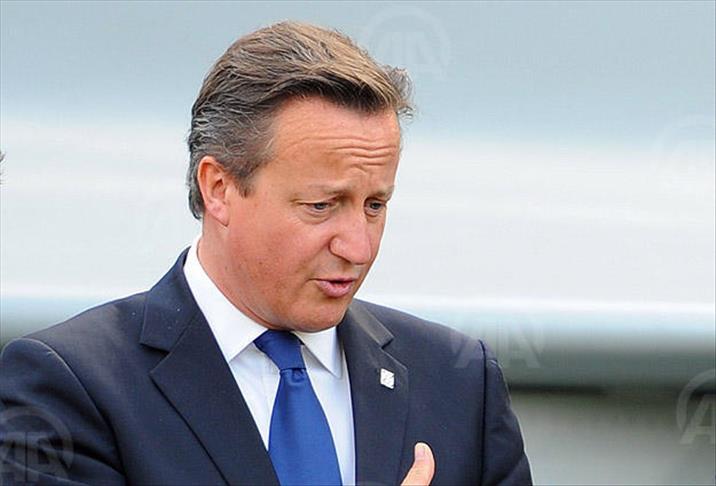
David Cameron told the BBC that a major problem has been a "distinction of saying we will only go after you if you are an extremist that directly supports violence."
"This has left the field open for extremists who know how not to step over the line," he added.
"But these are people who have radicalised young minds and led to people heading off to Syria or Iraq to take part in this ghastly slaughter."
Speaking to BBC Radio 4's Today programme, he said that such extremists "poison young minds" and encourage them to travel to warzones abroad.
Britain's Independent newspaper reported earlier this month that more than 500 British citizens are believed to have travelled to Syria as "jihadists" and 20 have been killed there.
While Britain has imposed restrictions to stop subjects suspected of fighting in Syria from returning to the United Kingdom, it has also been fighting a battle against some preachers it considers to be inciting or glorifying acts of "terrorism."
On September 25, radical preacher Anjem Choudary - who once spearheaded banned group al-Muhajiroun, which argued that the West is fighting a war against Muslims and Islam - was arrested in London on suspicion of encouraging "terrorism."
Fellow Muslim cleric Abu Qatada was deported from the U.K. to Jordan in 2013, with courts agreeing he was a threat to security, but was released from prison September 24 after being found not guilty of terrorism offences.
Cameron envisaged the battle against extremism being fought "for a generation."
He said that extremists were now coming out of Nigeria, Yemen and Afghanistan, while young people were being radicalised in universities and prisons.
www.aa.com.tr/en