LONDON
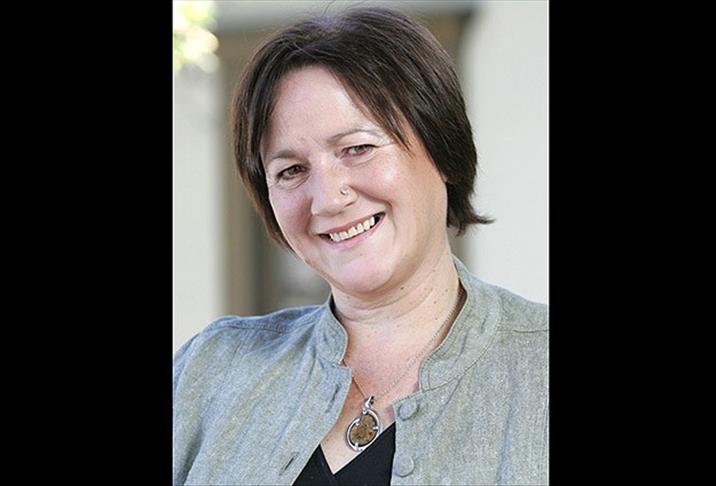
Dr Patricia Lewis, an expert from leading British think tank Chatham House, thinks that the perpetrators of chemical weapons attack in Syria can be detected through several ways including the type of the chemicals used, their intensity and missiles launching directions.
Dr Lewis, Research Director of, International Security Dept. of Chatham House, spoke to AA and evaluated those ways: “The UN inspectors - who are experts drawn from all over the world - are taking samples from survivors, from buildings, soil, clothing and may - if permitted - be able to take them from people who have been killed. The samples of soil, dust etc and blood and other body fluids/tissues are likely to contain traces of the deadly chemical itself (depending on conditions and which parts of the body - Sarin, for example, can persist for some time) and/or the compounds into which the chemical degrades. The degradation compounds of, for example, sarin are well known and well-studied and so its use would be determined. The samples will have to be sent to special laboratories for analysis and the samples will take time to collect."
On British Foreign Secretary’s recent remarks that Syria gave UN access too late, Dr Lewis said “I think that William Hague is concerned that continued shelling of the area will destroy the ballistic evidence of the chemical attack so that will make it harder for the direction of the attack to be pin-pointed. Such shelling will also disperse some of the deadly chemical and degradation products and thus increase the degree of difficulty for identification. This shelling however will not have any impact on blood and tissue samples, nor will the perpetrators be at all sure that they have managed to destroy evidence.”
Lewis said the types of the chemicals used can be identified too. She said “there are several ways - each forms part of the puzzle. The first is the chemical used and its concentration. This would tell us who had access to it.... if it is sarin for example (and the symptoms point in that direction) then the source of the weapon is likely to be government stocks. If it is another organophosorus compound, then - depending on the concentration - it could be from another source such as the agricultural sector - but it is unlikely that normal agri-products could have had such a devastating impact in such a short space of time.”
Chatham House expert Dr Patricia Lewis told AA correspondent that the origin of the missiles that carried chemicals would be a major piece of information.
“Then there is the direction from which the missiles came. Just as in a murder case the police look at the forensic evidence to determine from where the bullet entered the body and from which gun the bullet was fired, missile forensics can do the same thing. Studying the craters and fragment patterns of the shells can determine the line of fire. This information can then be coupled with radar, satellite imagery and eyewitness accounts to pin-point from where it was fired. Knowing that can tell us who fired the shells” Dr Lewis added.
Dr Lewis concluded by underlining the functionality of an action that is planned to be taken against Syria and said it could prevent more chemical attacks. “The general sense is that if no effective (again, not necessarily military) action is taken, then there will definitely be more CW attacks. One possibility is that ammunition depots that are likely to contain chemical weapons stocks be targeted - that way reducing the possibility that they could be used again by anyone”, Lewis said.