By Erol Avdovic
UNITED NATIONS
When UN Secretary General Ban Ki-moon returned from his shuttle-diplomacy engagement between Moscow and Kiev last week he said the de-escalation of tensions between Russia and Ukraine had been the main objective.
And a confident Ban said Russian president Vladimir Putin reassured him he had no intention of intervening militarily in southeastern Ukraine.
At his press encounter in front of the UN Security Council last Thursday, the secretary general even said he is “deeply concerned” over the Ukrainian situation in a new way. Concerned because the current crisis potentially diverts attention from other global problems and that could harm the UN’s “ability to address other pressing concerns, conflicts and humanitarian emergencies.”
“I have also urged members of the Security Council to address these issues as soon as possible, because there are so many, much more longer-term issues like the millennium development goals, sustainable development and climate change,” Ban told UN reporters.
Yet experts and diplomats believe it’s impossible to downgrade the Ukrainian "powder keg" from the top priority, mostly because of those who are vulnerable on the ground.
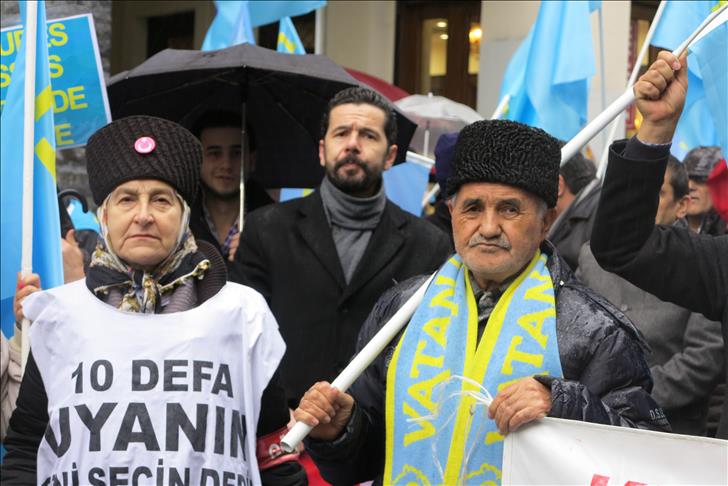
Shifting the focus of interest is exactly what Moscow wants to achieve, according to Ayla Bakkalli, representative of the Crimean Tatar Mejlis at the United Nations and executive member of the World Congress of Tatars.
She said there is “well designed Russian propaganda” premeditated to slow down the opposition to the illegal annexation of Crimea now formalized by the Kremlin.
Moscow is counting on the world's preoccupation with so many other troubles, Bakkalli said.
“One of the most important things that the Crimean Tatars of Ukraine must watch is propaganda versus information,” Bakkalli told Anadolu Agency.
She added that the developing narrative that Crimea is gone forever into the hands of Moscow is also “very dangerous propaganda.”
The facts on the ground need to be asserted but Moscow continues to bar international monitoring missions to Crimea, said Bakkalli.
Crimea could become a bloody arena of inter-ethnic conflict, Tatar leaders said at the UN this week and be reminiscent of the forced relocations during the Soviet era of the 20th century.
- Diplomatic war
Russian annexation of the Crimea “is not ‘fait accompli,” said Rita Kazragiene, deputy permanent representative of Lithuania to the UN.
And Kazragiene hinted Crimea will not disappear from the UN agenda no matter the other global problems mentioned by Ban.
The Secretary General finally stated his position last week on the Crimea referendum siding with the UN General Assembly (UNGA) resolution. The resolution calls for Ukrainian territorial integrity and underlining the March 16th referendum in Crimea as invalid.
The resolution was adopted by a narrow majority of 100 votes in favor, with 58 abstaining, 24 countries not showing and 11 opposing.
“According to the UN General Assembly (UNGA), Crimea is still part of Ukraine and it will continue to be,” Kazragiene said.
- Referendum and Stand-off
Crimean Tatar representative Bakkalli raised the possibility of holding a new referendum in the Crimea, this time by the Crimean Tatars, but she didn’t say when or in what form such a referendum would take place.
Most UN diplomats agree the struggle over Crimea is far from over. Or, as another western diplomat told AA at the United Nations in New York, major western powers are preparing for a possibly long “stand-off with Russia over Ukraine."
englishnews@aa.com.tr