By Mohammed Taha Tewekel
ADDIS ABABA
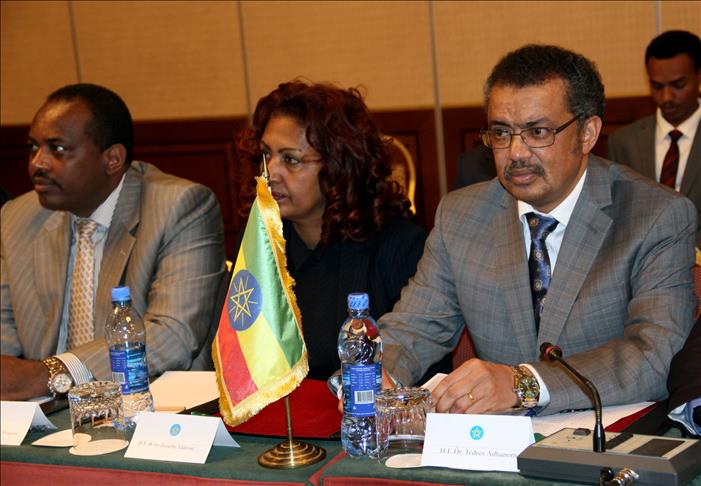
Ethiopian Foreign Minister Tedros Adhanom said Monday that his country would not commit to Nile water-sharing agreements that it was never signatory to.
Speaking at a press conference in Addis Ababa following a joint Ethiopia-Egyptian ministerial committee meeting alongside Egyptian counterpart Sameh Shoukri, Adhanom noted that a water-sharing treaty between Egypt and Britain was inked in 1929, while a second treaty was signed between Egypt and Sudan in 1959.
Ethiopia, he said, could not adhere to either agreement, neither of which it had ever signed on to.
Adhanom said Ethiopia had been an independent, sovereign country when the agreements were signed, but noted that Ethiopia had never been consulted on the treaties – even though the country represents a principal source of Nile water.
He said he believed that the Egyptian people understood Ethiopians' reservations regarding the two agreements.
Alternative deals
Adhanom said Nile Basin countries had – after extensive meetings over ten years – signed the Nile Basin Cooperative Framework Agreement. These countries, he added, had reached the Entebbe Agreement after negotiations on a framework agreement broke down.
The Ethiopian foreign minister said the Entebbe Agreement met international standards, noting that the treaty took the interests of all Nile Basin countries – including Egypt – into account.
The Entebbe Agreement was unlike previous treaties, he asserted, which had put Egypt's interests above those of all other parties.
He called on Egypt to sign onto the treaty, which, he noted, was open to all Nile Basin states.
Adhanom stressed his country's readiness to cooperate with other Nile Basin states to hammer out an equitable water-sharing arrangement.
Adhanom said construction of Ethiopia's multibillion-dollar hydroelectric dam – currently underway on the Nile's upper reaches – would not be halted during negotiations with Egypt.
He underlined his country's keenness to preserve the interests of both Egypt and Sudan, saying that Ethiopia believed in shared benefits with its neighbors.
Benefits
Adhanom said the Grand Renaissance Dam would benefit both Egypt and Sudan, while also contributing to Ethiopia's national development.
He described the project as a "development-oriented" one aimed at generating electrical power and ensuring the flow of river water to fellow states of the Nile Basin.
He said the project was being built only 20km from Sudan's border with Ethiopia, meaning it could not be used for irrigation purposes.
Adhanom added that the new dam would also save enormous amounts of water that had been wasted in the past due to evaporation.
englishnews@aa.com.tr
www.aa.com.tr/en