Ilayda Cakirtekin
08 June 2026•Update: 09 June 2026
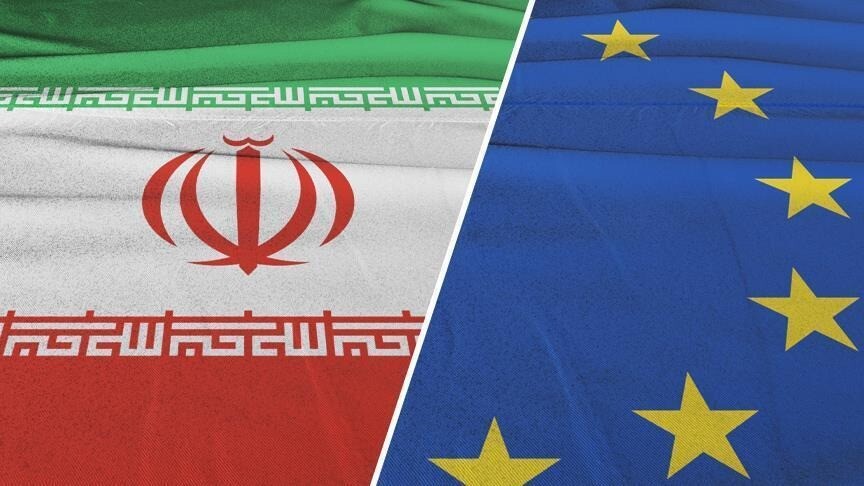
The European Union imposed sanctions Monday on the spokesman for the naval arm of Iran’s Islamic Revolutionary Guard Corps (IRGC) and a regional command over the closure of the Strait of Hormuz.
“The Council approved today restrictive measures against two individuals and one entity under the extended legal framework targeting those involved in Iran’s actions and policies threatening the freedom of navigation in the Middle East,” said a Council of the EU statement.
The bloc said it was listing Mohammad Akbarzadeh, the spokesperson for the IRGC’s naval wing, and the organization’s Hormozgan Provincial Command.
It also noted that it was listing Hamid Hosseini, a representative of Iran’s Oil, Gas and Petrochemical Products Exporters’ Union.
“Those listed under the sanctions regime are subject to an asset freeze, and it is prohibited to provide them with funds or economic resources, either directly or indirectly,” the statement said.
It added that a travel ban to the EU “applies to all natural persons listed.”
Responding to the move, Kazem Gharibabadi, Iran’s deputy foreign minister for legal and international affairs, described the sanctions as a “fraudulent move” in a post on the US social media platform X.
He accused EU member states of violating the rights of the Iranian people and remaining silent over a US naval blockade against Iran.
Gharibabadi also argued that Iran is not a party to the UN Convention on the Law of the Sea and said Tehran’s legal approach in the Strait of Hormuz is based on the principle of “innocent passage” under customary international law and maritime security considerations.
“Unilateral coercive measures do not create law; rather, they can themselves be the source of international responsibility for their authors,” he wrote.
He added that Iran attaches no value to the EU’s “political and hypocritical” action and would continue exercising its sovereign rights over the Strait of Hormuz.