By Martin Banks
BRUSSELS
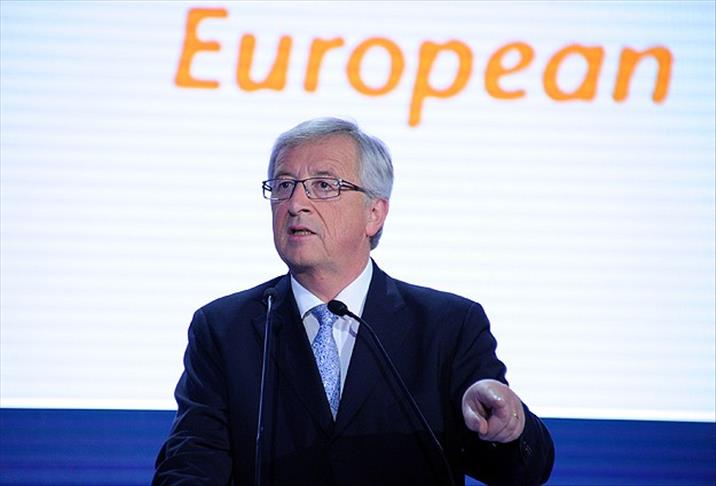
European Union leaders have confirmed former Luxembourg Prime Minister Jean-Claude Juncker as their choice to become the next president of the European Commission in face of strong opposition from Britain.
The next occupant of the EU's top job has been the subject a fierce debate about the future direction of Europe, with U.K. Prime Minister David Cameron arguing Juncker is too much in favour of closer political union and might block EU reform.
Even the way the appointment has been handled has been fraught with bitter discord and tension between pro- and anti-federalist members.
The choice over the next president was subject to the ‘Spitzenkandidaten’ process, whereby candidates are nominated by the main pan-European ‘political families’. Under this arrangement the party which came top in the European elections in May (the centre right European People's Party) had the right to nominate the candidate.
Their candidate was Juncker.
But Cameron and the anti-federalist camp have argued that it remains the right of national governments to decide who gets the job.
The surprising thing for some is that the Spitzenkandidaten experiment appears to have worked so well.
Former European lawmaker Andrew Duff said: "This time the European Parliamentary elections were indeed a bit different. After 35 years, turnout rose. The sharper electoral contest has led to a larger understanding of the importance of the choice of the commission president."
He added: "Cameron argues that Juncker is too much of an old-fashioned federalist to be commission president. Yet he has no other candidate to put up. And, despite vain claims, Cameron has no coherent reform program of his own."
A totally different perspective comes from the U.K. Independence Party’s new Scottish MEP David Coburn, who says Juncker's appointment "proves the EU is unwilling and incapable of reform even in the face of the recent European elections which showed a huge increase in the vote for Eurosceptic candidates. The appointment of Juncker is a slap in the face to millions of people across Europe who rejected the failing European political class."
Rebecca Harms, leader of the Greens group in the European Parliament, disagrees. She said: "The EU needs a president who feels accountable not only to EU leaders but also to the Parliament and consequently EU citizens. It’s only by increasing the visibility of its decision-making and policy that the EU can win back citizens’ trust in its policies and politicians."
Many will argue that Juncker´s appointment is a significant defeat for Cameron’s vision for Europe and a blow to his political strength.
But it could complicate the relationship between Cameron and German Chancellor Angela Merkel. Alternatively, it may strengthen Cameron’s hand ahead of Britain´s potential 2017 referendum on EU membership.
So, will a Juncker-led Commission mean Europe becoming more, or less, federalist?
One crucial issue facing him with be the ground-breaking free trade deal currently being negotiated with the U.S. -- the Transatlantic Trade and Investment Partnership (TTIP) -- that is supposed to make the EU more open to global trade, a key Cameron priority.
However, TTIP has come under sustained attack in recent months.
Juncker has promised negotiate a "reasonable and balanced" agreement with the U.S. without sacrificing Europe’s safety, health, social and data protection standards.
The Commission is responsible for negotiating the TTIP which will prove crucial in determining whether a final deal will be ambitious or one designed to upset the least number of people as possible.
If Juncker becomes president of the European Commission -- and his nomination still has to be rubberstamped -- it will represent a power shift away from national governments.
No other names were on the table so, in the end, Juncker's likely victory is not because he is seen as the outstanding candidate to take Europe forward but because he helps forge a consensus.
And, to an EU whose very foundations are constructed on consensus building, that probably makes perfect sense.
www.aa.com.tr/en