Yuksel Serdar Oguz
05 September 2014•Update: 19 February 2017
CAIRO
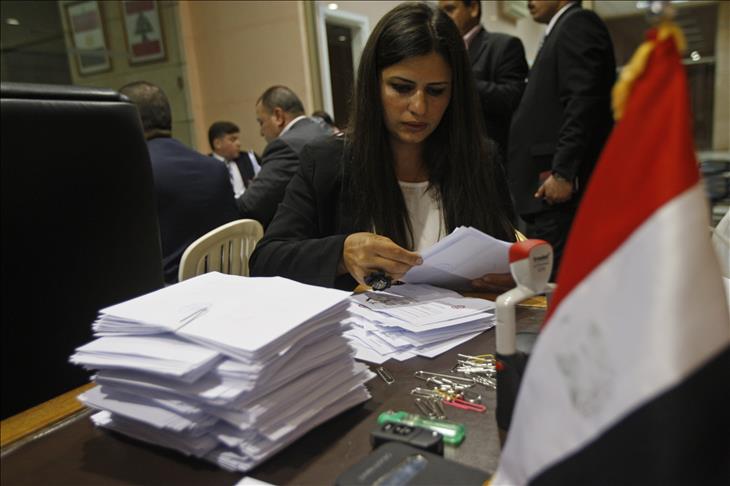
Egypt is currently awaiting parliamentary elections, expected sometime before the end of the year.
The legislative elections will be the third and final item on an army-imposed transitional roadmap unveiled in the wake of last year's military ouster of elected president Mohamed Morsi.
Egyptian Prime Minister Ibrahim said in an interview this week with the Russia Today television channel that the government had taken "all necessary logistical and administrative steps to hold [parliamentary polls] and follow through with the roadmap," which also included a constitutional referendum in January and a presidential election in May.
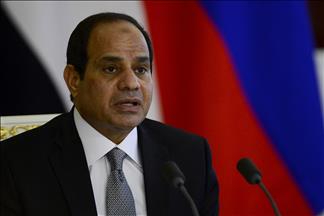
In July, Egyptian President Abdel-Fattah al-Sisi appointed a parliamentary elections commission tasked with managing the upcoming polls, which will be held in three phases under judicial supervision.
The commission completed its first task by setting up a commission for registering voters and updating their information.
Most parliamentary contestants are the political parties that endorsed al-Sisi, widely seen as the architect of Morsi's ouster, during recent presidential polls.
These parties include the liberal Free Egyptians party, funded by Coptic telecommunications tycoon Naguib Sawiris; the Conference Party, led by former Arab League chief Amr Moussa; the leftist Tagammu Party; and Tamarod, the group credited with spearheading last year's anti-Morsi demonstrations.
On June 5, military-installed interim president Adly Mansour decreed a law regulating elections for Egypt's incoming "House of Representatives" (previously known as the "People's Assembly).
The legislation states that 120 out of 540 seats will be determined via an electoral list system, while the remaining 420 will be earmarked for individual candidates.
The law also stipulates that a minimum of 56 seats be filled by women, 24 by Christians and 16 by people under the age of 35.
Another law defining electoral districts has yet to be issued.
Electoral alliances:
Four main Egyptian electoral alliances have been announced thus far:
The Egyptian Front Alliance
Unveiled on August 17, this includes Moussa's Conference Party; the Patriotic Movement Party, led by former presidential candidate and Mubarak-era prime minister Ahmed Shafik; the Tagammu Party; the Modern Egypt Party; the Democratic Generation Party; the Republican People's Party; the Egyptian Trade Union Federation; the Egyptian Farmers Union; and the Egyptian Council of Arab Tribes.
The Wafd Coalition
Led by the longstanding secular Wafd Party, this coalition includes the Egyptian Social Democratic Party; the Reform and Development Party; the Conservatives Party and the Egyptian Bloc.
Two days ago, Wafd Party leader Al-Sayed al-Badawi called for postponing the polls, saying that the parliamentary elections law should be amended.
The Civil Parties' Bloc:
This left-leaning alliance includes the Constitution Party; the Egypt Freedom Party; the Popular Current; the Karama Party; and the Justice Party.
These political forces supported Popular Current leader Hamdeen Sabahi, a two-time presidential candidate who was al-Sisi's sole competitor in the May elections – in which he received less than 4 percent of the vote.
The Independence Current:
Launched on August 24, this alliance includes the Ahrar Party; the Egypt Future Party; and the Egyptian Arab Socialist Party.
Undecided:
The Islamist-leaning Strong Egypt Party, meanwhile, led by renegade Muslim Brotherhood leader Abdel-Moneim Abul Fotouh, has conditioned its participation in the upcoming polls to the amendment of the parliamentary elections law.
The Salafist Nour Party, the only Islamist party to have supported the army's ouster of Morsi, has yet to announce whether or not it will contest the elections. Nour won the second largest number of seats after the Muslim Brotherhood during Egypt's 2011 parliamentary elections.
Boycotters:
The pro-Morsi National Alliance for the Defense of Legitimacy – which has never recognized Egypt's military-backed authorities – will likely boycott upcoming parliamentary polls.
This bloc, led by the Muslim Brotherhood (which swept the 2011 legislative elections), boycotted this year's two military-backed polls.
A number of protest movements that oppose both the military and the Brotherhood will also boycott the upcoming elections. These include the April 6 youth movement, the Ahrar and the Revolutionary Socialists.
www.aa.com.tr/en