BANGKOK
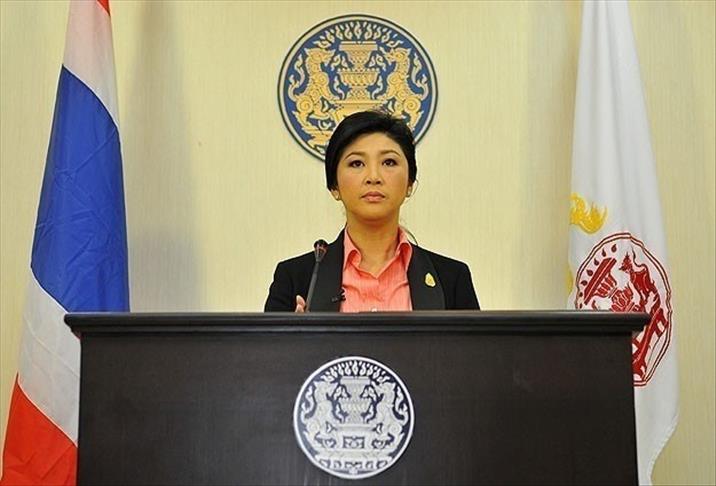
As Thailand braces for a crucial vote with far-reaching implications for its political future, former Prime Minister Yingluck Shinawatra put up a spirited defense during her impeachment trial Thursday.
“I came to prove my innocence. I have never thought of cheating anyone,” a well-prepared Yingluck spoke confidently in front of a sparsely occupied national assembly.
Yingluck, whose government was overthrown in a May 22 coup, is accused of dereliction of duty in relation to a rice-subsidies scheme, which her opponents claim was riddled with corruption.
If impeached, Yingluck -- the sister of highly divisive ex-Prime Minister Thaksin Shinawatra -- will be banned from politics for five years.
The military-appointed assembly, half of whose 220 members are active or retired military officers, is scheduled to vote on the case Friday.
On Thursday, Yingluck focused on underlining the weaknesses of the process undertaken against her by the Anti-Corruption Commission, and the benefits of the subsidies program for millions of Thai rice farmers.
“The legal grounds used by the Anti-Corruption [Commission] to bring the impeachment case against me are not valid, as they are based on the 2007 constitution which has been abolished,” she said.
The proceedings are based on the 2007 constitution, which the military abolished immediately after the coup. Legal experts working for the government argue, however, that the impeachment proceedings are still valid because organic laws linked to the constitution have not been abolished, an argument doubted by some academics.
“The rice-scheme was a big project, but the Anti-Corruption Commission heard only seven witnesses in the case, all of whom were political enemies of my party, Puea Thai,” Yingluck added.
Projecting official documents and press clippings onto a screen, the former premier disputed the validity of the figures put forward by the commission.
“The commission charged that 2 million tons of rice were missing, but several NGOs have confirmed that it was not the case,” she said.
Her lively defense -- broadcast live on Thai TV -- contrasted with the earlier performance of the commission’s elderly secretary-general, Vicha Mahakun, who laboriously read a succession of figures and spoke of the necessity of distinguishing “virtuous people” from “bad people”.
At the conclusion of her statement, Yingluck -- surrounded by several of her former ministers -- insisted that the “benefits of the scheme exceeded the disadvantages.”
“I wanted to give the opportunity to the poor, to the farmers to have a better life. Farmers are the backbone of our country,” she said. “The scheme generated significant income for the farmers and other segments of the economy. When compared to the economy as a whole, it was not a significant burden.”
Critics of the rice-subsidies scheme have said that it caused huge financial losses for the state, was run without transparency and opened the door for massive corruption. In November, the Thai Finance Ministry said that losses caused by the program had amounted to $15.8 billion since July 2011, when Yingluck was elected PM.
An impeachment decision requires the vote of three-fifths of the assembly. Though typically difficult to reach, observers believe the proportion is achievable as the country is under the leadership of a military opposed to the Shinawatra political clan.
Thailand’s military leaders, particularly junta chief and Prime Minister General Prayuth Chan-ocha and his defense minister General Prawit Wongsuwan, have strenuously been denying that they had given assembly members orders regarding the vote.
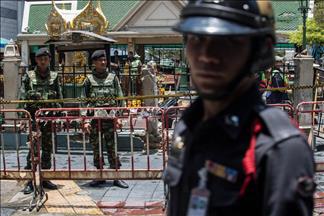
Army Chief General Udomdej Sitabutr has warned the “Red Shirts” -- supporters of the Shinawatra clan -- not to demonstrate if the impeachment is approved, saying Wednesday that he would use martial law to counter them in such a case.
The impeachment proceedings run the risk of increasing political tensions and jeopardizing the reconciliation between rival political clans called for by Chan-ocha.