BERLIN
Germany’s Turkish community has strongly criticized a controversial German draft parliamentary motion to support Armenian claims over the incidents of 1915 in the Ottoman Empire and warned that such a move may further alienate Turkish immigrants in German society.
Bekir Yilmaz, director of the Turkish Community in Berlin, or the TGB, said at a press conference in Berlin on Wednesday that politicizing the 1915 events undermined reconciliation efforts between Turks and Armenians, and also contributed negatively to the integration of Turkish immigrants into German society.
"How many lawmakers really have a comprehensive and deep knowledge of history that qualifies them to make such a judgment on history?" Yilmaz asked.
"Such decisions must not be taken by the parliaments; this should be the work of historians and courts," he said.
Yilmaz urged lawmakers to refrain from politicizing the debate based on one-sided views, but facilitate the reconciliation process between Turkey and Armenia by arranging experts and politicians from both countries to sit on the table.
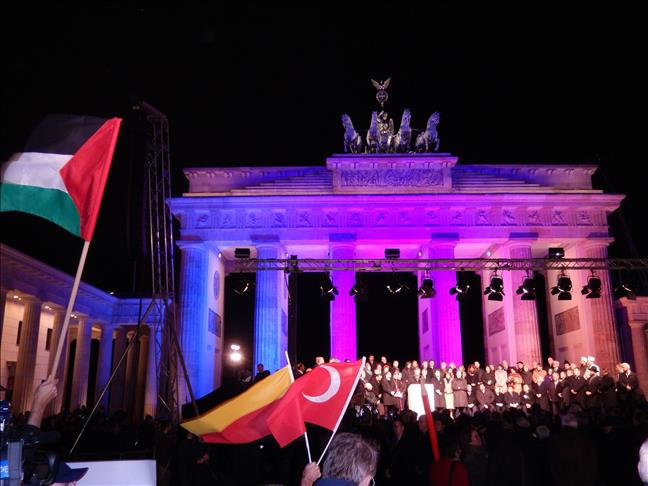
The community group has organized a major rally this coming Saturday along with 14 other non-governmental organizations to call on German lawmakers to stop the initiative.
The German government announced Monday that it would support a draft parliamentary motion to describe the relocation of Armenians in the Ottoman Empire in 1915 as "an example for the history of forced deportations and genocides in the 20th century."
The move marked the first time that the German government had used the word "genocide" when referring to the relocation of Armenians in 1915.
It came three days after Pope Francis also did the same, joined by calls from the German Protestant and Catholic churches to label the tragedy as "genocide."
‘Motion is one-sided’
Yilmaz, who spoke in German at the press conference, said that the motion was based on a one-sided account of history to back the Armenian allegations, but did not take into account the civil war conditions at that time; alleged massacres by Armenian armed groups who sought independence from the Ottoman Empire, and sufferings of hundreds and thousands of Ottoman citizens from other ethnic and religious groups.
Dr. Ali Soylemezoglu, director Dialogue for Peace, a Turkish association carrying academic studies on the tragedies of 1915 and the reconciliation efforts, also criticized the move at the German parliament.
"The European public opinions are falsely informed about the incidents of 1915. It was like a civil war, murders were committed on both sides," Soylemezoglu said.
He claimed that the archive documents from countries outside of Turkey, including the U.S. and Germany also rule out "genocide" or any systematic killings of Armenians.
He also said that statements of Johannes Lepsius, a German Protestant who became a missionary in the Ottoman Empire, showed that Armenians were "victims of policies" of world powers at that time.
"Lepsius himself said that Armenians became the victims of policies of Russia and Great Britain. Armenians became a pawn in international politics," Soylemezoglu added.
Davutoglu calls Merkel
Turkish Prime Minister Ahmed Davutoglu spoke over the phone with German Chancellor Angela Merkel on Tuesday to discuss the motion submitted to the German parliament, deputy government spokeswoman Christine Wirtz said Wednesday.
Wirtz said that Merkel informed Davutoglu about the German government’s position and praised the recent statement of the Turkish premier in which he paid tribute to the Ottoman Armenians who died in 1915.
"The Turkish prime minister has talked about the joint responsibility of Armenians and Turks, healing old wounds and continuing with the reconciliation process. Chancellor Merkel views this positively," she said.
Foreign Ministry spokesman Martin Schaefer said that Davutoglu’s statement included many lines shared by Germany.
In a statement Monday, Davutoglu offered his condolences to the grandchildren of Ottoman Armenians who lost their lives during World War I. "During the last years of the Ottoman Empire, many Ottoman citizens from different ethnicities who lived together for centuries in peace, suffered great torments.
"We commemorate the innocent Ottoman Armenians and convey our condolences to their grandchildren," Davutoglu added.
Turkey has called for the establishment of a joint commission of historians and the opening of archives to study and uncover what happened between the Ottoman Empire and its Armenian citizens.
The 1915 events took place during World War I when a portion of the Armenian population living in the Ottoman Empire sided with the invading Russians and revolted.
The relocation by the Ottomans of Armenians in eastern Anatolia following the revolts resulted in numerous casualties.Turkey does not dispute that there were casualties on both sides, but rejects the definition of "genocide."