BRUSSELS
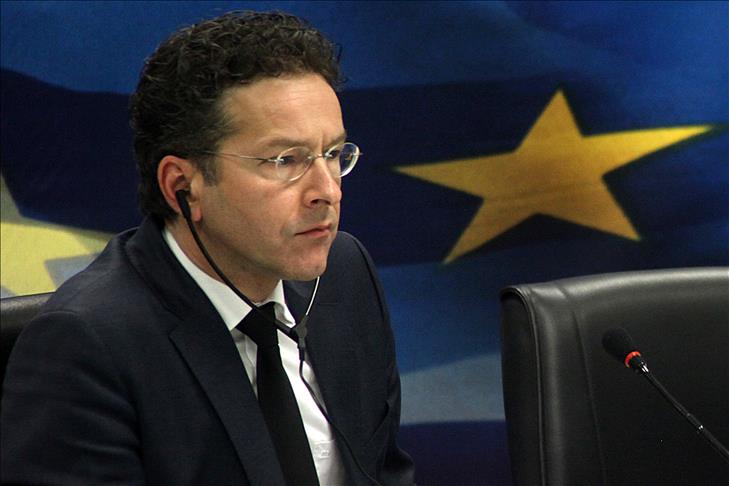
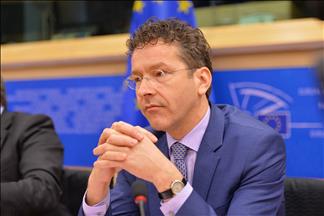
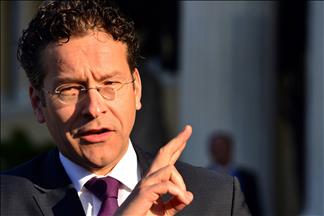
Greece should request an extension for its bailout program, and then creditors can be flexible about terms, Euro group President Jeroen Dijsselbloem told reporters in Brussels on Tuesday.
Speaking ahead of the EU Economics and Finance Ministers meeting on Tuesday, Dijsselbloem added: "It is really up to the Greeks; we cannot make them or ask them; it really is up to them,"
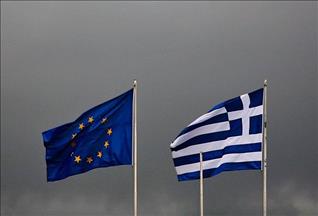
Greece’s leftist SYRIZA party, elected on the promise that it would end austerity measures, is demanding changes to the country’s massive €240 billion ($274 billion) bailout. The bailout formally ends on Feb.28, and Greece is negotiating with its international creditors.
"I hope that Greece will ask for an extension of the program, and once they do, we can allow flexibility within the program that will adapt to Greek political priorities."
Greek Finance Minister Yanis Varoufakis told reporters ahead of the meeting on Tuesday: "We will continue to deliberate in order to achieve a very good outcome for the average European -- neither for the average Greek, nor for the average Dutch person or the average German."
Varoufakis has rejected any continuation of the current bailout plan. He called for consideration of a proposal from the European Commission in which Greece would get four to six months credit in return for a freeze on its anti-austerity policies.
The Eurogroupe has strongly rejected such a plan, and has insisted on a continuation of the bailout.
Varoufakis said Monday he was ready to sign a draft communique that would allow an extension of the bailout program for a period of four months on the condition that it would not impose recessionary measures.
"For instance, no cuts in lowest of pensions, no VAT (Value-Added Tax) hikes during this period, especially in regions of Greece that in the beginning of summer required all the assistance it can get to boost tourism," he said.
"Unfortunately, that document I was prepared to sign was withdrawn minutes before the Eurogroup meeting on Monday began and was replaced with another document," he told reporters after Monday’s meeting.
As the talks continue to make little progress, Greek banks are losing about $2 billion every week as depositors withdraw funds. The Greek Central Bank calculates that funds remain for about ten days.
The only source of funding for Greek banks is an emergency loan from the European Central Bank, and the ECB has made no commitment to making such loans under the current circumstances.