02 May 2016•Update: 08 May 2016
By Ainur Rohmah
TUBAN, Indonesia
Indonesia has sought to underline that it did not pay a ransom to secure the release of ten hostages held by a Daesh-linked group on islands that lie between Malaysia and the southern Philippines.
However, the coordinating political, legal and security affairs minister would not comment Monday on reports that the sailors were released after a contribution from their employer to Philippine militant group the Abu Sayyaf.
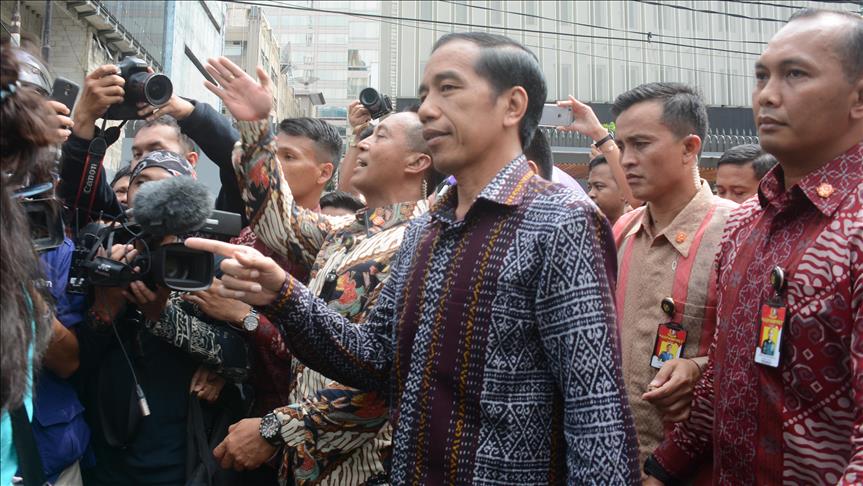
"We will never claim that the government did that [paid ransom] because we never do that," Luhut Binsar Pandjaitan told reporters at the presidential palace.
“That's company business,” he added, when asked if Patria Maritimes Lines helped out. "I don't want to comment on that."
The 10 Indonesian sailors, who were abducted in late March from a tugboat off Tawi-Tawi province, were turned over Sunday to the governor of the nearby majority Muslim island province of Sulu, Governor Abdusakur Tan II. The Abu Sayyaf had earlier demanded 50 million peso ($1 million) for their release.
They were flown to Jakarta at night and underwent thorough medical examinations at a hospital.
An Indonesian negotiator who worked for the men’s release, Major Gen Kivlan Zein, also insisted Monday that no ransom was paid to the Abu Sayyaf.
"The release was done without ransom, but [resulted from] negotiations," national news agency Antara quoted Zein, a former soldier, as saying.
Zein said that after the sailors’ captures, Philippine and Indonesian negotiators reached out to the Abu Sayyaf with the help of local authorities, including Governor Tan.
According to Zein, Tan is a relative of a wanted leader of the Philippines' one-time biggest Moro revolutionary group, Nur Misuari, whose former driver and bodyguard was identified as among those who kidnapped the Indonesians.
"So, I as the company representative asked for his [Tan’s] help to persuade the kidnapper," he underlined.
Zein, who remains in the Philippines, said negotiators were now working for the release of four other Indonesian hostages, who were abducted from a tugboat in mid-April.
"We already know where they are. I've contacted [the party] who has been holding our four citizens," he said. "Hopefully we can release them."
One of released men described being frequently “terrorized” by Abu Sayyaf members.
"They threatened to cut our throats if money was not given," metrotvnews.com quoted Surianto -- many Indonesians use one name -- as saying.
He and other hostages recounted how their captors had kept close watch over them, while the hijacked ship's captain Peter Tonsen Barahama said, "sometimes we were only fed once a day."
The 10 were freed six days after the Abu Sayyaf beheaded a Canadian hostage, 68-year-old John Ridsdel, after a 300-million pesos ($6 million) ransom failed to be paid.
The Abu Sayyaf is notorious for beheading victims after ransoms have failed to be paid for their release.
The Abu Sayyaf is believed to still be holding more than a dozen captives including four Malaysians kidnapped off the coast of Malaysia’s eastern Sabah state in early April.
Other hostages include a Canadian, a Norwegian and a Filipino woman seized alongside Ridsdel in September, a Dutch national kidnapped more than three years ago in Tawi-Tawi, a Chinese national and six other Filipinos.
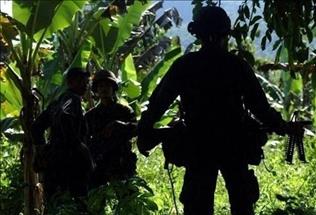
Since 1991, the group -- armed with mostly improvised explosive devices, mortars and automatic rifles -- has carried out bombings, kidnappings, assassinations and extortions in a self-determined fight for an independent Islamic province in the Philippines.