By Lauren Crothers
PHNOM PENH, Cambodia
Factories supplying garments for brands such as Gap and H&M are exploitating workers and failing to ensure that proper standards are met and rights upheld, according to an investigation by Human Rights Watch.
It accused the workplaces of mistreating workers, stymying efforts to forms unions, discriminating against pregnant women and even forcing staff to work overtime.
“[M]any brands have not fully lived up to... [their] responsibilities due to poor supply chain transparency, the absence of whistle-blower protections, and failure to help factories correct problems in situations where that is both possible and warranted,” a report released in Phnom Penh on Thursday said.
It added, however, that while some brands are “withholding information on issues of concern,” others have voluntarily subjected themselves to closer scrutiny.
The report, titled “Work Faster or Get Out,” comes after researchers interviewed 340 people, including garment workers, factory representatives and unionists around the country.
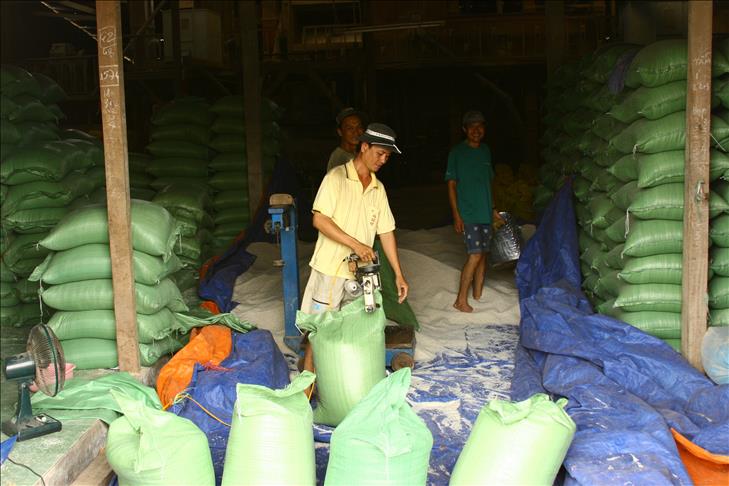
Case studies showed that H&M, Gap, Marks & Spencer and Joe Fresh have all been supplied by smaller, unauthorized subcontractor factories, where workers’ rights are often flouted and short-term contracts or fixed-duration contracts (FDCs) issued.
Researcher Aruna Kashyap told reporters at the launch that British retail giant Marks & Spencer plans to publicly release its supplier list some time next year, while Canadian brand Joe Fresh declined to do so, saying such a move would expose secret business practices.
Last year, Adidas began disclosing its supplier lists biannually, while Swedish clothing giant H&M made its list public in 2013 and updates it every year.
H&M released a statement to coincide with the launch of the report Thursday, stating that it agreed with a number of concerns raised by HRW and was making a number of efforts to offset these.
H&M said it too was concerned about the practice of issuing short-term contracts to workers, which HRW says is a way of preventing workers from joining unions and gaining benefits. H&M said it has been urging its suppliers to move away from the practice.
The retailer also acknowledged that the use of subcontractor factories “is a challenge to us, and, as HRW rightly states, often is where infringement of workers’ rights occur.”
Across the board, workers have testified as to the pressures faced to meet quotas and the limitations imposed upon them by factory bosses.
Pregnant women are often overlooked when factories are hiring and in many cases, these women are fired once their pregnancies are made public. In one case, a worker told HRW that she aborted her unborn child in order to return to the factory and keep her job.
Female staff must also endure sexual harassment, either by colleagues or management, and HRW noted the absence of any kind of legislation to protect against sexual harassment in the workplace.
Phil Robertson, deputy director of HRW’s Asia division, told The Anadolu Agency that he was supposed to meet with Labour Minister Ith Sam Heng Thursday afternoon to discuss the report, but reached later said Heng had not shown up, undersecretary of state Hou Vuthy sent in his place.
He said that Vuthy appeared not to have been fully briefed on the report or issues therein.
“The discussion was not very fruitful at all,” Robertson said. “We didn’t get any traction on any of the issues we wanted to raise. It was not a productive meeting.”
Labour Ministry spokesman Heng Suor could not be reached for comment.
Ken Loo, the secretary-general of the Garment Manufacturers Association of Cambodia, told AA by telephone that the organization did not have the power to sanction anyone over the use of short-term contracts.
“The use of FDCs is not illegal,” he said. “Secondly, and I’ve said this to all NGOs trying to report violations of FCDs, please submit evidence to the relevant authorities and I’m sure they will investigate and adopt sanctions that we deem appropriate.”
He added that “the association in principle does not condone the practice of discrimination as described in the report.”
An email requesting comment was sent to Gap but as of 6.30 p.m. (1230GMT) a spokesperson had not replied.