12 May 2016•Update: 13 May 2016
ANKARA
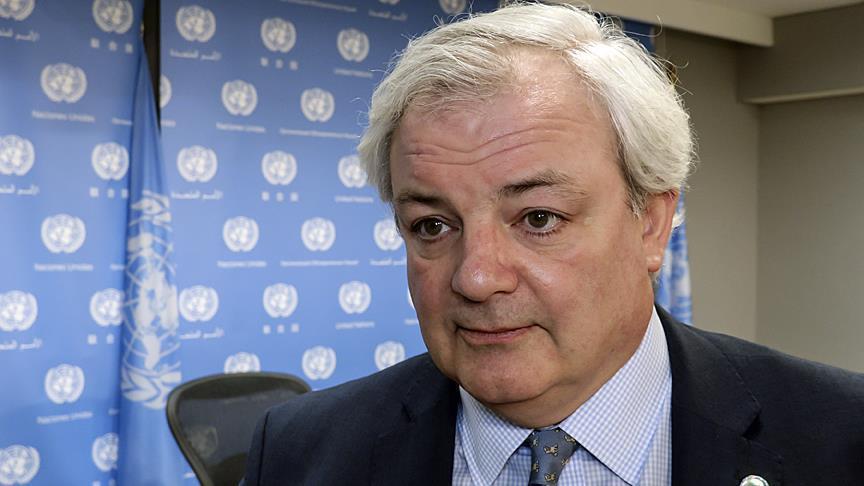
UN humanitarian affairs chief Stephen O'Brien said Thursday that Istanbul has been selected for the first World Humanitarian Summit because the city represents world history.
In a video conference on the May 25-26 summit, O'Brien said that a vast number of presidents and heads of government, including German Chancellor Angela Merkel and Niger President Mahamadou Issoufou, will take part in the summit. "A total of 50 presidents and heads of governments from 125 different countries will attend."
Pointing out that Istanbul is one of the world’s most historical cities, O'Brien said that Istanbul was chosen for the summit due to its symbolic meaning.
"Istanbul is not only a city, Istanbul represents world history, a meeting of east and west and north and south," he said.
The summit to address humanitarian problems will bring world leaders together to agree on a package of practical steps ahead.
The summit, spearheaded by UN Secretary-General Ban Ki-moon and organized by the United Nations Office for the Coordination of Humanitarian Affairs (UNOCHA), is aimed at discussing humanitarian issues in detail.
Turkey is well prepared for the high-profile summit, which will see up to 5,000 participants, including statesmen, businessman, NGOs, international agencies, and representatives of communities affected by refuge crises.
O'Brien pointed out that the summit is being held in the country where the largest number of refugees is now hosted, saying, "Over 2 million refugees are in Turkey now."
Turkey currently hosts 2.7 million Syrian refugees, as well as hundreds of thousands from troubled states such as Iraq and Afghanistan.
Turkey is currently home to the world’s largest refugee population, and it has spent $10 billion on the refugee crises on its soil since 2011.
Syria has remained locked in a vicious civil war since early 2011, when the regime of Bashar al-Assad cracked down on pro-democracy protests with unexpected ferocity.
The conflict in Syria has now driven more than 4 million people – a sixth of the country’s population – to seek sanctuary in neighboring countries, making it the largest refugee crisis in a quarter-century, according to the UN.