ANKARA
UN goodwill ambassador Khaled Hosseini who is author of best-selling novel "The Kite Runner" and a former refugee himself has said that if the fighting in Afghanistan ended today, it would take a generation or two for the country to recover.
"Over the last 30 years, virtually every institution of some meaning was destroyed. The fabric of society was torn. Millions of people became uprooted and an entire generation learned far too much about warfare and suffering. No one can say for sure what will happen when NATO leaves," Khaled Hosseini told Anadolu Agency correspondent.
Hosseini said that the Afghans he has spoken to on the ground expressed to him that they were worried security and the ability of the Afghan state to protect its people.
Despite harsh challenges facing the country at the present, "I will never stop hoping that there will be peace and prosperity again for the people of Afghanistan," Hosseini said.
Stating that 2011 was a year of epidemic suffering, Hosseini said that a great number of people were forced to leave their countries during the year.
"Indeed a record 800,000 people were forced to flee borders in 2011, a number greater than any since 2000. This is a worrying trend, especially if you consider the alarming rise in the number of internally displaced people (IDP) around the globe," he said.
Hosseini stated that there were several factors contributing to this suffering on mass scale.
"Urbanization, natural disasters, climate change, rising food prices, and resource conflicts contribute greatly to this rise in displacement. We are seeing more and more people stuck in a state of protracted exile due to resistance in host nations against local integration, a paucity of resettlement options, and conflicts that linger and continue for years and years. This compounds the already high number of IDP's around the world, as there are now twice as many IDP's as there are refugees in the world, a trend that is expected to continue," the UN goodwill ambassador said.
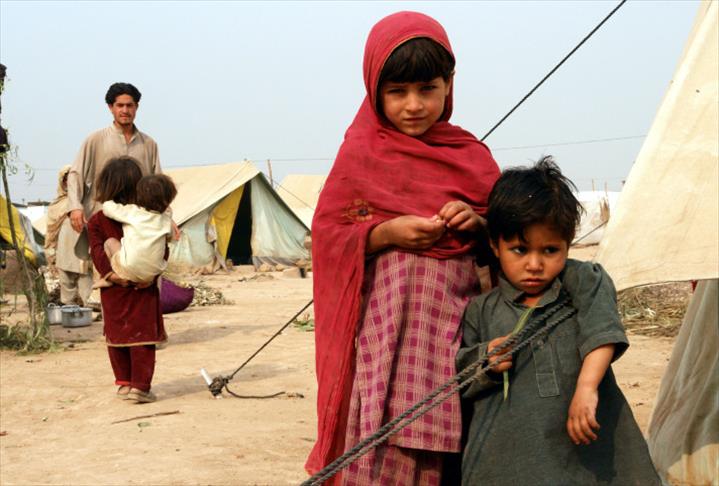
Noting that Afghans were making up the one of the largest group of the refuges with 2.7 million, Hosseini touched on the challenges that people facing in Afghanistan.
"Afghanistan has endured more than thirty years of war. Only 28 percent of the population is literate. Nearly five million Afghans have returned to Afghanistan after exile in Pakistan and other neighboring regions since 2002. Upon their return, they face many issues including homelessness and reintegration into a homeland that has changed dramatically since they left. Although there are many agencies working to address the humanitarian needs of the Afghan people, the need is overwhelming and delivering services without a reliable and stable national infrastructure is difficult. The reality is that Afghans are still hopelessly dependent on the support of the international community for their survival," Hosseini said.
Hosseini also said that a lack of livelihood opportunity, weak governance, lack of reliable access to basic services like water, food, shelter and education were the push factors that create reluctance on the part of Afghan refugees to return home.
Reminding him thousands of Syrian people were heading Turkey, Jordan and Lebanon everyday due to violence in their country, "While it is vitally important to make sure that refugees have access to shelter, food, water, and legal protection, providing these services does not address the root cause of their displacement. For that, whether it be South Sudan, Darfur, or Syria, we have to look at resolving the conflicts that have driven them from their communities and look for peaceful solutions in their native countries," said Hosseini.