Beyza Binnur Donmez
10 April 2026•Update: 10 April 2026
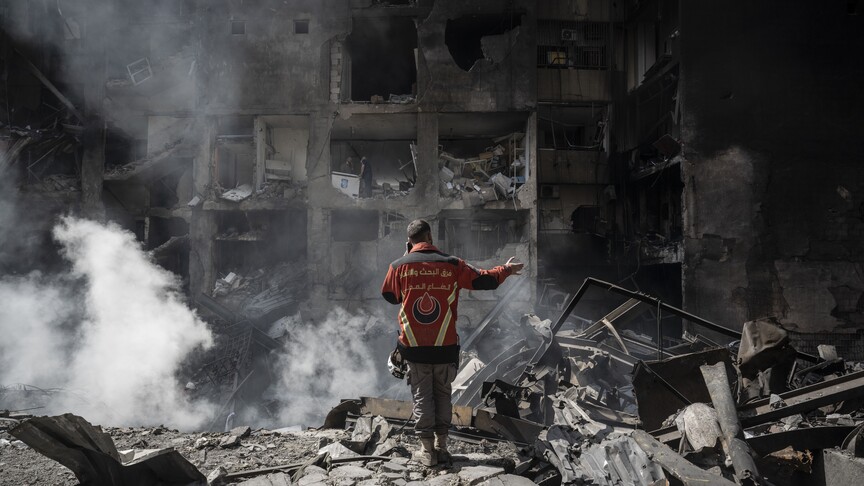
The UN refugee agency on Friday warned that Lebanon is facing a worsening humanitarian crisis following what it described as the most intense Israeli strikes in the current conflict.
UNHCR spokesperson Eujin Byun told reporters in Geneva that "the largest and most devastating Israeli attacks of the current conflict (were) carried out on 8th of April, (and) around 100 locations were hit within 10 minutes with no warnings, including densely populated neighborhoods in Beirut, already sheltering thousands of displaced people."
She said areas once considered safe were hit, "triggering panic and forcing people to flee for the second or third time," while damage to key infrastructure, including the Qasmiyeh Bridge, has further restricted movement between the southern and northern regions.
"Return is no longer possible, as the entire community have been partially or completely destroyed," Byun added, noting that about 150,000 people remain in southern Lebanon with limited humanitarian access.
Humanitarian access to them is "essential," and they need a safe route to flee if they are forced to again, the spokesperson urged.
"Humanitarian needs are rising sharply. Access to affected people is increasingly constrained,” she said as over 680 shelters hosting about 140,000 displaced people are severely overcrowded, and "nearly half of Lebanon’s public schools are now functioning as shelters," leaving children out of class and "grappling with fear, anxiety and repeated displacement."
Byun stressed that "all civilians in Lebanon need to be protected from those kinds of strikes," highlighting that around 1 million people are already displaced, 35% of them children.
The UNHCR has so far supported more than 151,000 displaced people in shelters and 31,000 in hard-to-reach areas, while also assisting over 250,000 people who have crossed into Syria.