By P Prem Kumar
KUALA LUMPUR
Malaysia has detained two more policemen on suspicion of involvement in a human trafficking scandal that has led to thousands of Muslim migrants being trapped on boats in Southeast Asia’s seas.
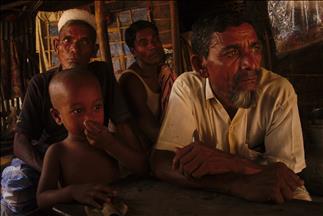
The officers were held for their alleged role in the killing of human trafficking victims – believed to be Rohingya and Bangladeshis - at smuggling camps near Malaysia’s border with Thailand.
Deputy Home Minister Wan Junaidi Tuanku Jaafar confirmed Thursday that eight other Malaysian officers have also been arrested in a sweep of the country’s force by the Anti-Corruption Commission for alleged involvement in human trafficking, although the cases were not connected.
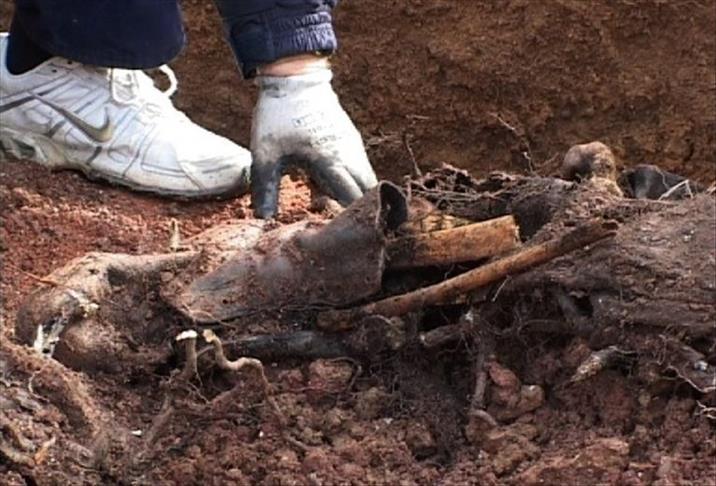
On Monday, the country’s police chief confirmed the discovery of 139 graves – some initially thought to contain around four bodies - at 28 camps in the border town of Padang Besar.
The deputy minister stated Thursday that the term "mass graves" is incorrect, as all the graves that were found in the hilly areas of Bukit Wan Burma in Padang Besar were proper burial sites containing just one body.
"It was not 'mass graves'. What we have found at the sites were proper burial sites," he told reporters.
He also said discoveries so far have seen the recovery of four bodies, each in a separate grave, which may result in a total of 139 victims being found by the end of the exhumation process.
“Based on the size of the graves, and after the area was cleared, we have a clearer indication of single grave, single person,” Wan Junaidi added.
“The bodies were wrapped in white cloth like the Muslim burial. Some are shallow graves, but not all,” he said, adding that the site where each body was buried had been marked with wooden sticks.
On Wednesday, police chief Khalid Abu Bakar had expressed confidence that no more such burial sites will be found on Malaysian soil.
"We did not detect any trace of similar activity at the border line or its surroundings. We are confident there are no other graves," he told reporters in the capital Kuala Lumpur.
Earlier this month, the bodies of more than 30 Bangladeshi and Myanmar migrants were discovered in southern Thailand, prompting a crackdown that led to smugglers fleeing and boatloads of the migrants then turning up on Thai, Indonesian and Malaysian shores, while thousands more remained at sea.
Padang Besar is believed to have served as a resting point for traffickers transporting the migrants by boat from Myanmar - most of them Muslim Rohingya - and Bangladesh.
Bakar said that security forces usually did not patrol the hilly area, but began to focus there after Thai police found the gravesites across the border and began exchanging intelligence with Malaysian counterparts.
The discovery came after denials by government officials of Malaysian involvement in the people smuggling ring, which has helped trigger a regional crisis.
On May 5, Wan Junaidi had told Anadolu Agency that there was no evidence to indicate the involvement of any of the country's nationals.
"We are still waiting for details of the raid. Until the details reach us, we cannot make any conclusions," he said, referring to the May 1 raid by Thai authorities at the camp in a remote jungle in southern Thailand.
But on Tuesday, Malaysian involvement was confirmed.
Home Minister Ahmad Zahid Hamidi announced that initial investigations found that Malaysian enforcement officers had collaborated with traffickers with international links spanning Thailand, Bangladesh and Myanmar.
“We suspect some of them. We are also working with the Forestry Department, in terms of enforcement at the boundary between Thailand and Malaysia,” he told reporters.
Police chief Bakar said Wednesday that Malaysian police would be holding talks with their Thai counterparts to facilitate an approach to the mass graves in Padang Besar from the other side of the border.
A meeting on Southeast Asia’s migrant crisis will be hosted in Bangkok on Friday with the attendance of representatives from 17 countries including Malaysia, Thailand, Indonesia, Myanmar and Bangladesh.
Observers also in attendance include the United States, Australia and Switzerland, and representatives from the UNHCR, the International Organization for Migration and the United Nations Office against Drugs and Crimes.
Malaysia 'confident' country has no more migrant graves:
http://www.aa.com.tr/en/world/517267--malaysia-confident-country-has-no-more-migrant-graves