13 May 2016•Update: 13 May 2016
By Vasiliki Mitsiniotou
ATHENS
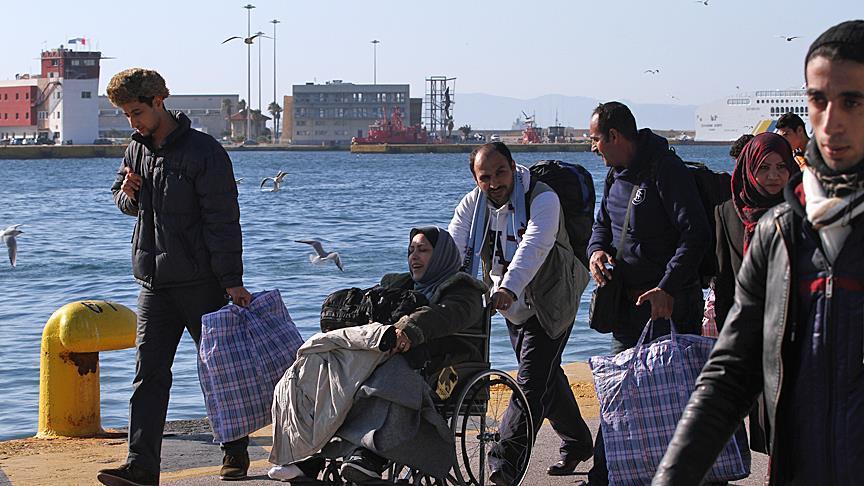
The number of migrants arriving on the Greek islands in April dropped 90 percent compared to March, said European Union border agency Frontex on Friday.
The drop is being attributed to several factors, such as the March 20 EU-Turkey agreement and stricter border policies by Macedonia at the northern Greek border.
"The total for all of April is well below the number of people we often saw reaching just the island of Lesbos on a daily basis during last year’s peak months," said Frontex Executive Director Fabrice Leggeri.
Greek islands in the Aegean have been the main gateways to Europe for the last two years. Since 2015, just under 1 million war refugees and migrants have entered Greece by sea, according to United Nations refugee agency data. Syrians accounted for the largest share of the migrants, followed by nationals from Pakistan, Afghanistan, and Iraq.
Greece began deporting migrants back to Turkey, as part of the EU-Turkish refugee agreement struck on March 20 to manage the continent's worst refugee crisis since World War II. So far, a total of 386 migrants, including 14 Syrians, have returned to Turkey from Greece, according to the Turkish Foreign Ministry.
At the same time, a total of 54,703 identified refugees and migrants are currently on Greek territory, 8,615 of which remain on the Greek islands according to the Greek Refugee Crisis Management Coordination Body.
However, the numbers of people coming have already exceeded the islands’ accommodation capacity, resulting in overcrowded spaces and living conditions that get worse every day.
The long wait for the bureaucratic asylum process and uncertainty has resulted in despair, to the extent that four refugees began swimming from Chios towards Turkey on Monday according to the Greek Coast Guard.
"We are facing difficult conditions and we do our best to safeguard the country and those unfortunate people's dignity," Alternate Migration Policy Minister Yiannis Mouzalas said Friday at the House responding to a question by a Communist Party (KKE) member.
In the meantime, the UN special rapporteur on the human rights of migrants, François Crépeau, is in Greece through Monday to gather information on the complex management of the Greek border, and its impact on the human rights of migrants.